Wonky Eyes and Sloppy Paint Apps: Why Faces Fail First on Production Figures — and How to QC Them
Faces fail first on production figures: eyes misalign by half a millimetre and everyone sees it. Why face paint goes wrong, and the QC checklist that catches it before shipping.
Wonky Eyes and Sloppy Paint Apps: Why Faces Fail First on Production Figures — and How to QC Them
A collector opens the box and looks at the face first — not the base, not the costume. If the eyes are off, the whole piece is off.
On Statue Forum, collectors have reported the same problem across different products and years: misaligned eyes, sloppy eyeliner, pupils off-centre. In one widely discussed case, buyers of a Rogue premium-format statue organised a petition after multiple collectors reported misaligned eyes and uneven eyeliner, asking the manufacturer for replacement heads matching the prototype. Similar complaints appear in threads about a Medusa statue, a Poison Ivy piece — "googly eyes" and sloppy paint edges — and a Psylocke figure with eyes that did not line up. No published statistic covers how often this happens, and this article will not invent one. But the pattern is clear: the same complaint, across many products, over many years.
Why the Face Is Where Paint QC Fails First
On a 1/4-scale statue, the eyes are millimetres wide: a pupil offset by half a millimetre is invisible on a datasheet and obvious on a shelf. People are extremely sensitive to faces — asymmetry in a gaze reads instantly as wrong.
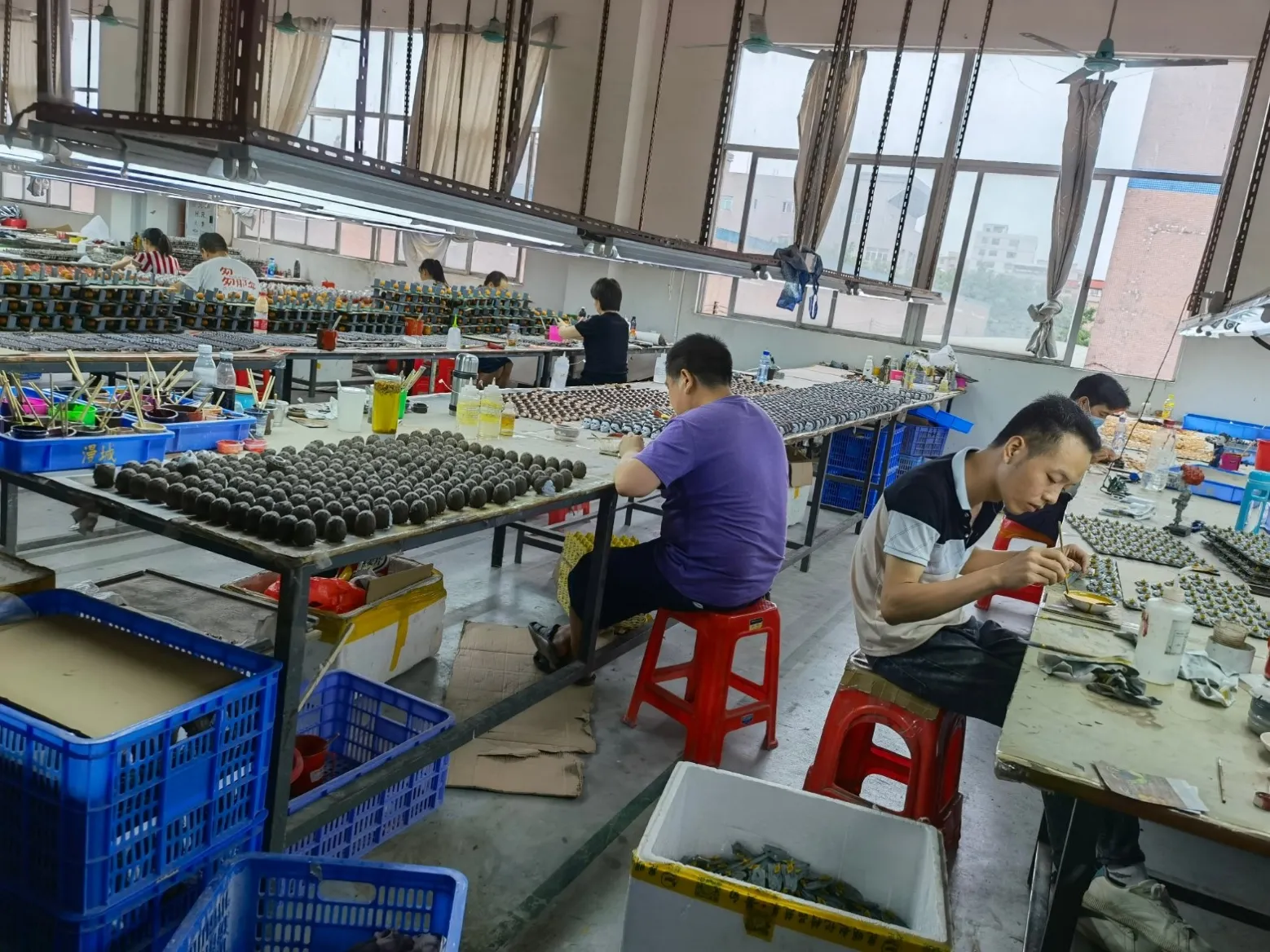
That sensitivity meets a production reality: the face is painted by hand, one piece at a time, by people working through hundreds of units. Every other part tolerates small variation — a costume fold painted slightly off is unnoticeable, while an eye painted the same amount off changes the expression. The face carries the tightest tolerance on the whole product, yet it is produced by the most variable step in the process: a human hand, repeated all day. It needs its own standard, its own check, and its own place in the process.
Hand-Painted Eyes vs Decals vs Tampo Printing
There are three practical ways to put eyes on a production figure.
Hand painting is how most resin statues and high-end busts are done: skin base, eye white, iris, pupil, eyeliner, lash line, highlight. It is flexible — a skilled painter can adjust to the sculpt — but variable: no two painters hold a brush identically, and the same painter's tenth piece of the day is not the same as the first.
Decals — waterslide transfers printed with the eye design — remove the painter's hand from the equation: the artwork is identical every time, and applying it is a positioning task. The trade-off is fit: a flat decal on a curved socket can wrinkle, silver, or lift. Decals suit flatter eye shapes and smaller scales.
Tampo printing (pad printing) sits between the two: a silicone pad picks up ink from an etched plate and presses it onto the curved surface, giving a crisp, repeatable image. It is standard for mass-produced PVC/ABS figures, where the run size justifies the plates. The limitation is the artwork: tampo only reproduces what is on the plate, so subtle gradients are hard, and each colour needs its own plate.
None is universally best: hand painting suits low-volume, high-detail resin pieces; tampo suits high-volume PVC/ABS runs where repeatability matters; decals suit cases where the geometry allows and the budget does not stretch to plates. Trouble comes from choosing on cost alone — decide the method before the paint master is made, not after the first batch comes back wrong.
What "Sloppy" Actually Means on a Production Line
Collectors say "sloppy paint." On a production line, that word covers several distinct defects, each with a different cause.
Eyeliner bleed is paint crossing the intended boundary — liner spilling onto the skin, or skin tone creeping into the eye. The usual cause is a worn stencil or mask, or a brush loaded with too much paint.
Off-centre pupils happen when the pupil is placed without a positioning reference. On a sculpt with a slightly asymmetric eye socket, a painter who centres the pupil on the socket rather than on the face's axis produces a figure that appears to look sideways. The fix is a reference — a positioning guide, a step photo, or a jig — that makes "centred" the same for every painter.
Left-right asymmetry is the most common complaint and the hardest to catch in isolation. Each eye can look acceptable on its own; together, they do not match — one eyelid line thicker, one iris higher, one lash line longer. The cause is usually rhythm: a painter paints all the left eyes in a batch, then all the right eyes, and the hand drifts between passes. Checking eyes one at a time misses this; checking them as a pair catches it.
Uneven paint build — a lash line thick in one place and thin in another — comes from brush pressure and paint viscosity changing through the day, as paint thickens while it sits.
Each defect points at a different fix: masks and paint loading for bleed, positioning references for off-centre pupils, paired checking for asymmetry, viscosity control for uneven build.
A Face-Paint QC Checklist That Works at Scale
A face-paint QC process that works at production scale has four elements.
First, separate the face from the rest of the figure. The face gets its own QC station, not a line in a general checklist. At Mancheng, face checks happen in stages — during painting, after painting, and before packing — so defects are caught while still fixable.
Second, inspect under magnification and consistent light. The defects that matter on a face are sub-millimetre — naked-eye inspection at arm's length will pass eyes a collector will reject at home. A magnifier and a fixed, neutral light source should be part of the station.
Third, check the pair. Every face check looks at both eyes together: alignment, iris height, eyeliner weight, lash-line length. A single-eye check is half a check. The reference is the approved paint master, kept at the station.
Fourth, sample by the right rule. Checking every face is ideal, and for high-value pieces it is what happens. Where the run is large, the sampling must still be meaningful: a defined proportion of every batch, taken across painters and across the shift, not ten pieces from the top of one box. The sampling rule should be agreed before production starts, not improvised on the line.
How to Write a Paint Spec the Factory Can Actually Follow
Most face-paint failures trace back to a specification that describes the result but not the steps. "Eyes to match prototype" is not a spec — a factory cannot follow it, and a QC inspector cannot enforce it.
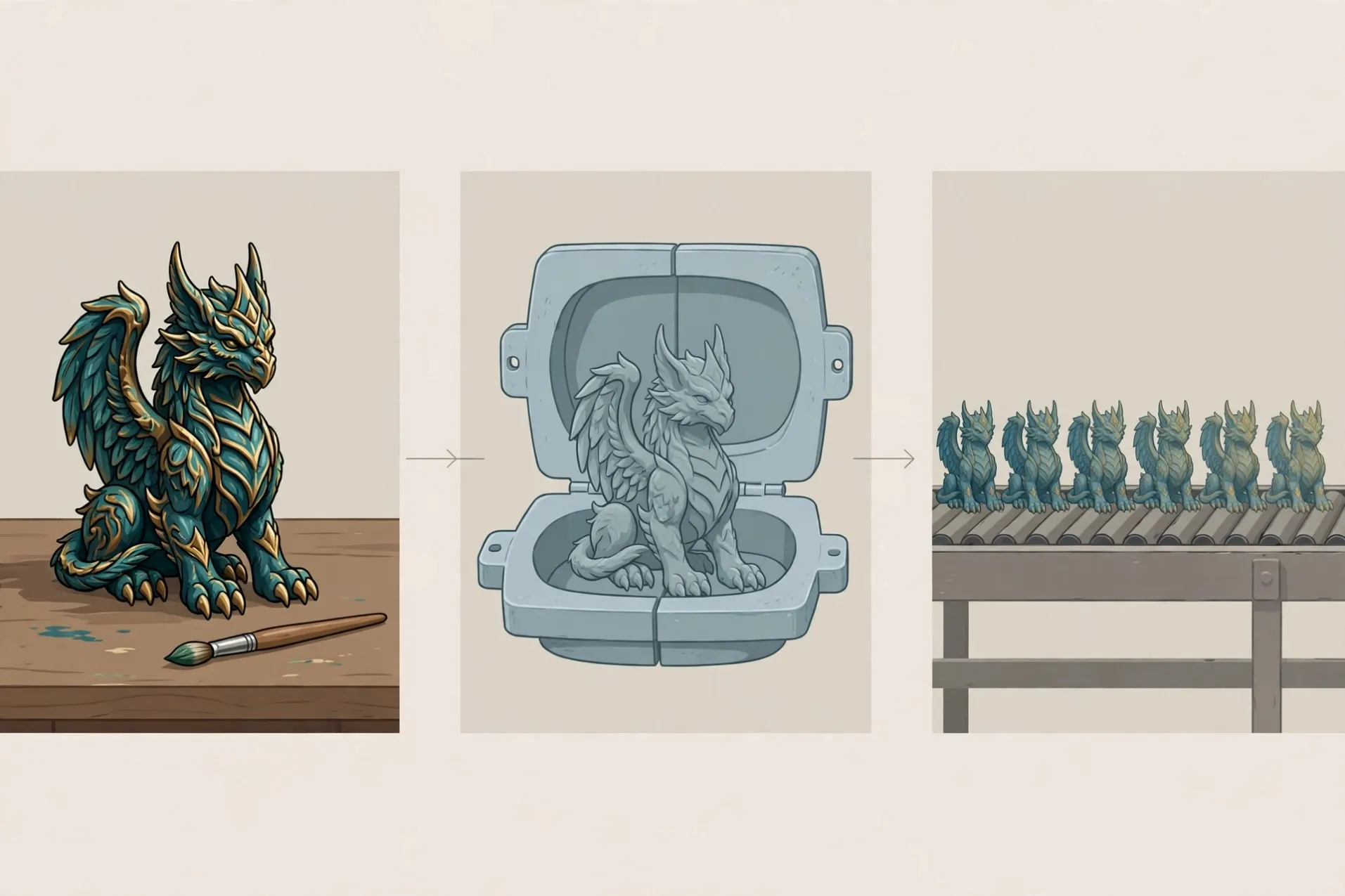
A usable face-paint spec has four parts. Step photos: the approved paint master photographed at each stage — skin base, eye white, iris, pupil, liner, highlight — so the painter sees the sequence. Colour references: physical colour chips for every paint used on the face, not screen images, which shift with every monitor. A written tolerance: what "acceptable" means for the face, stated plainly — for example, that the pupils must sit on the same horizontal line and the eyeliner must not cross the lash line. The point is that it is written down, so two inspectors reach the same verdict. A signed sample: the paint master, the step photos, and the colour chips approved and signed by both sides before production, so there is one reference everyone works from.
If any of these is missing, the factory will fill the gap with its own judgement — and that judgement will differ from the brand's.
For how a portrait paint sample should be reviewed, see How Should a Collectible Portrait Paint Sample Be Reviewed?. For checking paint edges on a finished sample, see How Should Paint Edges Be Checked on a Collectible Sample?.
When a Face Defect Means Rework, and When It Means Scrap
Not every face defect should be fixed. The decision needs a rule, agreed in advance.
Rework makes sense when the defect is on the surface and the fix is local: a small eyeliner bleed that can be cleaned and repainted without touching the surrounding skin tone, or a highlight dot that can be reapplied. The reworked face must go through the same face-QC station again.
Scrap is the right call when the fix would damage the surrounding work: a pupil that needs to move, which means stripping the eye and repainting the whole face, or an iris in the wrong colour, which means removing layers the skin tone depends on. Rework in these cases usually produces a worse face — thicker paint, muddy edges, a repaired look a collector will spot.
The boundary belongs in the paint spec, not decided piece by piece on the line. A practical rule: if the repair touches only one paint layer and does not cross into another colour area, rework it; if it crosses layers or requires stripping, scrap it. Scrapping a head costs money, but less than shipping a face the buyer will return.
What to Lock Down Before the Run Starts
Everything above only works if it is agreed before production — once the line is running, changing a paint standard means stopping the line.
Before the run starts, lock down four things. The paint master: one approved, signed master head, with step photos and colour chips, kept as the reference at the QC station. The method: hand painting, decals, or tampo — chosen for the product, with plates or stencils made and tested before the run. The face-QC station: a dedicated check, with magnification, fixed light, paired-eye inspection, and a sampling rule covering every painter and every part of the shift. The rework boundary: a written rule for what gets fixed and what gets scrapped, so the line does not have to improvise.
The Rogue petition is a useful warning, not just a story about one product. Buyers who care enough to organise a petition care about the brand — and will remember the experience next time they consider a pre-order. A factory that treats the face as its own QC problem, with its own station, spec, and standard, is the factory that ships faces collectors accept on first sight.
Mancheng Collectibles is a B2B OEM/ODM manufacturer in Dongguan, China, with 10+ years of experience in resin statues and busts, PVC/ABS figures, 1/6 scale figures, and prop replicas with electronics. We manufacture under client authorisation; design and IP belong to the client. For finish defects beyond the face, see this series' entry 008. Request a quote — tell us about your project, and we will advise on the manufacturing approach that fits it.
Sources: Statue Forum threads on Rogue PF, Medusa, Poison Ivy PF, and Psylocke paint applications. No industry statistics are cited — none were available.