Oct 26, 2026
How Should a Collectible Portrait Paint Sample Be Reviewed?
Review a collectible portrait paint sample for expression, eye direction, skin-tone transitions, texture and sheen under consistent viewing conditions.
Review a collectible portrait paint sample by checking whether the paint preserves the intended expression and sculpted forms, then examine eye direction, skin-tone transitions, small details and sheen under consistent light. A face that looks convincing in one close-up photograph may read differently at normal display distance or when fitted to the body.
Start with expression, not isolated paint details
Look at the whole head from the intended front and three-quarter display views before magnifying the eyes or mouth. Check whether shadows, brows and lip color support the approved expression. Darkening a crease can make the face appear older or more severe even though the sculpt has not changed.
Separate geometry concerns from paint concerns. If the underlying shape is wrong, adding stronger shading may conceal the issue in one photograph without resolving it. Identify what needs sculpt review and what can be corrected through the finish. Our process separates development and sample decisions so that the appropriate reference can be updated.
Check the eyes as a pair
Review gaze direction, iris placement and the relationship between the upper lids and visible eyes. Check from more than one angle: a painted eye can appear centered in a straight-on image while producing an unintended expression from the main display view.
For a stylized or masked portrait, follow the approved visual language rather than adding naturalistic details automatically. An extra bright highlight or darker outline is not necessarily an improvement. Its size and placement should make sense at the product's scale and should not compete with the expression.
Preserve sculpted skin texture
Skin is usually read through a combination of base tone, local variation, shadows and surface sheen. Check whether transitions describe the sculpted planes without creating obvious bands or covering fine texture. Heavy paint can flatten lips, eyelids and wrinkles; exaggerated contrast can make a small head look harsh.
Review the face alongside the neck, hands or other exposed areas that will be visible on the assembled object. They do not have to look uniformly flat, but intentional variation should not be confused with an accidental mismatch. Specify the intended relationship instead of asking for every area to have exactly the same color.
Distinguish material sheen from lighting glare
A reflection from a lamp can look like a glossy paint defect in a photograph. Move the viewing angle and compare under the agreed review lighting before requesting a finish change. Conversely, a flattering diffuse image can hide a sheen difference that is obvious in person.
Hair, mask, skin, teeth and eyes may require different finish treatments. Judge those boundaries deliberately. A uniform clear coat can change the way all of them read, even if the color underneath remains unchanged. Review the final intended coating stack rather than approving an unfinished intermediate stage as the complete paint master.
Use photographs as records, not as the only reference
Keep neutral overall views and close-ups of disputed details. Avoid beauty filters, automatic skin smoothing or dramatic color grading; they remove exactly the evidence the team needs to judge. Include enough of the head to show orientation rather than circulating an isolated eye crop without context.
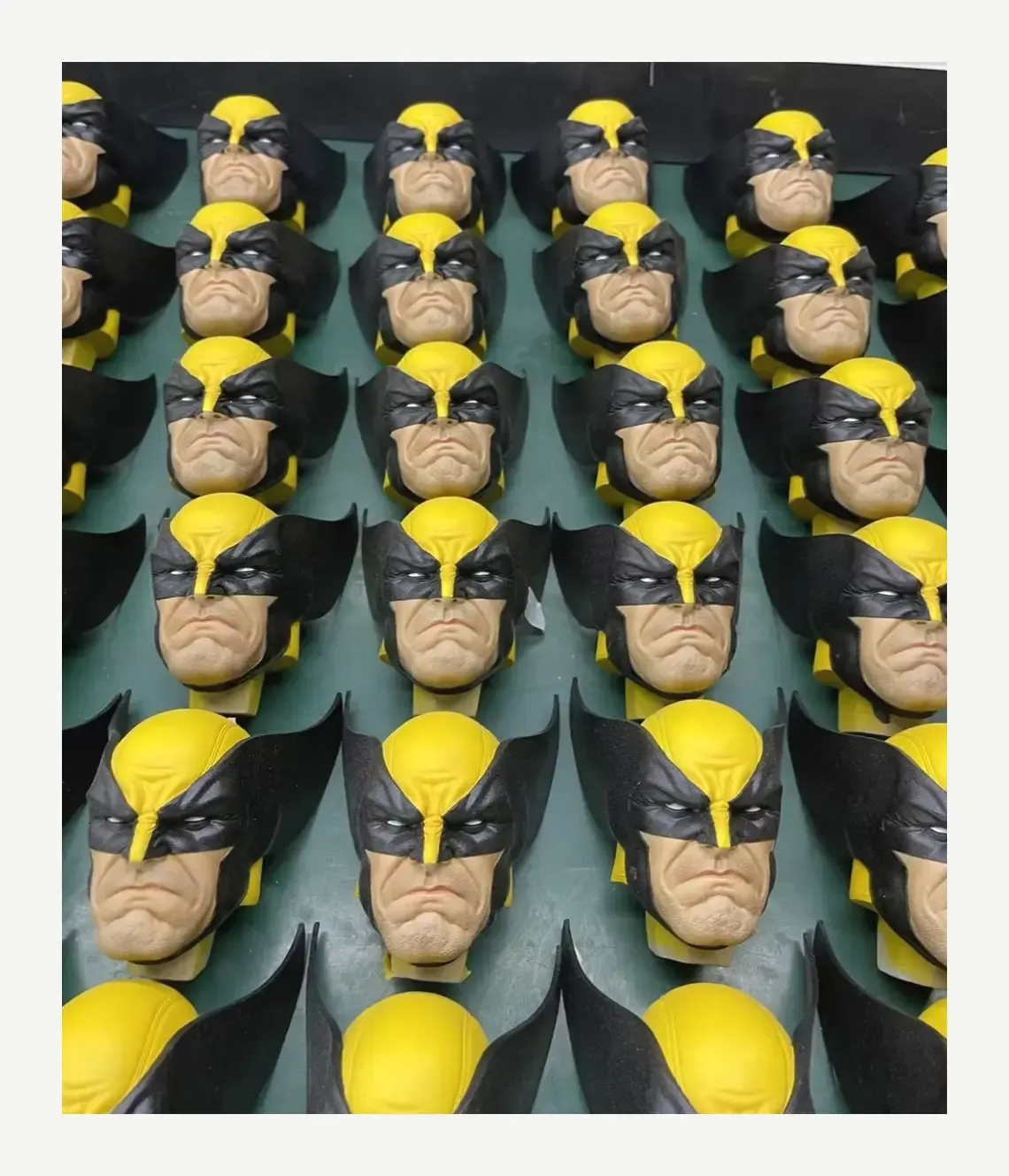
The real image accompanying this article shows painted heads arranged on a work surface. It demonstrates visible masks, skin texture and repeated facial forms; it does not establish that any particular approval, inspection or performance test was completed. Physical review remains important when screen brightness, white balance or reflections could affect the decision.
Turn comments into reviewable changes
Replace broad feedback such as “make it more lifelike” with a specific observation, location and reference. For example, identify whether the concern is gaze, a hard cheek transition, lip definition or excessive skin sheen. Agree on the intended result before a painter changes several features at once.
Review the corrected head on the intended body and at normal display distance. Keep the approved physical sample and its revision record available for the next stage. See our products for collectible formats, or contact us to discuss portrait and finish references for a new project.
FAQs
Should a portrait be approved only from close-up photographs?
No. Close-ups help explain details, but also review overall expression, display-distance appearance and the head's relationship to the assembled body. Use a physical sample when color or sheen remains uncertain.
Does stronger shading always make a portrait more realistic?
No. Stronger contrast can distort the apparent age, expression or sculpted planes. The appropriate tonal range depends on scale, style and the approved reference.
Can a painted production head replace the approved paint master?
Not automatically. A reference should be deliberately reviewed, identified and retained as the agreed standard. A head photographed on a work surface is not evidence of that approval by itself.