Why Your Production Statue Doesn't Look Like the Prototype — and What to Lock Down Before the Run
Production pieces rarely look like the prototype photo. Five causes, from hand-painted masters to casting generations, and what to lock down in writing before the run.
Why Your Production Statue Doesn't Look Like the Prototype — and What to Lock Down Before the Run
The box arrives. You lift the statue out, set it on the shelf, and step back — and something is off. The paint is flatter than the photos. The eyes look different. The skin tone is a shade warmer, or colder, than the prototype you fell in love with months ago.
Collectors report this again and again: a long Statue Forum thread on a production Obi-Wan figure, buyers of the Sideshow Swamp Thing Maquette comparing the prototype's wet gloss and vivid colours with a noticeably duller production run, and owners of the Blizzard Widowmaker statue describing the prototype as soft and the production piece as oversaturated. This is not one brand's problem, and it is not usually one mistake. It is five causes, working together — and each of them can be locked down before the run starts.
Five Causes, Not One
When a production statue disappoints, the instinct is to blame one thing: the factory cut corners, or the paint team was careless. That is rarely the whole story. In practice, the gap comes from five separate causes:
- The prototype was hand-painted by one artist; the run is painted by a line of people.
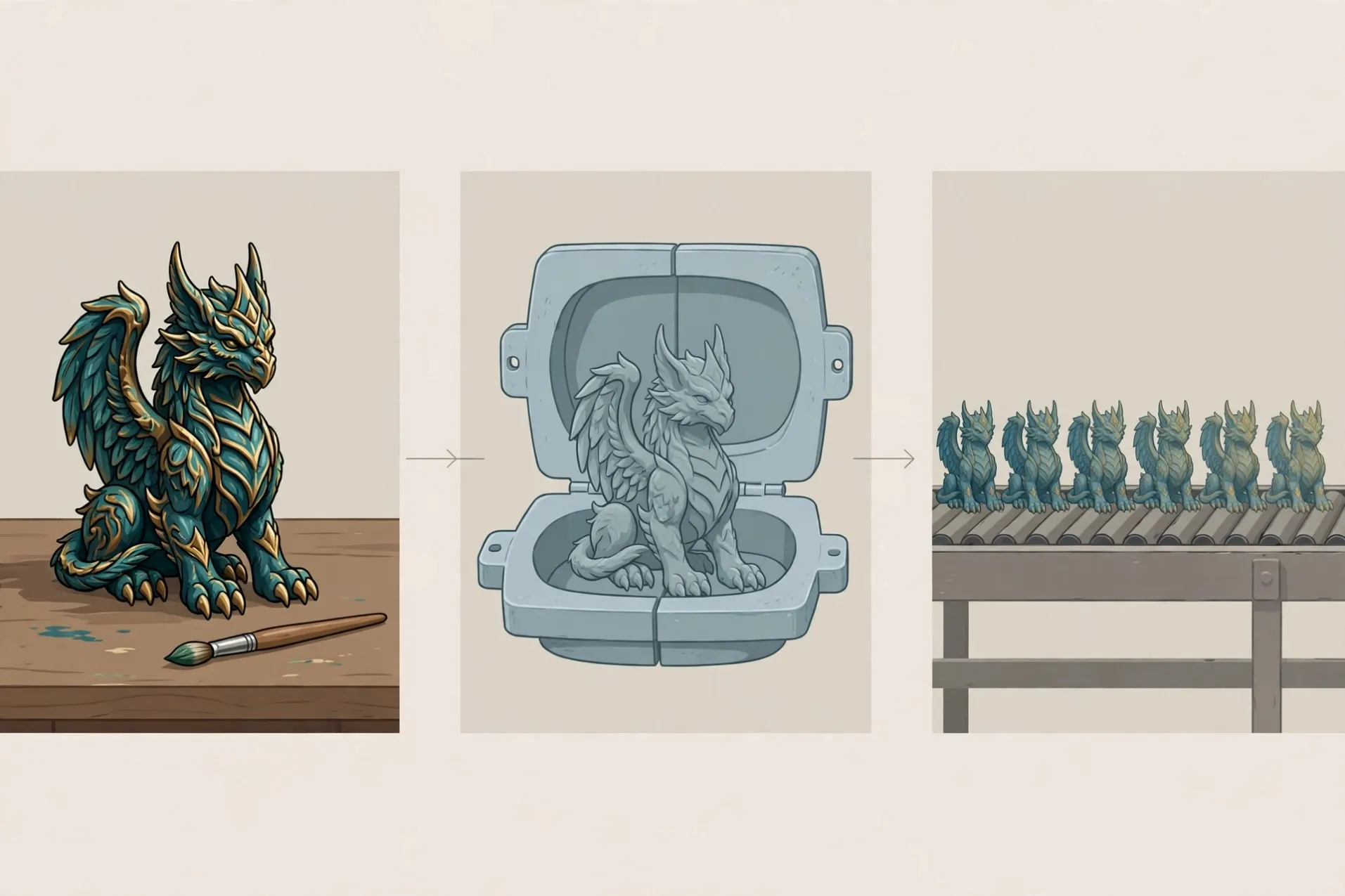
- Detail is lost at every step of the casting chain, from print to master to mould to cast.
- The production run may use a different material from the prototype.
- The prototype was photographed under conditions the production piece will never be seen in.
- The mould itself wears as the run goes on.
None of these is a mystery. All five are normal parts of manufacturing. The problem is that most buyers — and many first-time brands — only discover them after the run is finished, when fixing them is no longer possible.
The Hand-Painted Master vs the Paint Line
The prototype that sells the pre-order is usually painted by one artist, often the sculptor or a dedicated paint master, working on a single piece over days. Every blend is adjusted by eye. The eyes are painted last, slowly, until the expression is right. The skin has layered washes that no one timed.
A production run works differently. The paint process is broken into steps, and each painter repeats one step — base coat, shading, eyes, details, clear coat — hundreds of times. That is the only way a run of hundreds or thousands of pieces can be painted at all. But it changes what the paint can be. A gradient that one artist feathered by hand becomes a fixed sequence of sprays. A subtle eye highlight becomes a dot applied in seconds.
This is not a reason to accept a worse face. It is a reason to approve the paint the way production will actually do it. Before the run, ask the factory for a production-method paint sample — a piece painted by the line, using the line's steps, not a second master painted by the artist. Approve that sample in writing, with the paint steps listed beside it. If the eyes cannot be reproduced by the line, change the design of the eyes before the run, not after the first hundred pieces are painted.
Casting Generations: Detail Lost at Every Step
A resin statue is not printed. It is cast, and casting is a chain: a 3D print becomes a master, the master is finished by hand, a silicone mould is made from the master, and resin is poured into the mould to make the production pieces. Each step copies the previous one — and each copy loses a little.
Print lines that were never sanded out of the master get copied into the mould, and then into every cast. Sharp edges soften. Fine texture flattens. Deep grooves fill in. One studio's staff, explaining a production shortfall on a forum, described the loss as a small percentage at each step — that is one studio's explanation, relayed by a forum poster, not an industry standard, and no public dataset pins the number down. What is well documented, across many collector discussions, is the direction: detail only ever goes one way, and it never comes back.
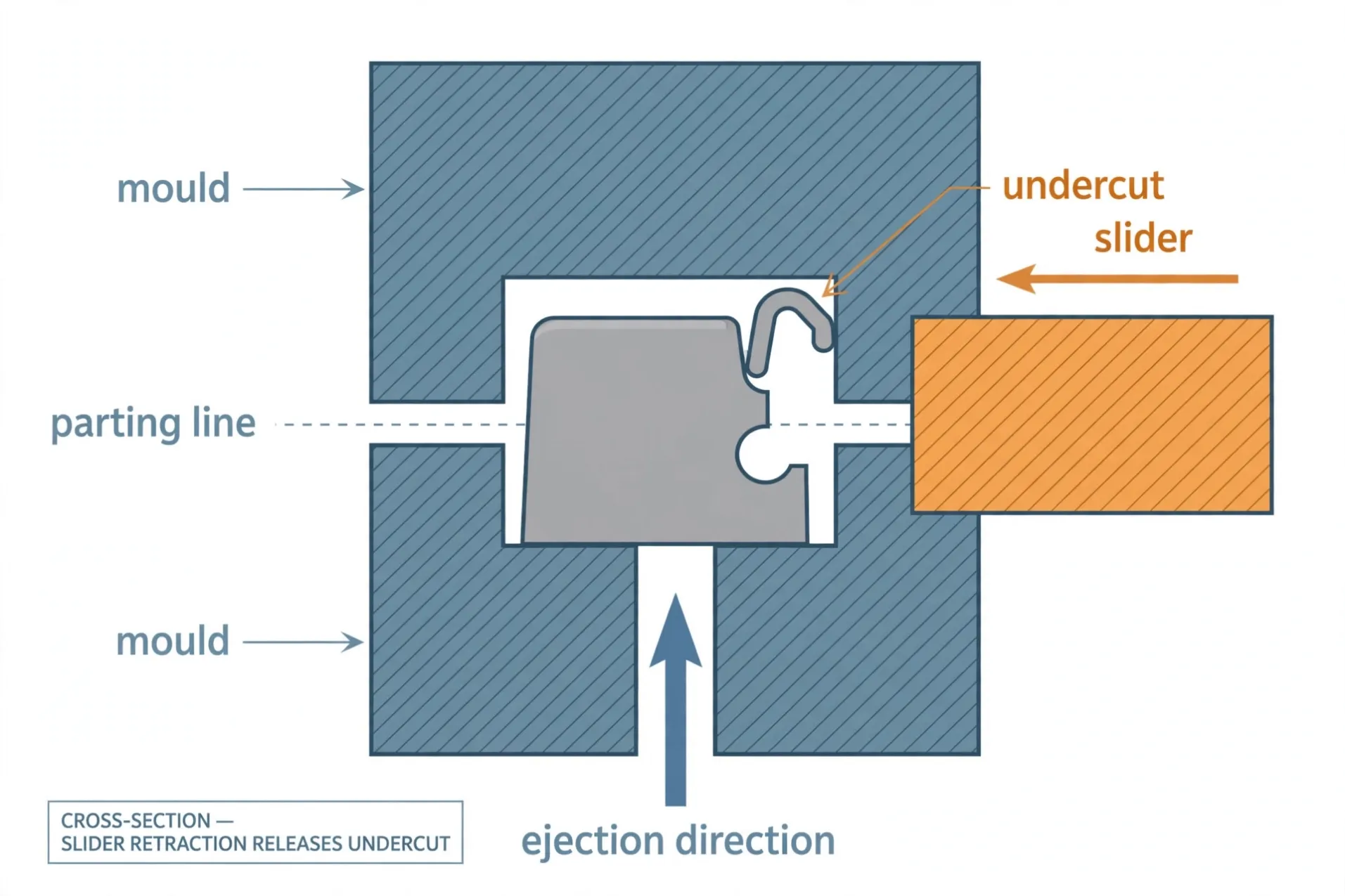
The practical answer is to check the first cast against the master, not just against the prototype photo. Look at the sharpest edges and the finest texture, because those are the first things to go. If the first cast has already lost the detail that sold the piece, the mould or the master needs work before the run — not after. Mould wear adds the same effect over a run: as more pieces are pulled from a silicone mould, fine detail degrades, and later pieces look softer than the first ones. Re-moulding from a cast piece instead of the original master is worse still — you are copying a copy.
Material Changes You May Not Have Noticed
Prototypes and production pieces are not always made from the same material. A prototype might be a 3D print in a hard resin, while the production run is cast in a softer casting resin — chosen for cost, weight, or cure time rather than detail retention. The change is often invisible on a spec sheet and obvious in the hand: different weight, different surface feel, and different behaviour under paint.
Material also changes how paint sits. A paint that bonded well to the prototype's surface may pool or peel on the production resin. A clear coat that looked deep and wet on the master can look cloudy on a different substrate. Collectors see "the paint is wrong"; the cause is often the surface underneath it, not the paint itself.
Before approving production, ask one direct question: is the production run made from the same material as the approved sample? If the answer is no, ask for a sample in the production material, painted with the production paint steps. A material change after sample approval is a product change, and it should go through approval again.
What "Close Enough" Means in Writing
Most prototype-to-production disputes come down to a sentence that was never written down. "Make it look like the prototype" is not a standard. It cannot be measured, and it cannot be enforced — which is why it is the sentence that causes the most arguments.
A workable standard is written, physical, and specific. It names:
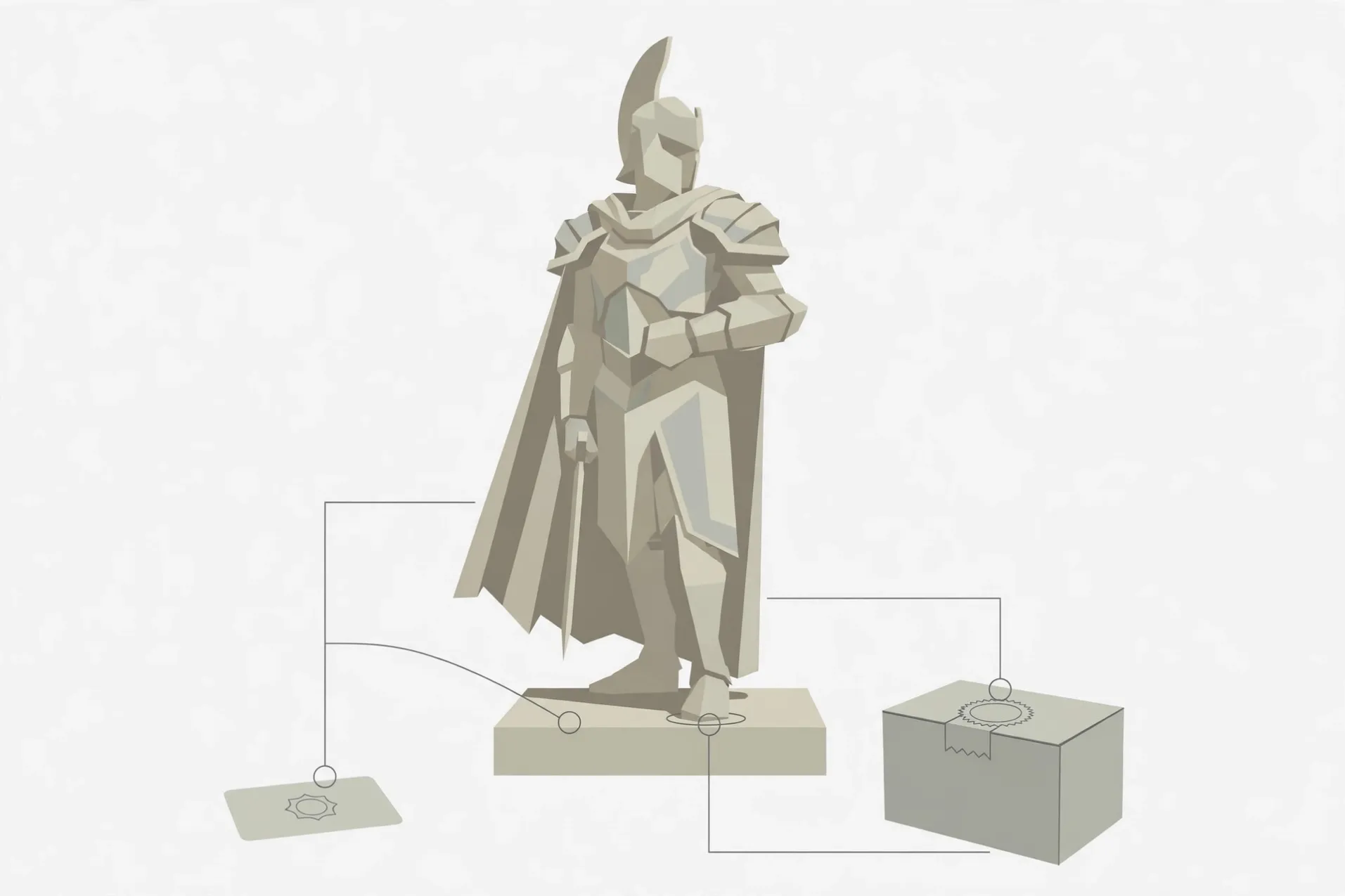
- Colour boards — physical swatches for every main colour, approved and kept as the reference.
- Paint steps — the sequence of coats, in order, including where shading starts and stops.
- Face standard — an approved painted face, kept as the reference for eyes, skin transitions, and expression.
- Gloss levels — which parts are gloss, satin, or matte, and where each begins and ends.
- Viewing conditions — the light and distance under which the piece will be judged, because paint that looks right under a workshop lamp can look wrong in daylight.
None of this is exotic. It is the difference between a factory guessing what you meant and a factory checking its work against something it can hold in its hand.
The PP Sample Is the Real Contract
The pre-production sample — the PP sample — is the most important piece in the whole run, and the most misunderstood. It is not a formality. It is the point where the prototype stops being the reference and the production piece takes over.
Here is the sequence that works: the prototype sells the idea, but the PP sample is what production is measured against. Once the PP sample is approved in writing, the factory produces to the PP sample. If a production piece matches the PP sample, it passes — even if it differs slightly from the earliest prototype photo. If it does not match the PP sample, it fails.
That is why the PP sample must be made by the production process, in the production material, using the production paint steps. A PP sample painted by the master artist proves nothing about the run. A PP sample painted by the line proves everything.
Treat the approval as a contract: sign it, date it, keep a copy of the approved piece, and keep the written standard beside it. Any change after PP approval — a different paint, a different material, a different part — needs a new approval, in writing.
First-Article Inspection: Catching Drift Early
Even with a good PP sample, a run can drift. Paint batches vary. A painter's hand changes over a long day. A mould wears. The first pieces off the line are the early warning system — but only if someone checks them.
First-article inspection means comparing the first finished pieces directly with the approved PP sample, under the agreed viewing conditions, before the rest of the run continues. If the first pieces have drifted, the line stops, the cause is found, and the run restarts.
Staged quality control is how this is done in practice: the blank body is checked before paint, the paint is checked mid-process and again after it is finished, and the assembled piece is checked once more before packing. Each stage catches problems while they are still cheap to fix. A paint defect found before assembly costs a repaint. The same defect found after packing costs a return, a replacement, and a collector who tells the story online.
What to Lock Down Before the Run
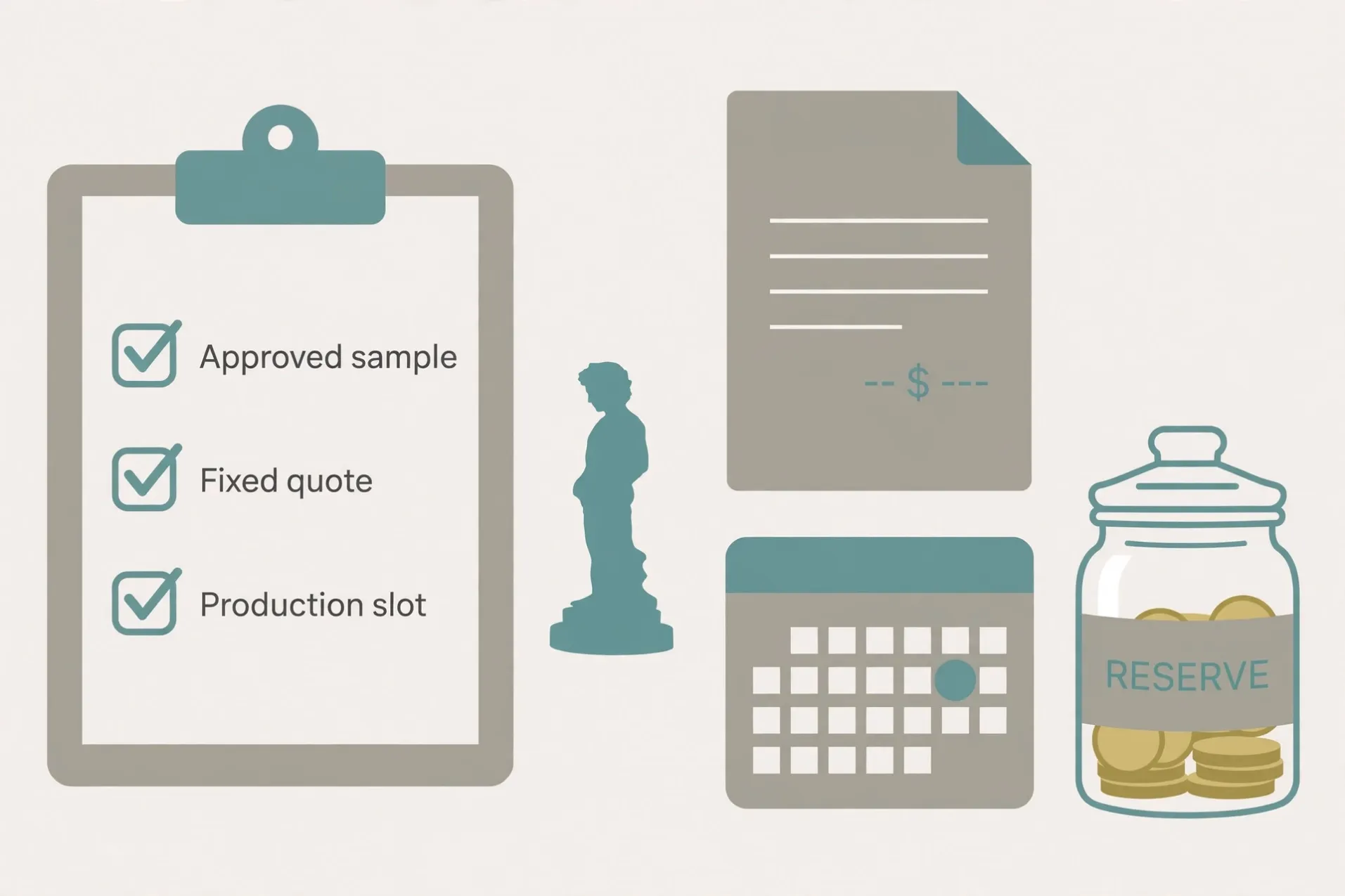
Settle this checklist before production starts:
- A production-method paint sample, approved in writing, with the paint steps listed.
- Colour boards, a face standard, and gloss levels — physical references, not descriptions.
- The production material named, and a sample in that material approved.
- A PP sample made by the production process, approved in writing as the binding reference.
- First-article inspection against the PP sample, before the run continues.
- A written rule: no change after PP approval without a new written approval.
The prototype will always be the most beautiful version of a statue. It was made slowly, by one person, to be photographed. Production will never be that — and it does not need to be. What it needs to be is the version the buyer was promised, checked against a standard everyone agreed in advance. That is not a matter of luck. It is a matter of writing things down before the run starts.
Mancheng Collectibles manufactures resin statues, PVC/ABS figures, 1/6 scale figures, and prop replicas with electronics under client authorization, as an authorized OEM. Our process runs from client reference through 3D sculpting and engineering, printed prototype, painted sample, and controlled mass production, with staged quality control at the blank body, mid-paint, post-paint, and pre-packing stages. If you are planning a run, request a quote, and we will talk through the sample and approval steps first.