From Approved Sample to Production: How Paint Consistency Is Controlled
See how paint masters, batch controls, in-line checks and final QC keep collectible color, finish and assembly aligned with the approved sample.
The practical answer: collectible paint consistency is controlled by turning the approved sample into a production standard, then checking materials, color layers, application sequence, assembly and final appearance against that standard throughout the run. A good result does not depend on one painter remembering how the sample looked. It depends on clear physical references, repeatable instructions and checks made early enough to correct variation before it reaches final assembly.
This matters because a production piece can match an individual color chip and still look wrong as a complete collectible. Skin tones change under different lighting, metallic finishes depend on surface preparation, translucent parts respond to coating thickness, and neighboring colors can make each other appear warmer or cooler. Control has to follow the finished visual result, not a single paint value in isolation.
The Approved Sample Is the Visual Standard
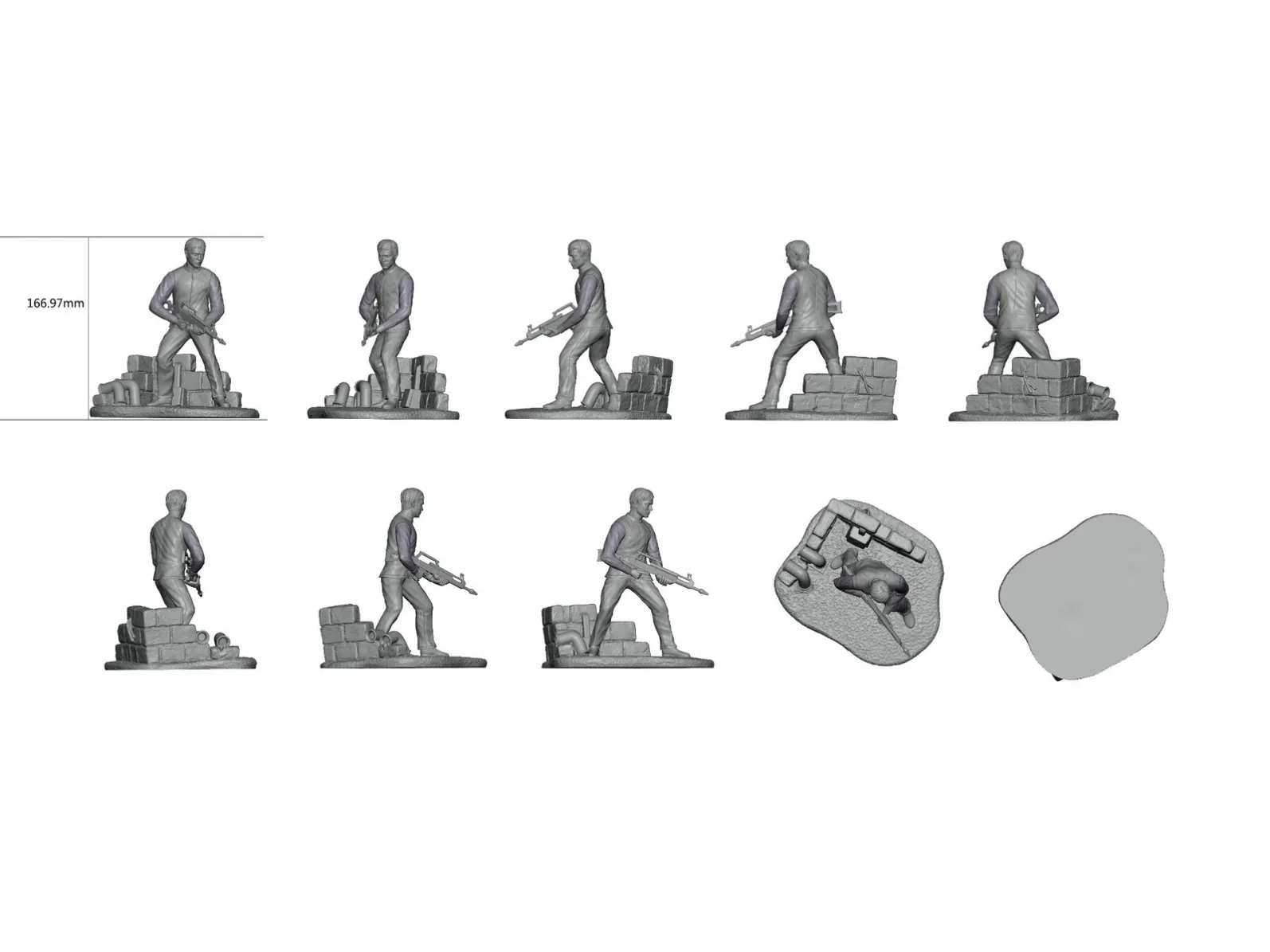
The approved sample should remain the primary reference for color, finish, texture, gloss level, paint boundaries and overall balance. Photographs are useful for communication, but they are not a reliable substitute: camera settings, screens and lighting can shift color and hide surface differences.
Before production begins, the sample should be reviewed as a complete system. The factory team needs to understand which features are critical to the character, which surfaces must remain clean, where variation is acceptable and which details must be checked on every piece.
What should be captured from the sample?
- Approved base colors and the order in which they are applied
- Shadow, highlight, wash and dry-brush placement
- Hard and soft paint boundaries
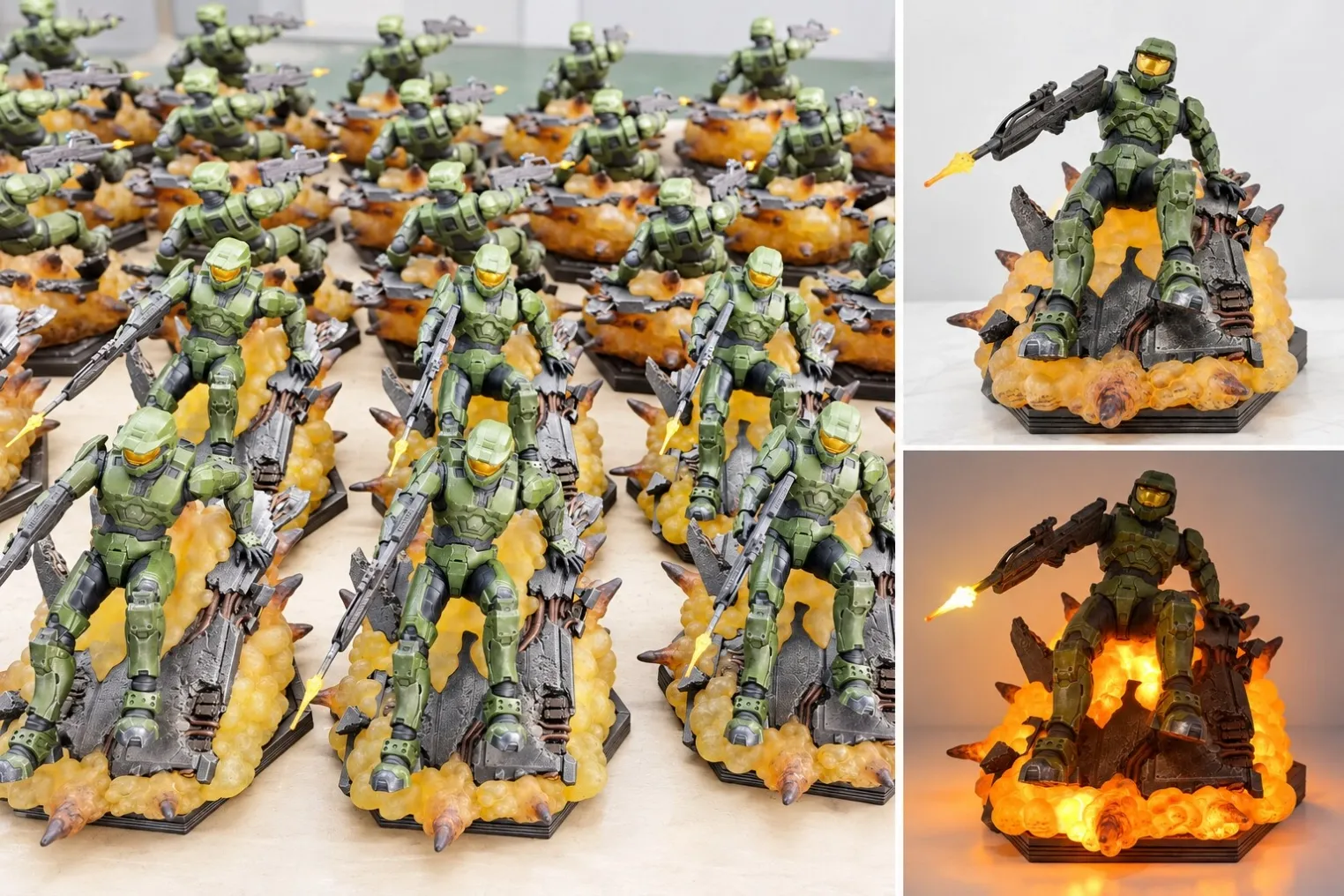
- Metallic, pearlescent, translucent, matte and gloss effects
- Face, eye and other high-attention details
- Acceptable alignment where painted parts meet during assembly
- Areas that must be protected from overspray, adhesive or handling marks
The point is not to document every brush movement. It is to identify the decisions that determine whether a finished production piece still carries the approved appearance.
Paint Masters Turn Appearance Into Repeatable Instructions
A paint master is most useful when it is supported by practical production references. These may include approved color samples, marked photographs, masks, fixture requirements, finish notes and a defined application sequence. For complex resin statues, PVC/ABS figures, 1/6 figures and mixed-material collectibles, the sequence can be as important as the color itself.
For example, a skin tone may use a base coat, controlled shading, localized warmth and a final surface adjustment. A metallic finish may require sanding, primer control and an even undercoat before the metallic layer is applied. If these steps are compressed into a label such as “bronze” or “skin,” operators are left to interpret the result instead of reproducing it.
Critical decisions before the line starts
- Which parts should be painted separately for access and cleaner boundaries?
- Where are masks or dedicated fixtures needed?
- Which effects require a defined number or order of coats?
- How will paint thickness affect assembly tolerances?
- Which details require specialist work rather than a general production step?
- What defects require rework, and what conditions require rejection?
Surface Preparation Has to Be Controlled First
Paint cannot correct an unstable surface. Casting seams, sanding marks, pinholes, release residue, uneven primer and poorly fitted components remain visible through later finishing. Reflective or high-contrast finishes make these problems especially obvious.
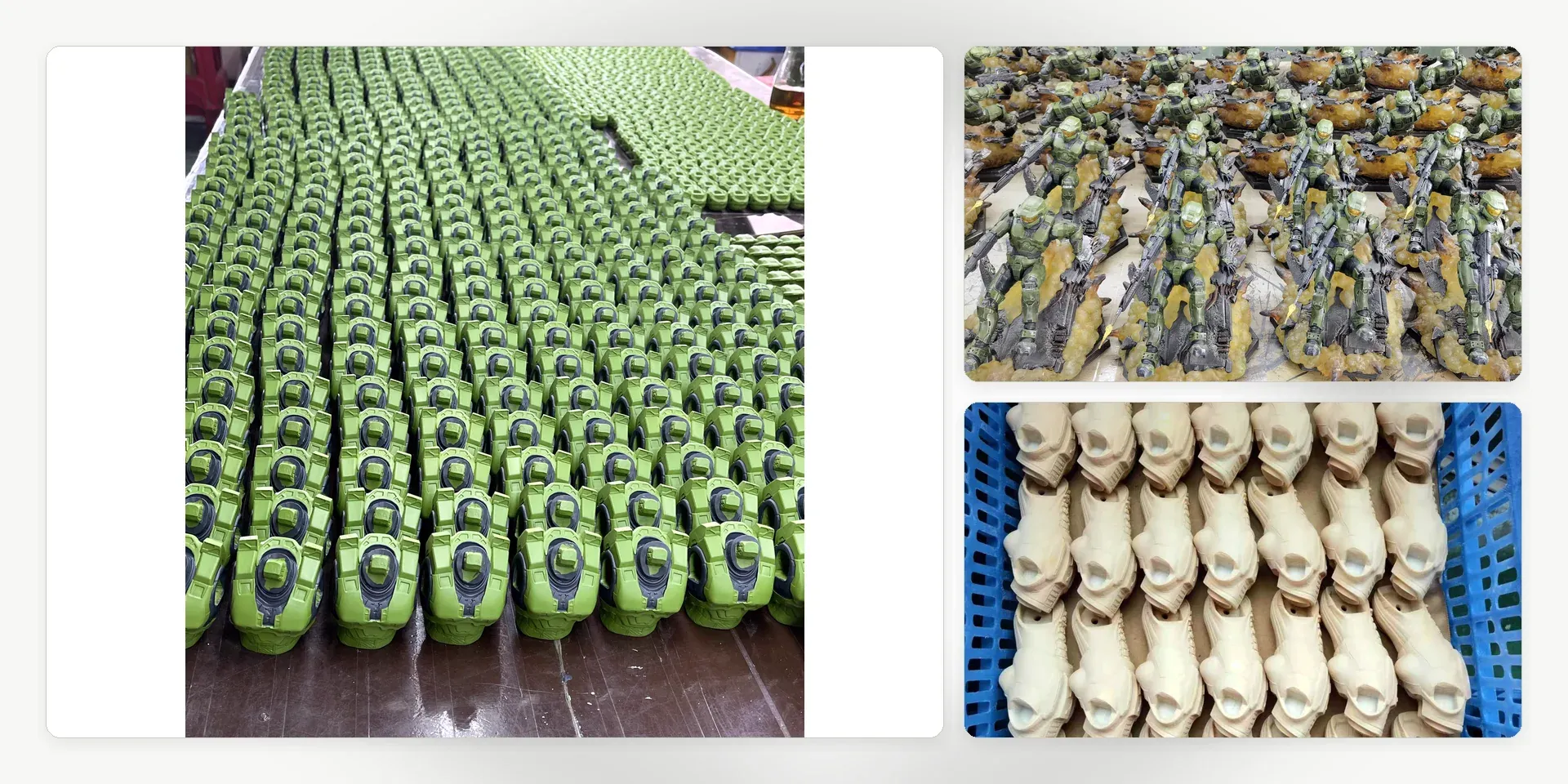
Observable factory evidence begins before color is applied: cast or molded parts are trimmed, cleaned, fitted and inspected; repaired areas are blended into the surrounding texture; and primer is checked for coverage and adhesion. This preparation protects sculpted detail while giving the paint process a consistent starting point.
If one batch is prepared more aggressively than another, fine texture can disappear. If seams are left for painters to hide, color and coating thickness become inconsistent. Preparation standards should therefore be checked as their own production stage rather than treated as invisible preliminary work.
Batch Production Reduces Uncontrolled Variation
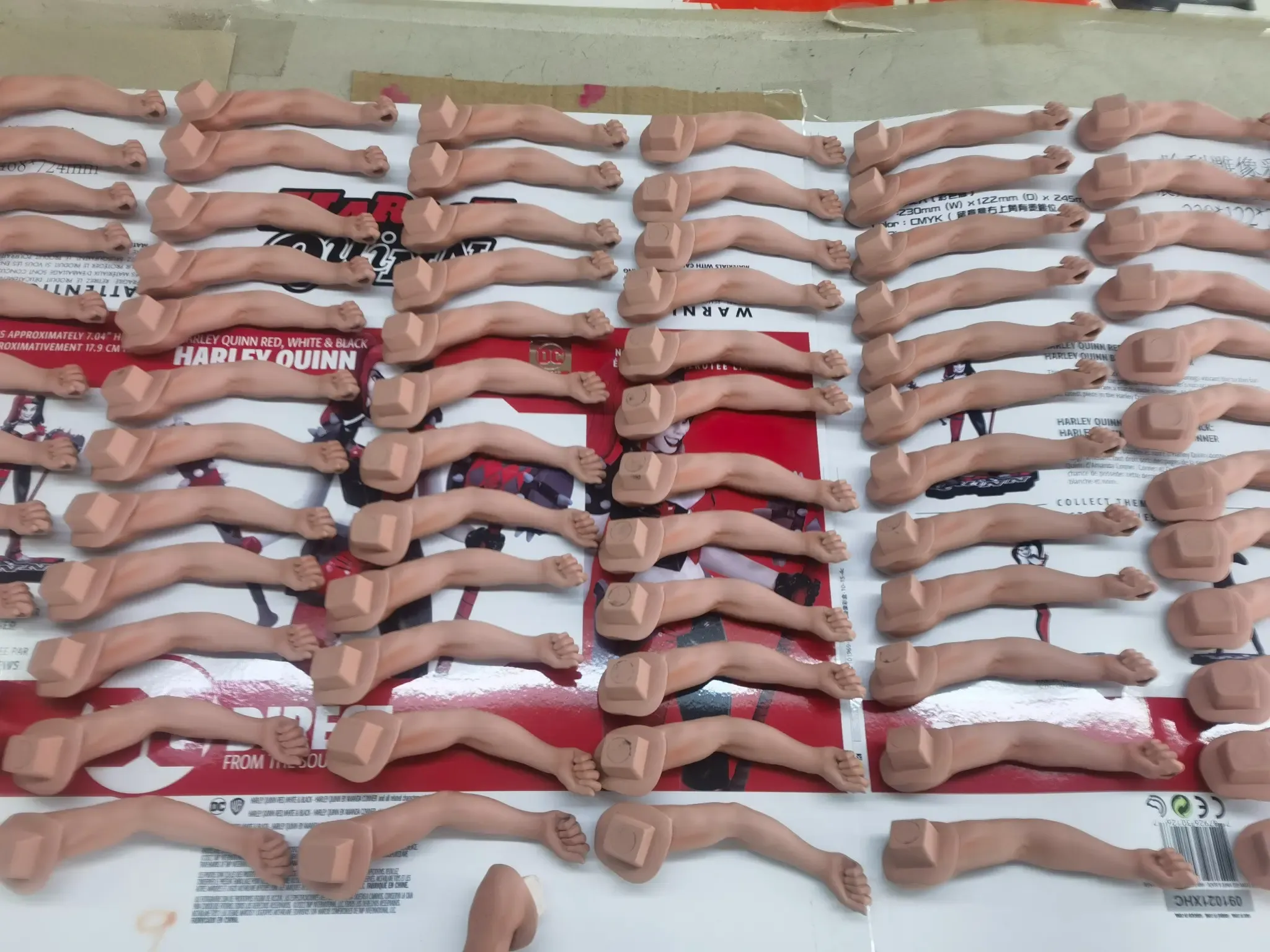
Organizing similar parts into controlled batches makes differences easier to see and correct. Components can be compared at the same stage, under the same lighting, before the next layer hides the cause of a problem.
Batch control is particularly useful for faces, repeated accessories, gradients, matching left-and-right parts and components that assemble across a visible seam. It allows supervisors to compare like with like instead of discovering variation only after complete products have been assembled.
Useful evidence during production
- Parts arranged consistently so missing or incorrect operations are visible
- Approved references present at the work area
- Clear separation between completed, awaiting inspection and rework parts
- In-line comparisons made before costly downstream operations
- Recorded corrections when a batch begins to drift from the standard
These controls are practical rather than decorative. Neat rows of parts are meaningful only when they support counting, comparison, traceability and a defined inspection point.
In-Line Checks Catch Problems Before Final Assembly
Final QC is too late to be the first serious comparison. A finished collectible contains accumulated work from casting or molding, preparation, painting, assembly and functional integration. Rejecting it at the end wastes all of those completed operations.
In-line checks should focus on the risk of the current stage. After base coating, inspectors can look for coverage and contamination. After detailed painting, they can compare boundaries, symmetry and character-defining features. Before assembly, they can verify mating surfaces, paint thickness and color continuity between components.
For mixed-material products or collectibles with LED, sound or mechanical features, cosmetic inspection also needs to consider function. Wiring, switches, moving parts and access panels should not damage the finish or create visible misalignment. Functional checks and appearance checks must meet at assembly rather than operate as separate systems.
Final QC Compares the Whole Product, Not Isolated Parts
At final inspection, the complete collectible should be compared with the approved sample for overall color balance, finish, fit, cleanliness and presentation. Inspectors should view the product from the angles that matter to the customer, not only from the easiest inspection position.
Final QC commonly considers:
- Overall match to the approved visual standard
- Faces, eyes and other focal details
- Color continuity across assembled parts
- Visible seams, gaps and alignment
- Gloss or matte consistency
- Overspray, adhesive marks, fingerprints and surface damage
- Stable assembly and correct accessories
- Operation of specified LED, sound or mechanical features
Our development and production process connects sample approval, surface preparation, painting, assembly and QC so the final decision is supported by checks throughout production. Examples of finished manufacturing work can also be viewed on the Projects page.
Packaging Is the Last Part of Finish Control
A product can pass final inspection and still arrive with rubbed paint, transferred coatings or pressure marks if the packaging does not support it correctly. Painted surfaces should be reviewed against tray contact points, protective films, accessory placement and unpacking movement.
Heavy resin parts need secure support. Delicate effects, plated surfaces and translucent components may need clearance from abrasive packaging materials. The final packed-product check should confirm that the approved finish can survive normal handling and shipment preparation, not only look correct on the QC table.
What Buyers Should Ask a Collectible Manufacturer
Before approving production, ask how the factory will translate the sample into working standards, where in-line checks occur, how rework is separated, and how the final piece is compared with the reference. Request evidence that corresponds to the actual risk: prepared castings for surface quality, controlled batches for paint consistency, assembled products for fit, and packed samples for protection.
A strong answer should describe specific decisions and inspection points. It should not rely only on a final inspection claim or a few photographs of attractive samples.
Frequently Asked Questions
Is a color code enough to control collectible painting?
No. A color code does not define surface preparation, layer sequence, shading, gloss, neighboring colors or application method. The approved physical result and production instructions are both needed.
Why can production pieces look different from the approved sample?
Common causes include inconsistent preparation, coating thickness, lighting, application sequence, paint boundaries, assembly alignment and uncontrolled batch variation. In-line comparison helps identify the cause before final QC.
Should every finished piece be compared directly with the master sample?
Critical appearance and assembly standards should guide every piece, while inspection methods can combine operator checks, in-line supervision and final QC. The exact plan should reflect product complexity and identified risks.
If you need a production review for an approved sample or paint specification, send us your project scope with the material, scale, finish and functional requirements.