How to QC Face Paint on Production Collectible Figures
Learn how to control gaze, paint edges and facial finish on collectible figures with an approved master, repeatable production checks and clear rework criteria.
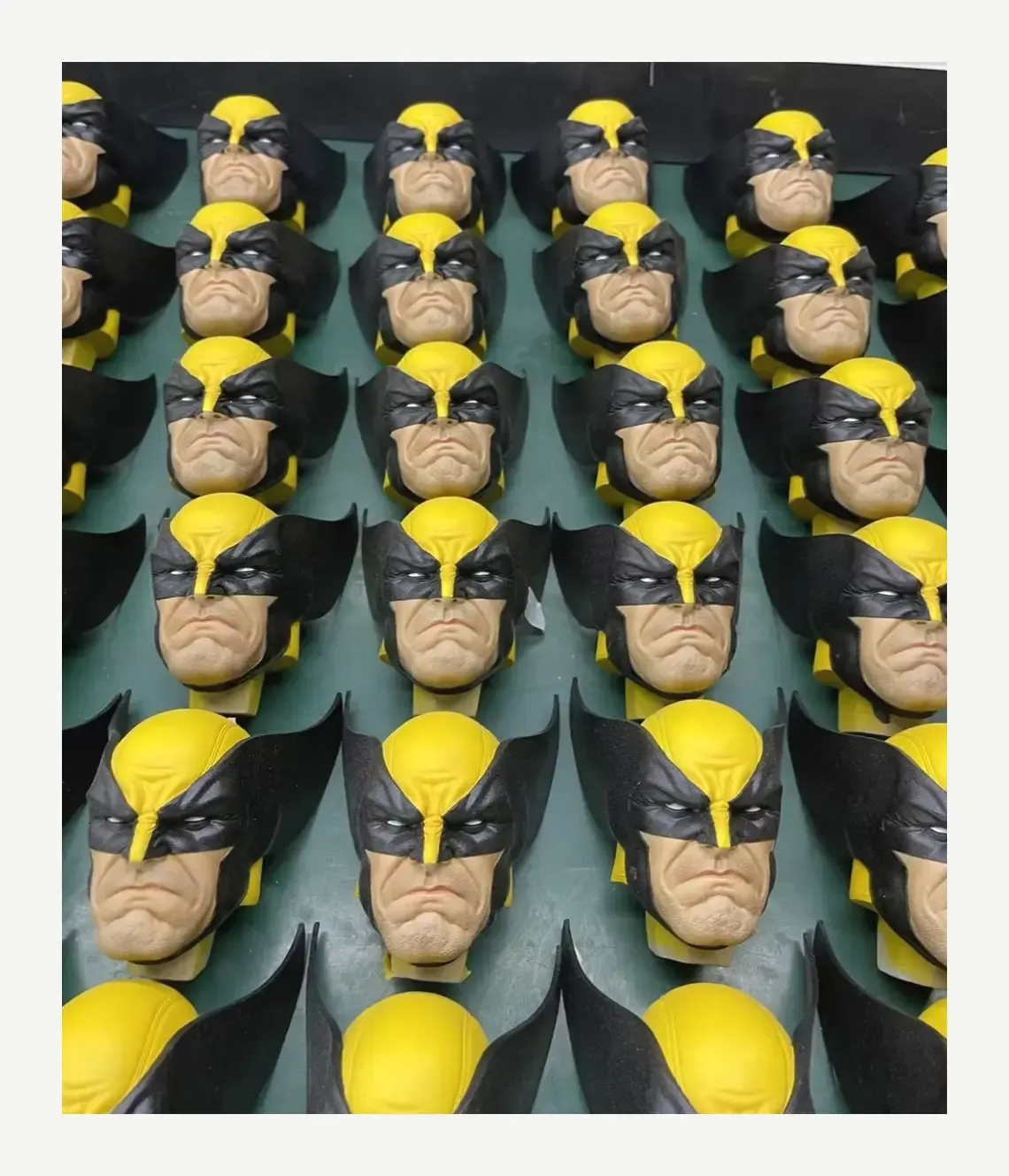
Face-paint defects are easy to underestimate in a production brief. A small shift in gaze, an uneven eyeliner edge or a skin-tone smear can change the expression of an otherwise well-made figure. The practical answer is to treat the face as a controlled inspection area: approve the sculpt and paint master separately, define a repeatable application method, and compare production pieces with the same reference under consistent viewing conditions.
This article focuses on the handoff from approved sample to production. It complements our guide to reviewing a portrait paint sample, which covers the sample-approval stage, and our checklist for checking paint edges across a finished collectible.
Why the face needs its own QC checkpoint
Faces draw attention because several high-contrast features sit close together. The viewer reads eye direction, eyelid shape, eyebrows, mouth and skin transitions as one expression. If one feature shifts, the whole face can look different even when the rest of the figure matches the approved color and finish.
Collector discussions have included complaints about eye direction and messy paint around the eyes and lips. Those are buyer observations, not a factory audit or a defect-rate study; they still show why a brand should make face appearance explicit in the acceptance brief. One public collector discussion about facial paint and eye direction illustrates how quickly small differences can become the focus of a product review.
“The face is wrong” is not yet an actionable QC finding. A useful inspection record says what is wrong, where it is, how it compares with the approved sample, and whether the source appears to be sculpt geometry, paint placement, assembly orientation or handling damage.
Separate sculpt alignment from paint alignment
Before judging paint, confirm that the approved sculpt provides a reliable reference. Check the head straight-on, in profile and at three-quarter views. Confirm that the eye openings, nose, mouth and head centerline read as intended from those views. A painted sample can conceal a sculpt issue; repainting cannot correct an eye socket or facial feature that is physically out of position.
Keep two approvals on file. The sculpt approval locks the facial geometry and expression. The paint master locks color, line placement, eye direction, coverage and finish on that geometry. If possible, photograph the approved head in a neutral position from repeatable angles. Use those same views for the first-off sample and subsequent checks.
Mark the intended gaze and orientation in a simple face map. A front view can show the eye axes, iris and pupil placement, brow line and any asymmetry that is deliberate. Add side or three-quarter references where the sculpt curves away from the camera. The map should explain the design; it should not invent a universal millimetre tolerance that ignores figure scale, sculpt shape and viewing distance.
Choose the application method for the design
Hand painting gives an artist flexibility for nuanced expression, layered color and small runs. Its repeatability depends on the quality of the visual reference, the operator’s control, suitable supports and a clear inspection standard. Without those controls, the same eye can drift in shape or direction from piece to piece.
Decals can reproduce fine printed artwork consistently when the graphic, surface and placement are compatible. They may need careful positioning on curved areas, and an edge or film can become visible if the surface preparation or application is not suitable. Decals are not automatically the best choice for every sculpt or finish.
Tampo printing can apply repeatable graphic details to many compatible surfaces, but the face geometry, printing access, registration and color sequence all matter. A method that works on a flat mask or eye panel may not transfer cleanly to a deeply curved portrait. Stencils or masks can help with defined boundaries, but they also need stable registration and controlled removal.
Decide the method using the approved appearance, production quantity, face geometry, colors, finish and available access. Make a representative sample with the actual material and process before locking the line. For a multi-part head or interchangeable face, include the assembled view; a mark that looks centered on a loose part may not read centered after assembly.
Describe defects in terms the line can check
Translate subjective words such as “wonky,” “sloppy” or “off” into visible conditions. A face-paint checklist can cover:
- Gaze and alignment: the eyes appear to look in the approved direction; pupils and irises sit consistently within the approved eye shapes.
- Pair consistency: the two eyes read as a deliberate pair from the front and three-quarter views, including any intentional asymmetry.
- Edge control: eyeliner, brows, lips and other defined boundaries stay within the approved paint map, without unintended overspray or spillover.
- Coverage: no missed areas, thin patches, visible undercoat or unwanted paint build changes the approved appearance.
- Color transitions: skin-tone shading and blush blend where intended; there are no smears, fingerprints or abrupt edges outside the reference.
- Cleanliness and finish: no dust, fibers, debris, glossy spots or handling marks distract from the face under the agreed inspection conditions.
Keep “cosmetic mismatch” separate from “structural mismatch.” If the eye features are correctly painted but the sculpt is asymmetric, the corrective action is different from a shifted decal, a misregistered print or an uneven hand-painted line. Photograph the whole head and a close view so reviewers can see both the defect and its position on the part.
Build a repeatable face-paint inspection flow
Start with the approved paint master and its reference views at the inspection station. The master should be clean, fully assembled where relevant and stored so it does not fade, become dirty or get confused with a work-in-progress sample. Keep the approved color references and face map beside it, with revision dates so the line does not mix versions.
Inspect the first production pieces after setup, after a material or color change, and after a stop that may affect registration or operator setup. Confirm the method is producing the intended eye direction, line boundaries and skin transitions before the run proceeds. Record the station, sample identity, process or material revision, result and any correction made.
Use consistent lighting, viewing distance and angles. Begin with a normal front view that reflects how a collector will see the figure, then inspect the face closer for paint edges and coverage. A magnifier can help find a small defect, but it should not replace the normal-view check: an extremely close view can exaggerate harmless texture, while a distant view can hide a visible misalignment.
Check after painting and again after assembly or before packing. Assembly, touch-up and handling can introduce new marks or change how paired parts line up. Mancheng’s staged QC approach checks faces during painting, after painting and before packing, so a defect can be caught before it travels into the next step. The inspection criteria should stay consistent at each stage, while the checks account for what can actually be seen at that point.
For ongoing production, define a sampling plan based on the product, process stability and buyer’s requirements. Do not invent a universal inspection percentage. If an early run shows drift or repeated rework, raise the inspection level and investigate the cause; when the process is stable, follow the agreed plan and keep the records needed to trace a problem.
Set a clear rework and rejection boundary
Not every face-paint defect calls for the same response. A small, accessible edge issue may be correctable if the repair method is approved and does not damage adjacent paint. A gaze that changes the expression, a repeated registration error or multiple layers of touch-up may need the part held for review rather than quietly repaired on the line.
Define who can authorize a repair, what methods are acceptable, and when the sample must be rechecked. After rework, inspect the corrected area and the surrounding finish. If the cause is unclear or the same defect appears again, stop and review the process instead of adding another layer of paint. Record the approved disposition so different inspectors do not make different calls on similar pieces.
What to lock in the production paint brief
A factory can follow a visual target more reliably when the brief combines images with instructions. Include the approved sculpt and paint master, frontal and three-quarter face views, an annotated face map, color references, application method, paint sequence, assembly orientation, inspection lighting and viewing conditions, and the agreed accept/rework/hold criteria. Specify how versions are approved and what changes require a new sample.
Before mass production, ask the team to review a first-off sample against those references and resolve open questions in writing. A brief that says only “make the eyes neat” leaves the most important decisions to interpretation. A brief that shows gaze, boundaries and acceptable appearance gives the production team and buyer the same point of comparison.
- Approve sculpt geometry before paint approval.
- Lock a painted master with repeatable views.
- Choose hand painting, decals, tampo or masking for the actual face design and substrate.
- Define eye direction, line boundaries, coverage and intentional asymmetry.
- Use the same light, angles and normal viewing distance for inspection.
- Check at setup, during painting, after assembly and before packing as agreed.
- Record defects, corrections and final disposition by sample or batch.
For a new collectible, a clear face-paint spec helps the brand and manufacturer solve the right problem before repeated production begins. If you are preparing a project brief, contact Mancheng with the reference views, materials, finish target and sample stage. We can help turn the approved expression into practical manufacturing and QC checkpoints.
FAQs
What is the best way to inspect painted eyes on a collectible figure?
Compare the production head with an approved paint master from the same front and three-quarter views, under consistent lighting and at a normal viewing distance. Then inspect closer for boundaries, coverage and cleanup. Record a visible condition rather than writing only “eyes look off.”
Should every face detail be hand painted?
No. Hand painting, decals, tampo printing and masking each suit different artwork, surface shapes and production needs. Approve the selected method on a representative sample made with the intended substrate and finish.
Can a factory fix misaligned eyes with touch-up paint?
Sometimes a paint-placement issue can be corrected, but touch-up cannot fix misaligned sculpt features and may damage surrounding paint. Identify the failed step first, approve a repeatable repair method, and recheck the corrected face before release.