Undercuts: The Detail That Quietly Doubles Your Tooling Cost
A small hook, side hole or groove can stop a mould from opening straight — and every slider or lifter it needs adds cost. How to design undercuts out before the quote.
Undercuts: The Detail That Quietly Doubles Your Tooling Cost
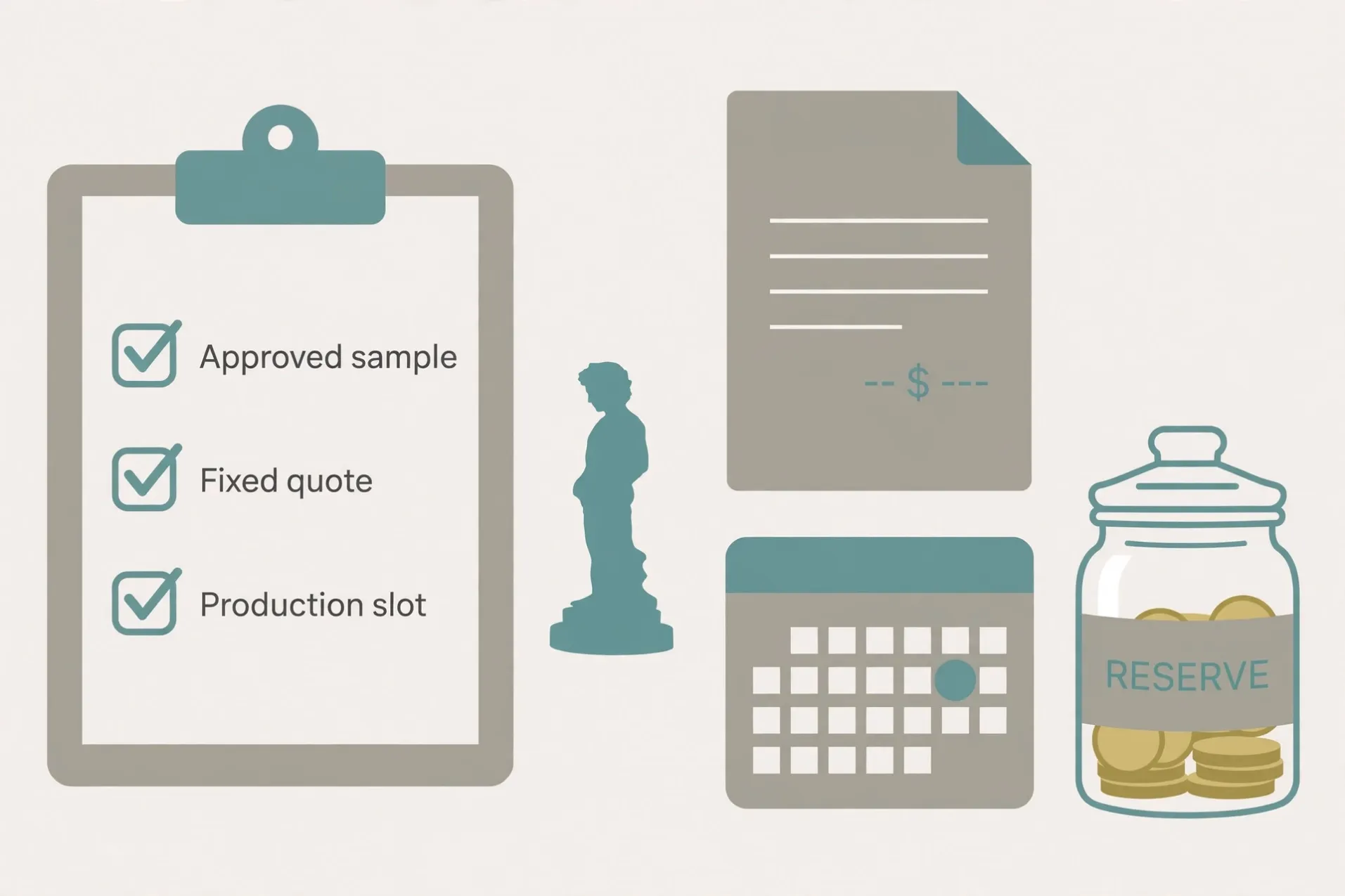
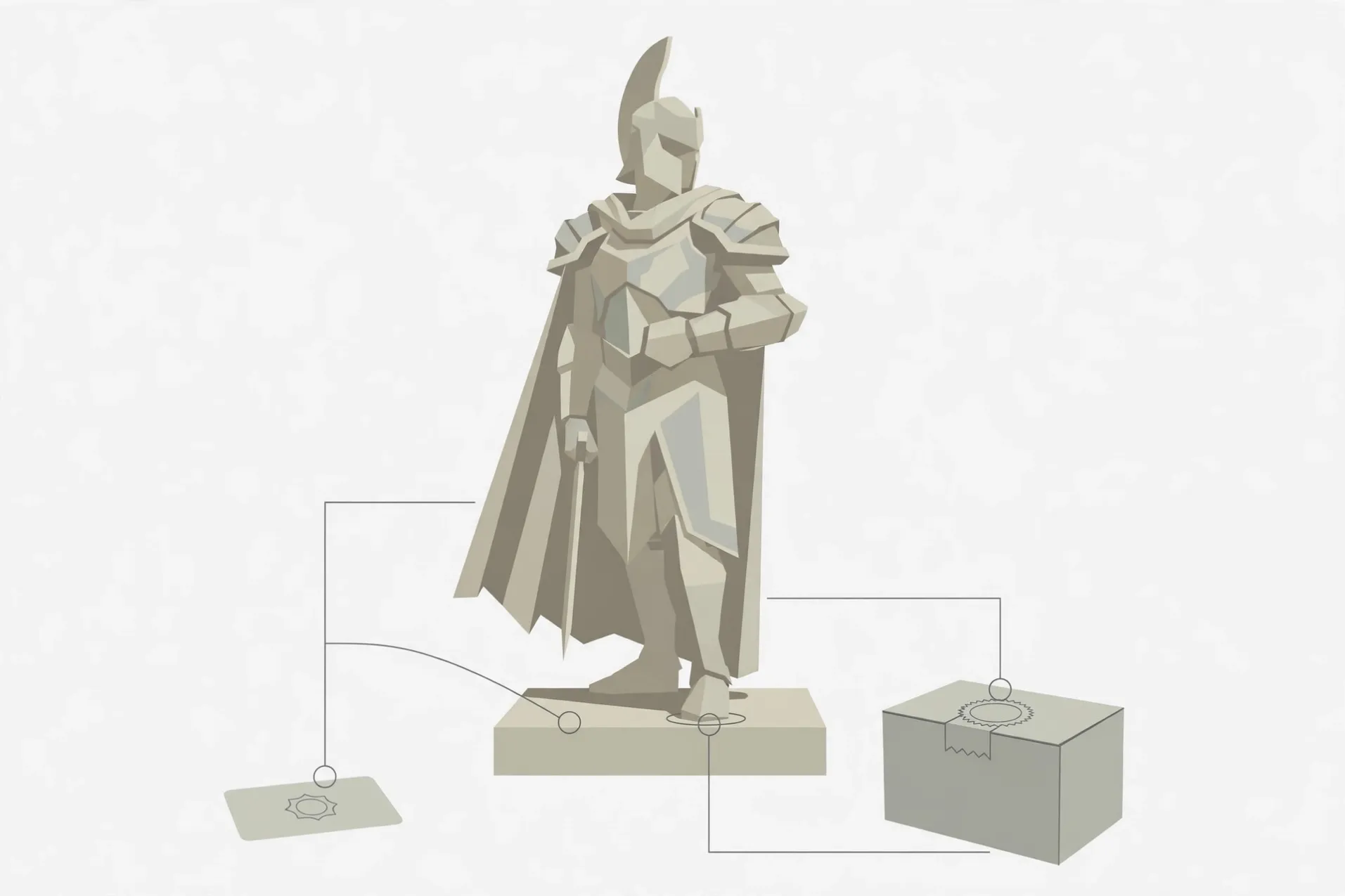
You approve a sculpt. You get a tooling quote. And the number is far higher than you expected — not because the figure is bigger or the run is larger, but because of a few small features you barely noticed: a clip under a chin, a hole through a side wall, a groove wrapping around a limb.
Those features are called undercuts. In mould-making, they are the detail that quietly doubles your tooling cost.
This is one of the most common points of confusion between a creator and a factory. The creator sees a small hook. The factory sees a mechanism — a moving steel part to design, machine, fit, and maintain for the run. This article explains what an undercut is, why a mould cannot simply open around one, what you pay for when a quote includes sliders and lifters, and how to design most of them away first.
What an Undercut Is
An undercut is any feature on a part that prevents the mould from opening in a straight line.
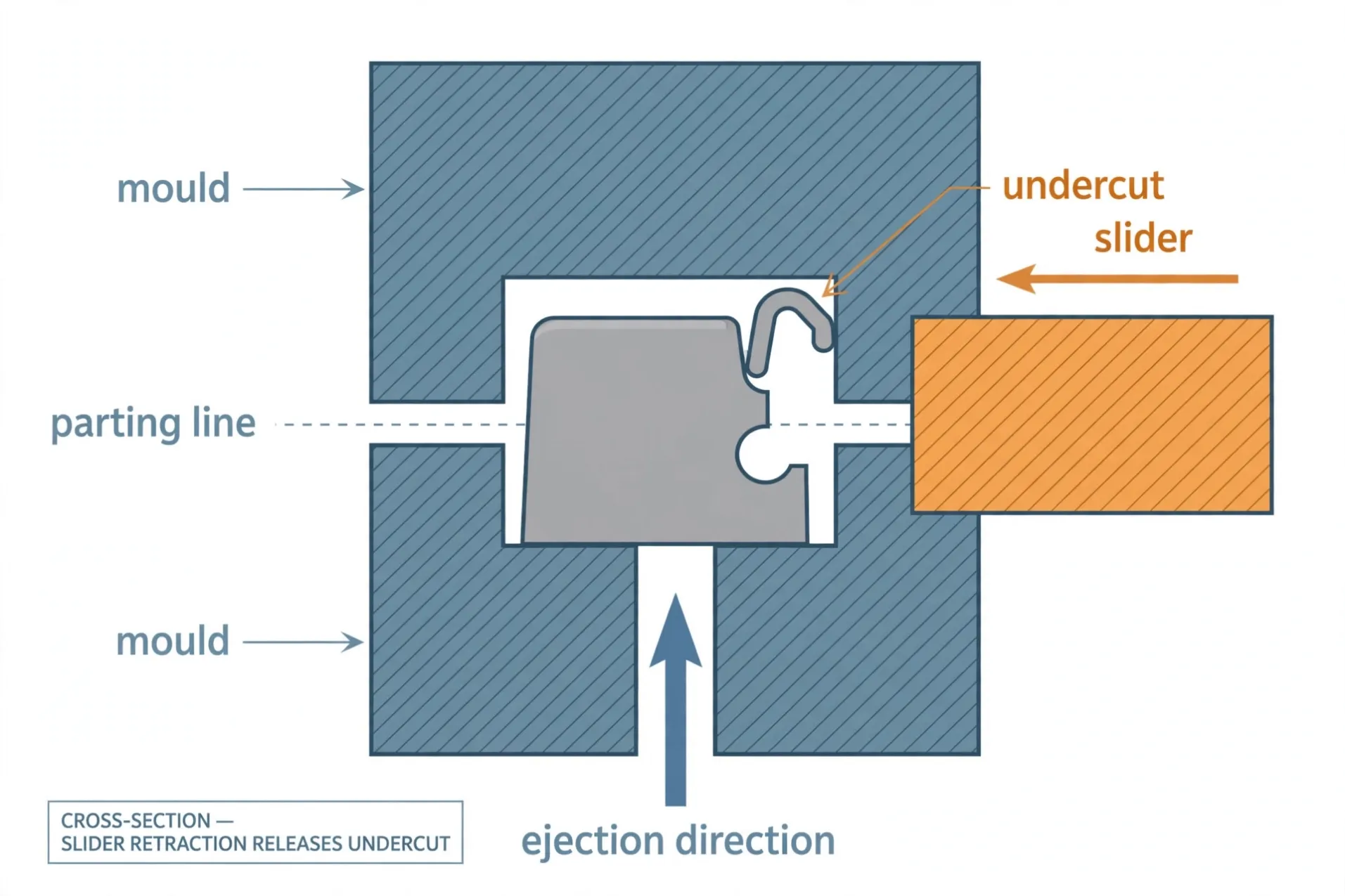
Picture a simple two-part steel mould: one half moves up, the other stays down, and the finished part drops out between them. That works only if every surface faces the direction of opening or angles away from it. The moment a feature points sideways — or hooks back toward the mould — the part is trapped.
Common undercuts in collectible figures include clips and snap hooks (a hand clipping onto a weapon, a cape fastening to a shoulder), side holes (an opening for a peg, pin, or cable), grooves and recesses (a channel wrapping around a limb, often for a strap or belt), and threads (a screw thread on a neck joint or base connector).
None of these are exotic. A sculptor adds a clip because the design needs one; a product team adds a side hole because an accessory must plug in. The problem is not that undercuts exist — each one changes what the mould has to do, and that change shows up in the tooling quote.
Why the Mould Can't Just Open
A mould opens in one direction. That is the whole design of it: two halves, one straight pull apart.
An undercut sits across that direction. If the mould tries to open straight, either the part is forced past the steel holding it — tearing the plastic, snapping the clip, or gouging the surface — or the steel itself is damaged and the mould must be repaired before another part can be made. Neither is acceptable in production.
So the factory has a choice: remove the undercut, or build a mechanism into the mould that moves out of the way before it opens. The first costs nothing in tooling. The second is what shows up on the quote — and it is invisible in a render, living inside the mould in steel parts that move sideways while the rest of the mould moves up and down.
Sliders, Lifters, and Inserts: What You're Paying For
When an undercut cannot be designed out, the mould needs a moving mechanism. Three common ones, each solving a different kind of undercut:
Sliders move sideways. A steel block slides out from the side of the mould before the two halves open, freeing a side hole, a side clip, or a groove. They add a machined block, a guide, and a driving mechanism — one more moving part to fit and maintain across the run.
Lifters move at an angle. They handle undercuts inside a part, such as a hook on an inner wall: as the mould opens, the lifter travels diagonally, pulling the hook clear before the part is ejected. They are compact, but the angle must be exact, and the lifter wears with every cycle.
Inserts are hand-loaded. A small steel piece goes into the mould by hand before each shot, forms the undercut, and comes out with the part afterwards. Inserts are the simplest mechanism and the cheapest to build — but they slow every cycle, because someone must load and remove the insert by hand, every single time.
A single undercut might need one mechanism. A figure with four undercuts might need four. Each mechanism is extra steel, extra machining, extra fitting time, and a part that can wear out, jam, or need replacement during the run. That is what you are paying for — not the hook, but the machinery that makes the hook possible.
Not every factory handles undercuts the same way. As one mould-making guide notes, undercuts are as much a supplier question as a design question: a factory that rarely builds sliders and lifters will quote more cautiously than one that builds them every week. If your design has undercuts, ask how many slider and lifter moulds the factory has built.
The Cheapest Undercut Is the One You Design Out
Before you accept a quote with mechanisms in it, ask whether the undercut needs to be there at all. Most undercuts in a first sculpt are there by habit, not by necessity — and a small design change can remove the mechanism entirely.
Change the draft angle. A perfectly vertical wall traps the mould. A slight taper — a draft angle — lets the part slide out, turning an undercut into a clean release with no visible change to the figure.
Move the parting line. If an undercut sits just below the line where the two mould halves meet, moving that line a few millimetres can put the feature on the other half, where it releases cleanly. Ask the factory's tooling engineer — it is often the cheapest fix available.
Change the clip direction. A snap hook pointing sideways needs a slider. The same hook, rotated to point in the direction the mould opens, may need nothing at all. The function is identical; the tooling is not.
Split the part. A groove wrapping around a limb is an undercut in one piece; in two pieces, each half releases cleanly and the halves are glued or clipped together afterwards. Splitting adds an assembly step but can remove a mechanism — and assembly is usually cheaper than tooling. (See How to Plan Part Breaks Before Tooling a Collectible.)
None of these changes make the figure worse. They make the figure mouldable — a different thing from making it beautiful, and just as important.
When the Undercut Is the Product
Some undercuts cannot be designed out, because the undercut is the point. A snap clip holding a weapon in a hand has to hook. A threaded connector has to thread. A recess for a strap has to recess.
When that is the case, the conversation changes. Instead of "can we remove this?", ask "which mechanism, and what does it cost in tooling, cycle time, and maintenance?" A few questions worth asking:
- How many mechanisms does this design need, and which undercut does each one serve? A quote should answer this feature by feature. If it cannot, the tooling review has not been done yet.
- What happens if a mechanism wears out mid-run? Sliders and lifters wear. Ask whether a worn slider means a repair or a replacement, and how long production stops for.
- Can one mechanism serve two undercuts? Two features on the same side of a part can sometimes share a single slider. It is worth asking; when it works, it saves a mechanism.
- Is there a simpler mechanism? A hand-loaded insert is slower per cycle but cheaper to build than a slider. For a small run, the insert may be the better deal; for a large run, the slider pays for itself in cycle time.
The point is not to avoid undercuts at any cost. It is to know, before you approve the quote, which undercuts you are keeping, what each one costs, and why.
Resin vs Injection: Undercuts Behave Differently
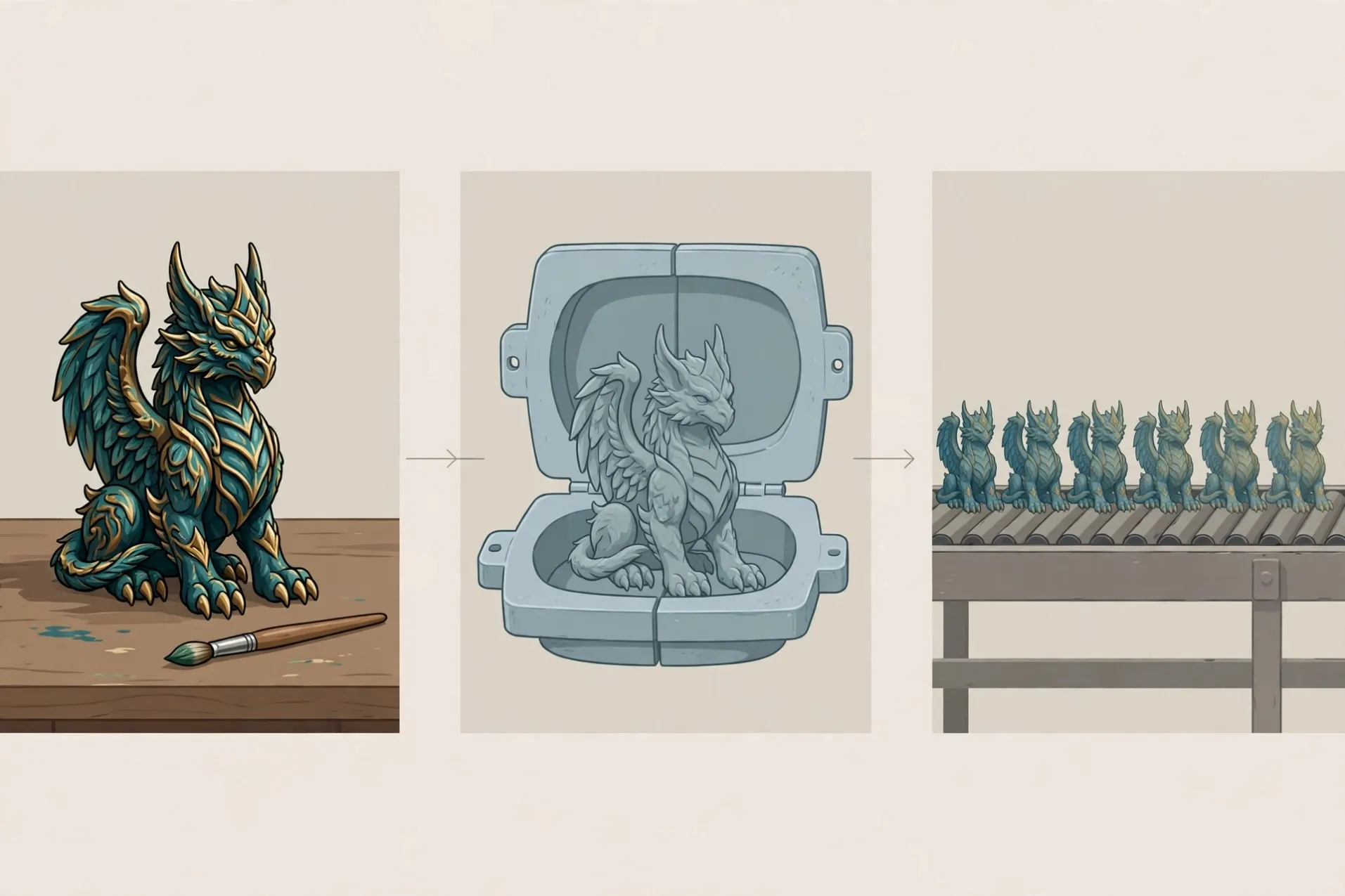
Undercuts are a very different problem in resin casting than in injection moulding — and this is where many first-time creators get confused, because the same sculpt can be cheap to cast in resin and expensive to inject in PVC or ABS.
A resin mould is made of silicone, and silicone is flexible. When a resin part with a small undercut is pulled out, the mould flexes, the undercut pops free, and the mould springs back. Small clips, shallow grooves, and gentle hooks often release with no mechanism at all. That flexibility is one reason resin is forgiving for complex sculpts — and one reason a sculpt that casts beautifully in resin can be a problem when the same design moves to injection moulding.
A steel injection mould does not flex. It is rigid, and it opens in one straight direction. Every undercut needs a mechanism, or the part cannot come out. There is no middle ground.
This matters when you choose a material route. If your design is full of undercuts — clips, hooks, side holes — resin casting may be the cheaper path, because the flexible mould absorbs them. If you need the durability and volume of PVC or ABS injection, the undercuts must be reviewed one by one, and the tooling quote will reflect every mechanism they need. (See F028 — Steel Mould or Silicone Mould and What Should Be Approved Before Tooling a Collectible.)
One more thing: a silicone mould has a shorter life than a steel mould, and it wears fastest exactly where it flexes most — around undercuts. A resin mould with heavy undercuts needs replacing sooner than one without. The cost does not disappear in resin; it just moves from the tooling quote to the mould replacement schedule.
Ask for the Undercut Count Before You Approve the Quote
Here is the practical habit that saves the most money: before you approve any tooling quote, ask the factory for the undercut count.
Ask for it in writing, feature by feature: how many undercuts the design has, where each one is, and how each will be handled — designed out, slider, lifter, or insert. Then ask for the quote to be broken down the same way, so you can see what each mechanism costs.
If the factory cannot give you that breakdown, the tooling review has not been done yet — and the quote is an estimate, not a price. That is the moment to pause, not to approve. At Mancheng, undercuts and the demoulding plan are reviewed at the part-break stage, before tooling begins, and the PVC injection work is managed with the partner factory so the mechanism plan is agreed before the steel is cut.
A good quote tells you what you are paying for. An undercut count is how you read it.
Sources: Longman Toys, "Custom Toy Quotation Breakdown: Cost Lines Explained" (undercut complexity as a tooling cost driver — https://www.longmantoys.com/blog/custom-toy-quotation-breakdown-cost-lines-explained); ZetarMold, "Injection Mold Undercut Design" (each undercut needs a slider or lifter mechanism and extends lead time — https://zetarmold.com/injection-mold-undercut-design/); UL Prospector, "The Cliff Inside the Mold: What Undercuts Teach Us About Making Things" (undercuts as a supplier-selection question — https://ulprospector.ul.com/22677/pe-the-cliff-inside-the-mold-what-undercuts-teach-us-about-making-things/). No specific tooling prices are quoted from these sources; the article discusses structure only, as the framework requires.
Illustration: the cross-section diagram above is a generated illustration (Illustration), not a photograph of a real mould.
Request a Quote
Have a design with clips, hooks, or side details and want to know what they mean for tooling? Send your files to elina.liu@manchengcollectibles.com or request a quote — tell us about the undercuts, and we will review the demoulding plan with you before the quote is written.
About Mancheng Collectibles: Mancheng Collectibles is a B2B OEM/ODM manufacturer in Dalingshan Town, Dongguan, China, with 10+ years of experience making resin statues and busts, PVC/ABS figures, 1/6 scale figures, and prop replicas with electronics. We manufacture under client authorization — design and IP always belong to the client. No fixed MOQ; every project is assessed on its own. No public prices.