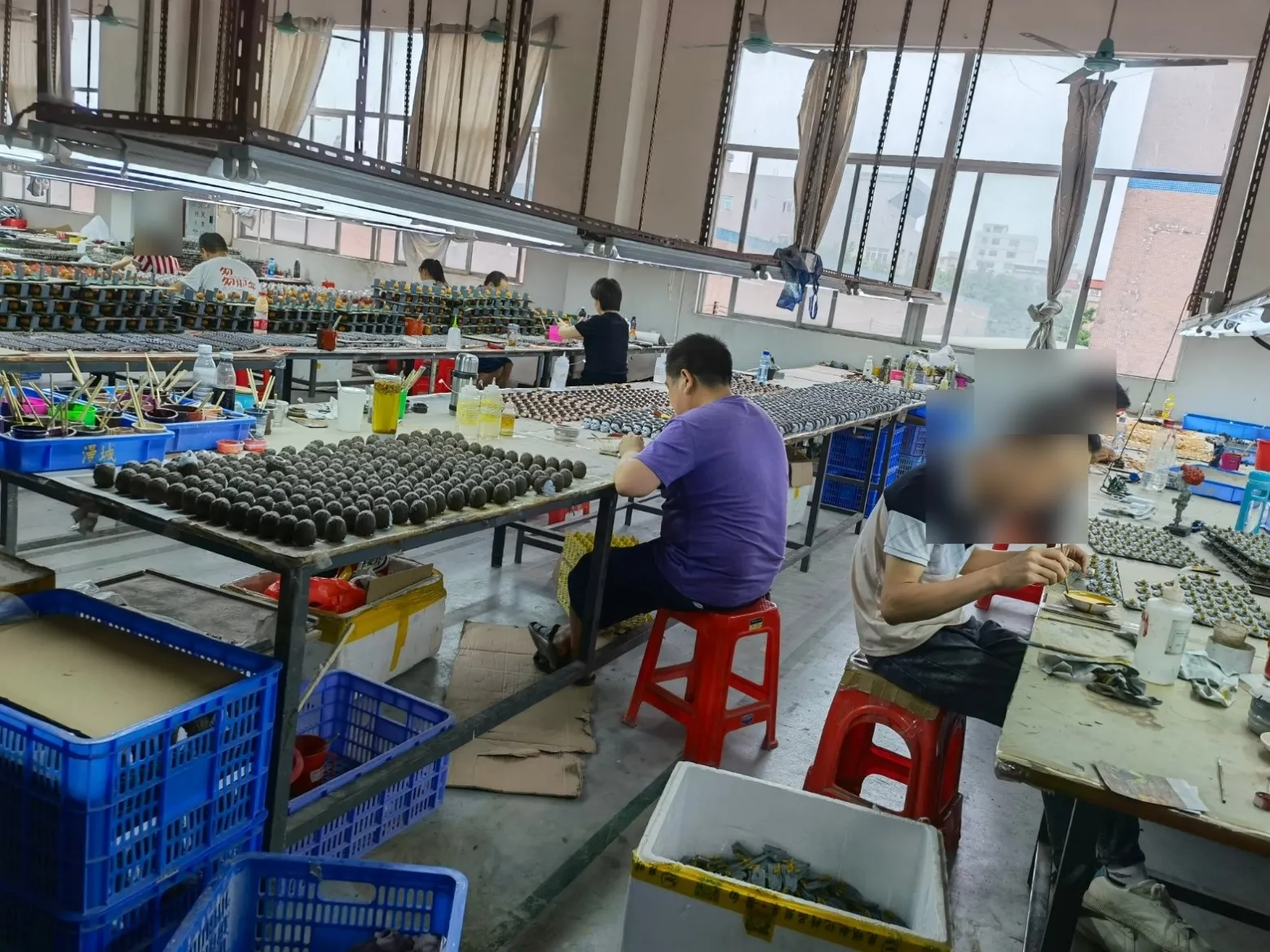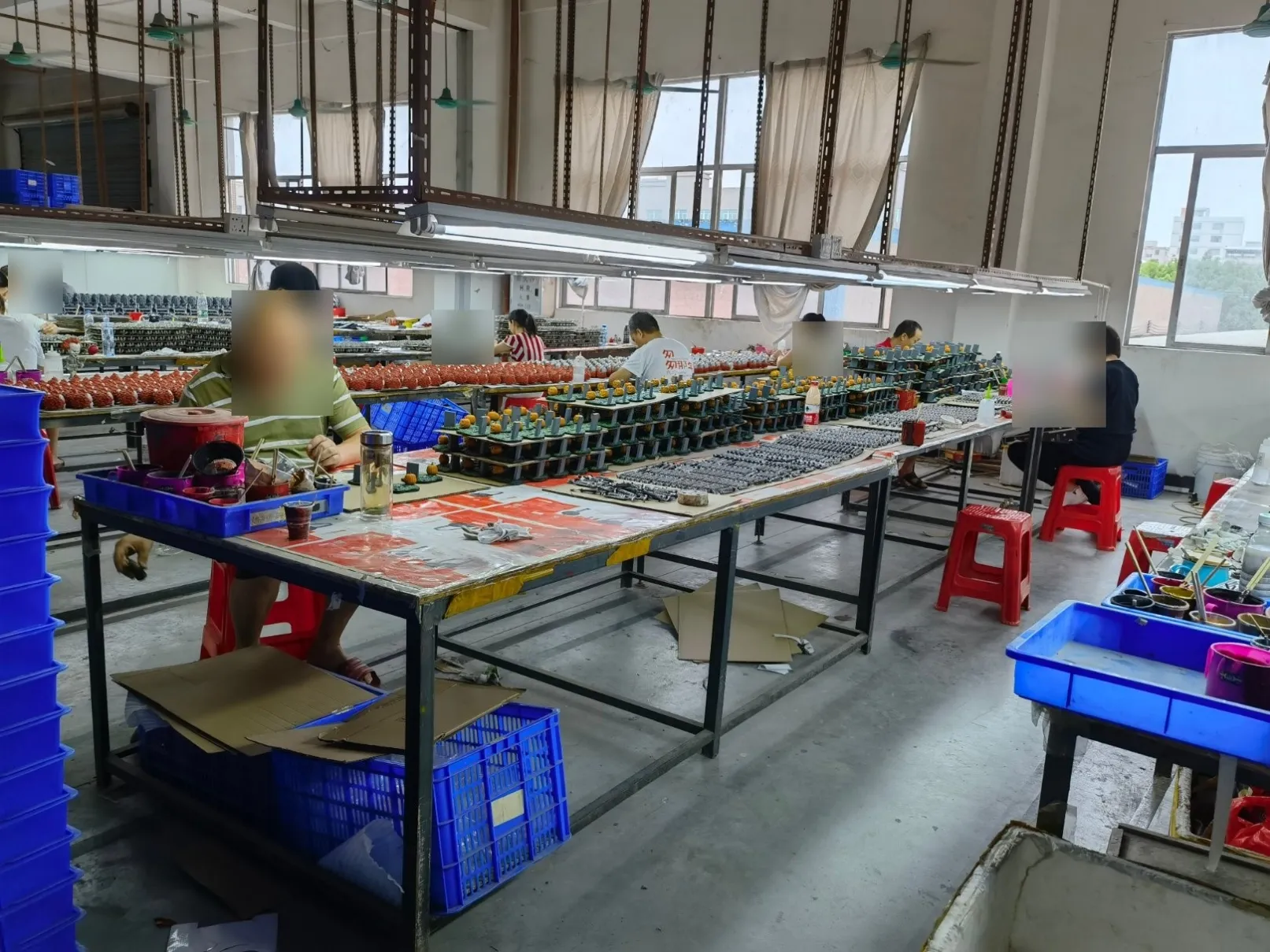
Paint That Flakes Years Later: The Primer Step Some Factories Skip
A statue can look perfect on arrival and still flake years later. The missing step is often primer — why it matters, how to check for it, and what to put in the paint spec.
Paint That Flakes Years Later: The Primer Step Some Factories Skip
A collector opens a box they have kept sealed for three years. The statue inside was flawless when it arrived. Now the paint on one shoulder is lifting in thin curls, and a flake comes away on a fingertip. Nothing was dropped. The piece simply sat there — and the paint gave up.
This is one of the most frustrating defects in the collectibles world, because it arrives long after the return window has closed and long after the factory has moved on to the next project. It is also one of the most preventable. In many of the cases collectors report, the cause is the same: the paint was applied straight onto bare resin, with no primer underneath.
Why Paint Flakes Years After Delivery
Paint failure rarely looks dramatic at first: a hairline crack along an edge, a small blister, a patch that feels slightly loose under a fingernail. Months later, a whole section can peel away in sheets.
There are two broad causes. The first is adhesion failure: the paint never bonded properly to the surface underneath, so it separates as the material underneath moves with temperature and humidity changes. The second is environmental ageing: heat, ultraviolet light and damp slowly degrade the paint film itself. Only the first can be prevented on the factory floor.
The reason the problem takes years to show is that a weak bond can hold for a long time. A paint layer sitting on smooth, unprimed resin may look perfect at final inspection, survive packing and shipping, and survive its first year on a shelf. Resin expands and contracts with temperature far more than the paint film does. Each small cycle works the bond a little looser, until one day the paint stops holding — and it looks as if it happened overnight. It did not. It was failing slowly from the day the piece left the factory.
That delay is what makes the defect so damaging for a brand. By the time collectors notice, the whole production run is in the market, and the brand is answering the same complaint from dozens of buyers at once.
What Primer Actually Does on Resin and Polystone
Primer is not colour. It is the layer between the cast surface and the colour coats, and its job is to give the paint something to grip.
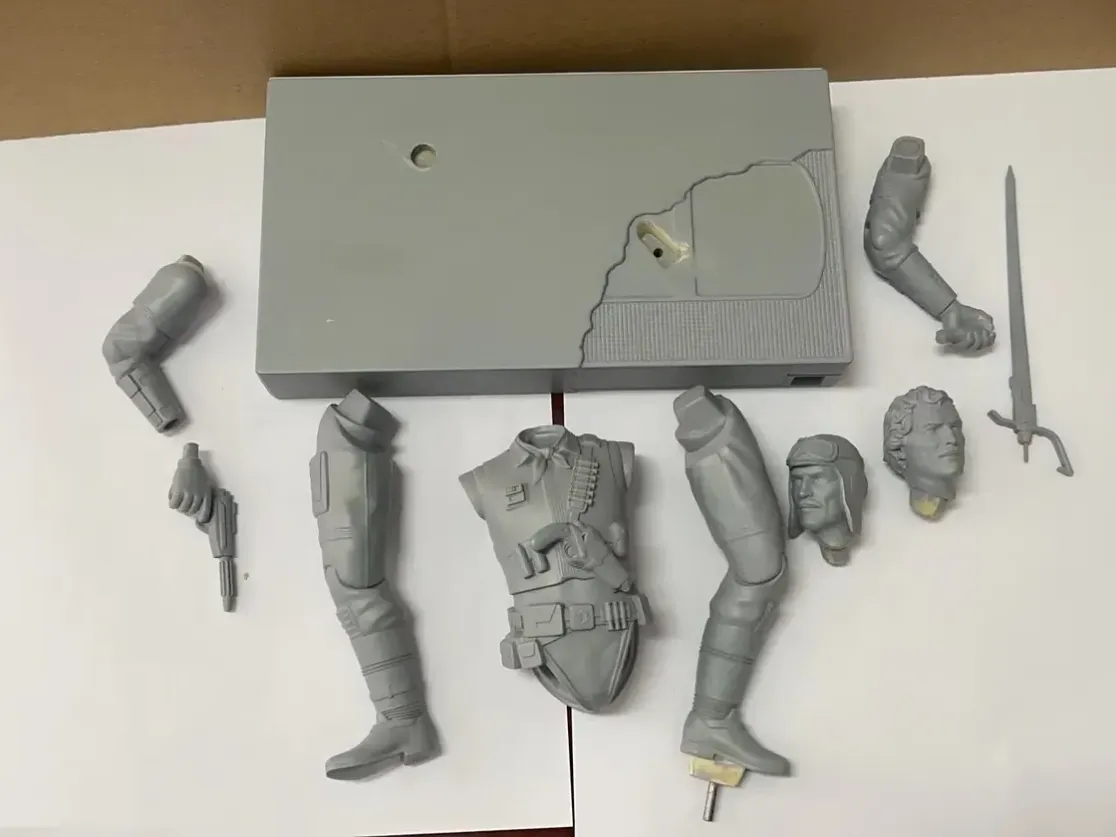
Cast resin and polystone are smooth, dense and sometimes slightly oily at the surface. Paint applied directly to that surface has little to hold on to. A primer coat does three things: it bonds to the resin surface, keying into the microscopic texture of the cast; it presents a uniform surface the colour coats can grip; and it seals the cast, so residual release agent, dust or moisture cannot work its way up into the paint layers later.
Without primer, the colour coats are effectively sitting on a polished surface, held by surface tension and hope. Skipping the step saves a little time and material on every piece, which adds up across a production run — but the saving is invisible to the buyer at delivery, and the failure is visible to everyone three years later. It is the worst kind of corner to cut: the factory pockets the saving and the brand pays for the failure.
How to Tell Whether Primer Was Applied
A buyer cannot see primer under finished paint. That is the whole problem. But there are ways to check before a production run is committed.
The most direct check is a destructive sample inspection. Take one cast piece pulled at random after the primer stage and cut a small cross-section through the paint layers. Under magnification, the layer structure is visible: resin, primer, colour, clear coat. If there is no distinct primer layer, the step was skipped. A single destructive check per batch costs one piece and settles the question.
A second check is procedural. Ask the factory for its paint process record for the run: the primer product name, the application method, the drying or curing time, and the batch records showing the step was signed off. A factory that actually primes will have these records. A factory that does not will answer vaguely, or describe the first colour coat as if it were primer. That distinction should be settled in writing before production starts, not discovered afterwards.
A third check is a simple adhesion test on a painted sample. A cross-hatch test — scoring a small grid into the paint, pressing tape over it and pulling it away — shows at once whether the paint is bonded or merely sitting on the surface. Paint that lifts in flakes from the grid has an adhesion problem, whatever the factory's process sheet says.
What collectors have done, in the cases reported on Statue Forum, is the reverse of this: they scraped at flaking paint and found bare resin underneath, with no primer layer at all. In the Psylocke PF thread, multiple buyers reported cracking paint and confirmed the absence of primer. In a separate long-running thread, owners of 1:1 scale and legendary scale busts reported the same finding after years of storage. The Kotobukiya Captain America thread is the sharpest version: white paint cracking on arrival, with several owners of the same piece reporting the identical fault. These are individual reports, not a survey — but the same conclusion, reached independently by different collectors on different products, is worth taking seriously.
The White-Paint Problem
White and pale colours show this failure first and worst. The first reason is visibility: a crack or flake in white paint exposes the darker resin beneath, so the defect is obvious from across the room. The same failure in a dark colour may go unnoticed for longer.
The second reason is in the paint itself. White pigments are used in heavy loadings, and white paint films tend to be thicker and more brittle than darker colours. A thick, brittle film is less able to flex as the resin underneath expands and contracts, so it cracks where a thinner, more flexible dark coat might hold. That is why a statue can flake on its white costume and hold perfectly on its dark base, even though both were painted in the same run.
Storage Is Not an Excuse
When collectors report flaking, the first response they often hear is about storage: the piece was kept somewhere too warm, too damp, or too sunny. Storage conditions matter — heat and humidity swings will accelerate any paint problem — but they cannot explain away a missing primer layer.
A properly primed and cured paint system survives normal indoor storage. The collectors reporting these failures are not, for the most part, keeping statues in attics or damp garages. Many report pieces kept boxed, indoors, in ordinary living conditions. The paint failed anyway, because the bond was never sound.
That distinction matters for how a brand handles the complaint. Telling a collector their storage caused the problem, when the real cause was a skipped process step, damages trust. The honest answer is to check the paint process and fix it for the next run.
What to Write Into the Paint Spec
None of this is fixed by good intentions. It is fixed by writing the primer step into the paint specification so precisely that it cannot be quietly dropped.
The specification should name the primer product or, at minimum, the primer type suited to the resin being used. It should state the application method, the number of coats, and the drying or curing conditions — temperature and time — before the next coat goes on. It should state the surface preparation required before primer: the cast piece cleaned, de-greased and free of release agent, because primer cannot bond to a contaminated surface either. That preparation is covered in our guide to what should be checked on resin castings before painting, and it is part of the same chain: clean cast, primer, colour, clear coat.
The specification should also state how primer will be verified: a destructive cross-section check on one piece per batch, or a documented inspection at the primer stage, with a signed record. The primer layer should be treated as a hold point — a stage the factory signs off before moving on — not as an assumption.
Finally, the specification should sit in the same document that fixes the rest of the finish. Our guide to how to specify surface finishes for a collectible before sampling sets out that approach: finish, colour, gloss and inspection standard, all agreed before the first painted sample.
A Pre-Production Adhesion Test
The cheapest moment to find an adhesion problem is before production, on a painted sample, not after a thousand pieces have shipped.
Before the run starts, ask for a small batch of painted test pieces — the same resin, the same primer, the same paint system, cured under the same conditions as production. Put them through a simple programme: a cross-hatch adhesion test, and a period of temperature cycling — warm days and cool nights, or a controlled warm/cool cycle — followed by another adhesion check. A paint system that is going to fail in three years will often show weakness in weeks under cycling, in the form of hairline cracks or reduced adhesion scores.
This is not an expensive test — a few painted pieces and a few days. What it buys is certainty about the one layer the buyer will never see, and the one step a factory is most tempted to skip. A factory that is confident in its primer process will welcome the test.
Paint that flakes years after delivery is not a mystery and it is not bad luck. In the cases collectors keep reporting, it is a specific, preventable failure: colour applied to bare resin, with no primer in between. The fix is equally specific — surface preparation, a named primer, a written specification, and an adhesion test before the run. None of it is visible in the finished product, which is exactly why it has to be written down, checked, and signed off. The paint your buyers see is only as good as the layer underneath it that they never will.
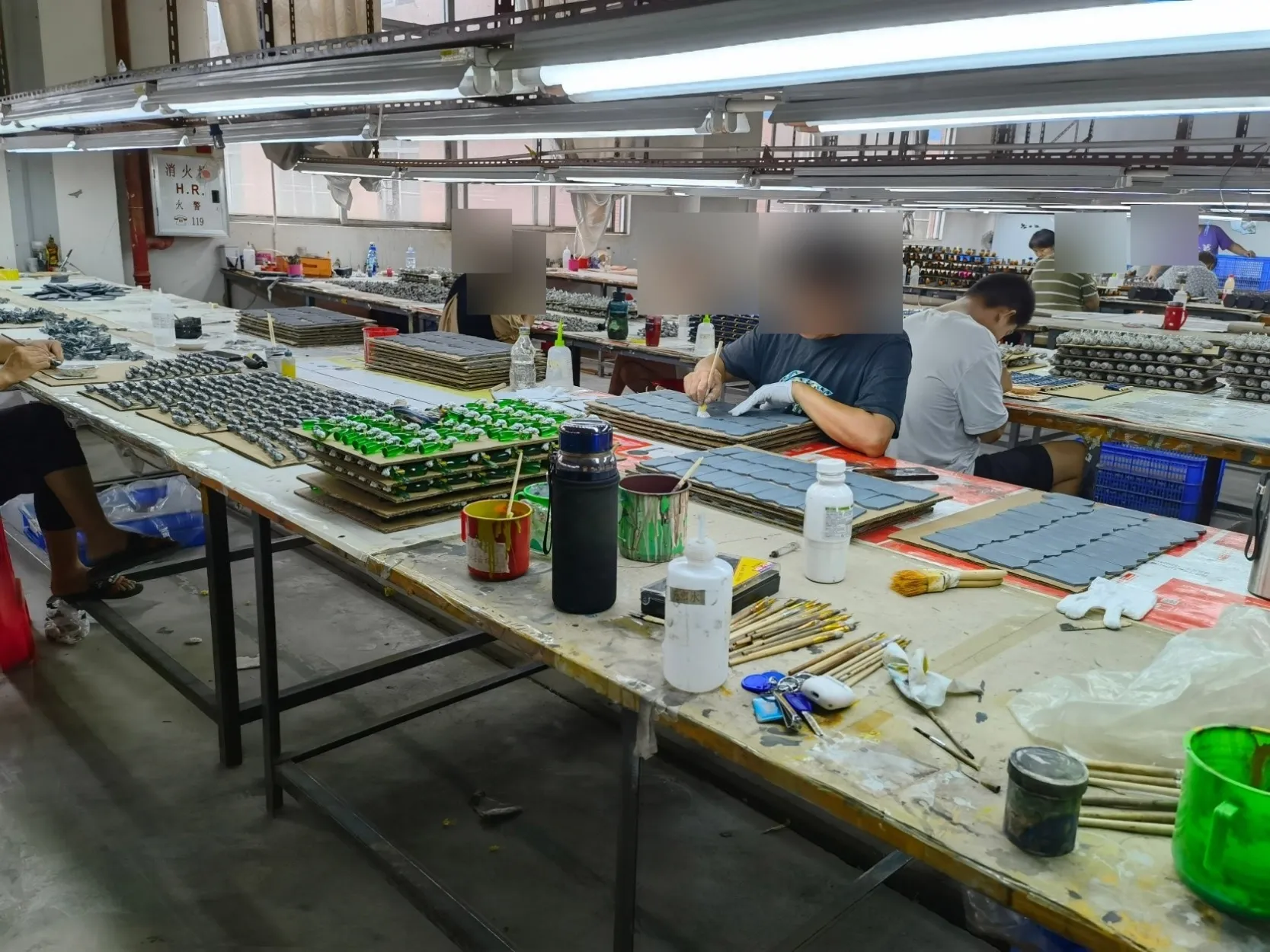
Mancheng Collectibles is an authorized OEM manufacturer in Dalingshan, Dongguan, China, with over 10 years of experience producing resin statues and busts, PVC/ABS figures, 1/6 scale figures, and prop replicas with electronic features for collectible brands and product development studios. Paint is checked in stages — during painting, after painting, and before packing — so finish defects are caught on the factory floor, not in a collector's home three years later.