Oct 31, 2026
When Can Painted Collectible Parts Move Into Assembly?
Assess painted collectible parts for the actual handling, fixture and contact demands of assembly rather than relying only on a dry-looking surface.
Move painted collectible parts into assembly when the actual coating system is ready for the handling, fixtures and contact involved in that next operation. A surface that looks finished or feels dry during a brief check has not automatically demonstrated that readiness.
The release decision should connect the paint supplier's instructions with the production sequence and representative observations on the actual parts. It should not rely on a universal waiting period borrowed from another paint or on a photograph of neatly arranged components.
Separate appearance approval from handling readiness
A customer can approve a color or finish while the production team still needs to establish when the part can be supported, gripped or fitted. These are related decisions with different evidence.
For acrylic artist paints, Golden's technical notes on drying explain a distinction between surface drying and drying through the film. This is a primary-source example of why a touch observation can be incomplete. It does not identify the coating on a particular collectible, prescribe Mancheng's process or supply a waiting time for resin, PVC or ABS products.
Use the guidance for the actual paint, topcoat and substrate combination. Confirm which condition permits the next operation and which conditions require further evaluation. Do not apply a generic heat treatment or extra clear coat to an unexplained surface condition.
Identify what assembly will do to the finish
Review the next handling sequence with the painting and assembly teams. Where will a hand, holder or fixture touch the part? Will it rest on a support? Does a mating component slide across a visible painted surface during fitting?
Record the contact and movement that matter to this product. A part that can be lifted by an unpainted locating feature may face different demands from one that must be held around a finished torso. The question is whether the approved sequence is suitable, not whether a careful operator can avoid all contact for one demonstration.
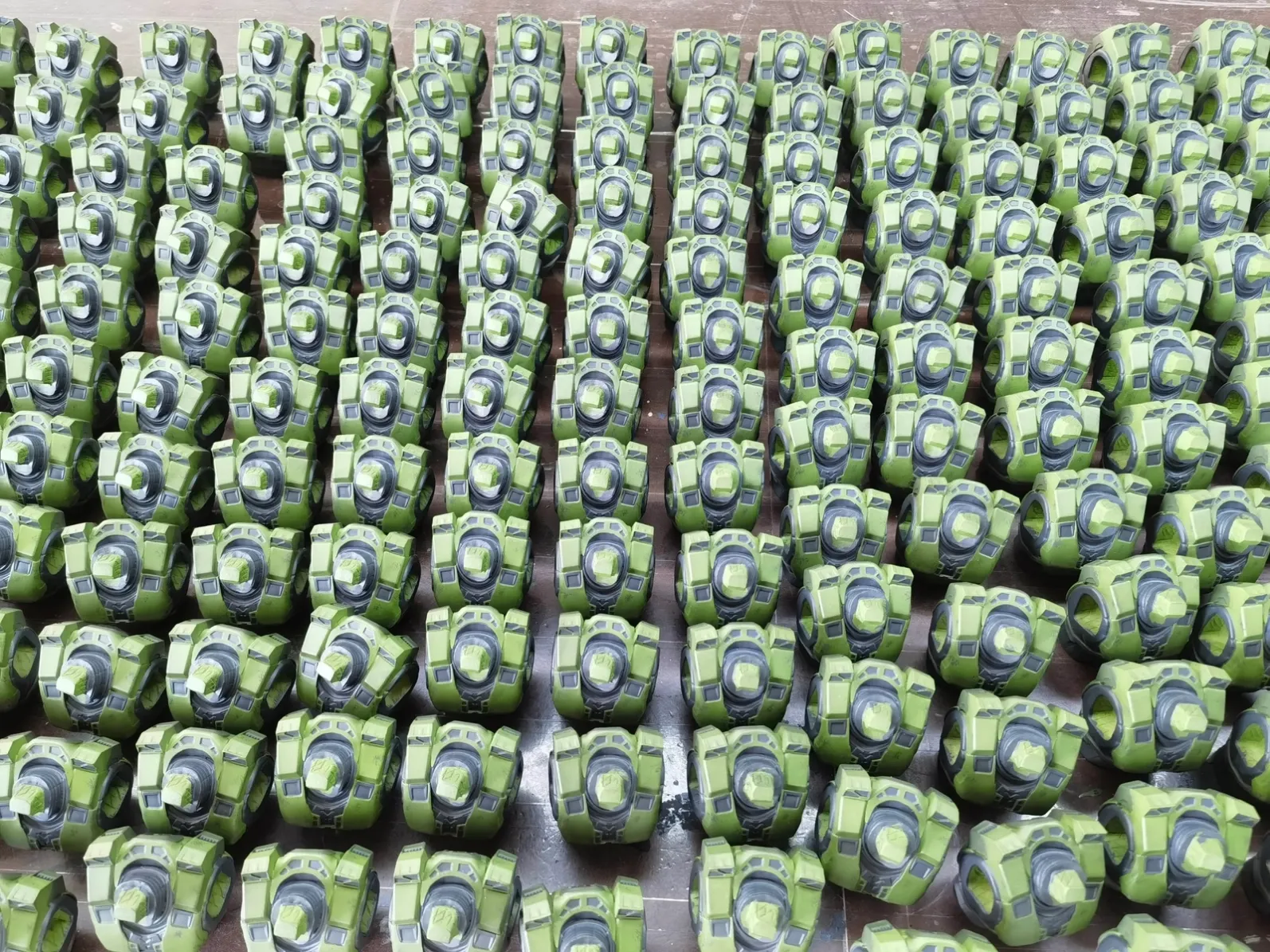
The accompanying photograph shows partially painted armor components, with masking still visible, arranged before further production work. It illustrates the stage at which handling decisions matter. It does not show a drying test, identify the coating or prove that any component has been released for assembly.
Review a representative sequence and inspect afterward
Agree an appropriate evaluation with the responsible technical team using production-intent materials and parts. Inspect the finish before the sequence, carry out the relevant handling and inspect it again under consistent conditions.
Look for observations such as a visible pressure mark, altered sheen, transferred material or a surface that adheres to its support. Record what happened and where; do not assign a chemical cause merely because the surface feels sticky.
If bagging or protective wrapping follows, assess that contact separately with the intended material and conditions. Passing a brief handling observation does not establish extended packed-contact performance. The existing packaging contact-point guide addresses where support belongs; this decision concerns when the finish is ready to encounter it.
Investigate an unexpected result before releasing the lot
Retain the affected part and relevant material and application records. Establish whether the observation appears before assembly, only after a particular contact or after storage. Check whether the sample represents the applicable production revision.
Involve the coating supplier or responsible technical specialist when the behavior is unexplained. Additional waiting may be worth evaluating, but it is not proof that every tacky surface will recover. Nor does a successful result on another material establish compatibility here.
If the finish or handling route changes, review the affected sequence again. Keep the correction and its evidence connected to the release decision, rather than allowing a verbal instruction to become an undocumented process change.
Give assembly a usable release reference
Define the applicable finish revision, handling method and accepted condition. Separate parts awaiting a decision from parts released to the next operation. The production team needs an understandable status, not just an attractive paint-master photograph.
This belongs within collectible development and production, where painting, assembly and packing can be considered together. A finish is ready for the next stage when the evidence covers that stage's actual demands. Looking complete is one observation; being ready to handle is a decision that needs its own basis.
Frequently asked questions
Is there one safe drying time for every collectible finish?
No. Follow the actual coating system's guidance and evaluate the relevant materials, application and conditions. This article prescribes no universal time.
Does a sticky surface prove the paint was packed too early?
No. It establishes a condition to investigate. Record when it appeared, the materials and contact history before deciding the cause.
Does handling approval also approve long-term protective wrapping?
No. Review the intended wrapping contact separately. The material, duration and conditions may differ from the assembly operation.