Working Pockets on 1/6 Clothing: What Should the Sample Prove?
Review working pockets on 1/6 clothing with the intended accessory, dressed-figure access, empty and occupied appearance, and a complete retrieval route.
A working pocket on 1/6 figure clothing should be reviewed with the intended accessory going in and coming back out, on the dressed figure. A convincing pocket outline or miniature zipper is not enough to establish that function. The sample needs to show usable access, the intended appearance when occupied and a practical retrieval route.
This matters when a product description or display option invites the collector to store a small item in the outfit. The promise is more specific than “real fabric clothing.” It concerns the relationship between a particular garment, a particular accessory and the person expected to handle them.
Identify what the pocket is meant to hold
Name the intended item instead of approving a pocket as generally functional. A narrow card, a rounded object and a projecting handle ask different questions of an opening and its interior.
State how much of the item should remain visible in the approved display. Is the pocket meant to conceal it, show a recognizable upper section or merely suggest the outline beneath the cloth? Those are separate appearance targets. Do not enlarge the accessory or change its visible detail simply to fit an undefined pocket promise.
If no item is meant to enter the pocket, describe it as a decorative clothing detail. That can be the appropriate choice for the outfit; it should not become a working feature merely because it looks as if it could open.
Check access on the dressed figure
An opening that is accessible on a loose garment may be obstructed once the outfit is layered on the body. Review its relationship to belts, straps, bag handles, jacket fronts and the figure's arms.
Follow the actual insertion direction. Identify where the owner holds the garment and where the accessory is guided. If the proposed demonstration requires lifting a whole jacket layer or removing another accessory, decide whether that activity belongs in the intended use.
Distinguish owner handling from a factory dressing operation. A pocket filled before the garment is put on the figure has not yet demonstrated that a collector can use it afterward. Review that difference before advertising the feature.
Compare the empty and occupied appearance
Approve both conditions when both are intended display options. Observe the pocket outline, surrounding garment and the visible position of the accessory. A satisfactory empty appearance does not settle how the outfit should look with something inside.
For a hypothetical coat carrying a small notebook, decide whether the notebook should sit upright, lean deliberately or remain concealed. Then assess that arrangement on the actual intended body. This is a suggested sample-review situation, not an account of a manufactured project.
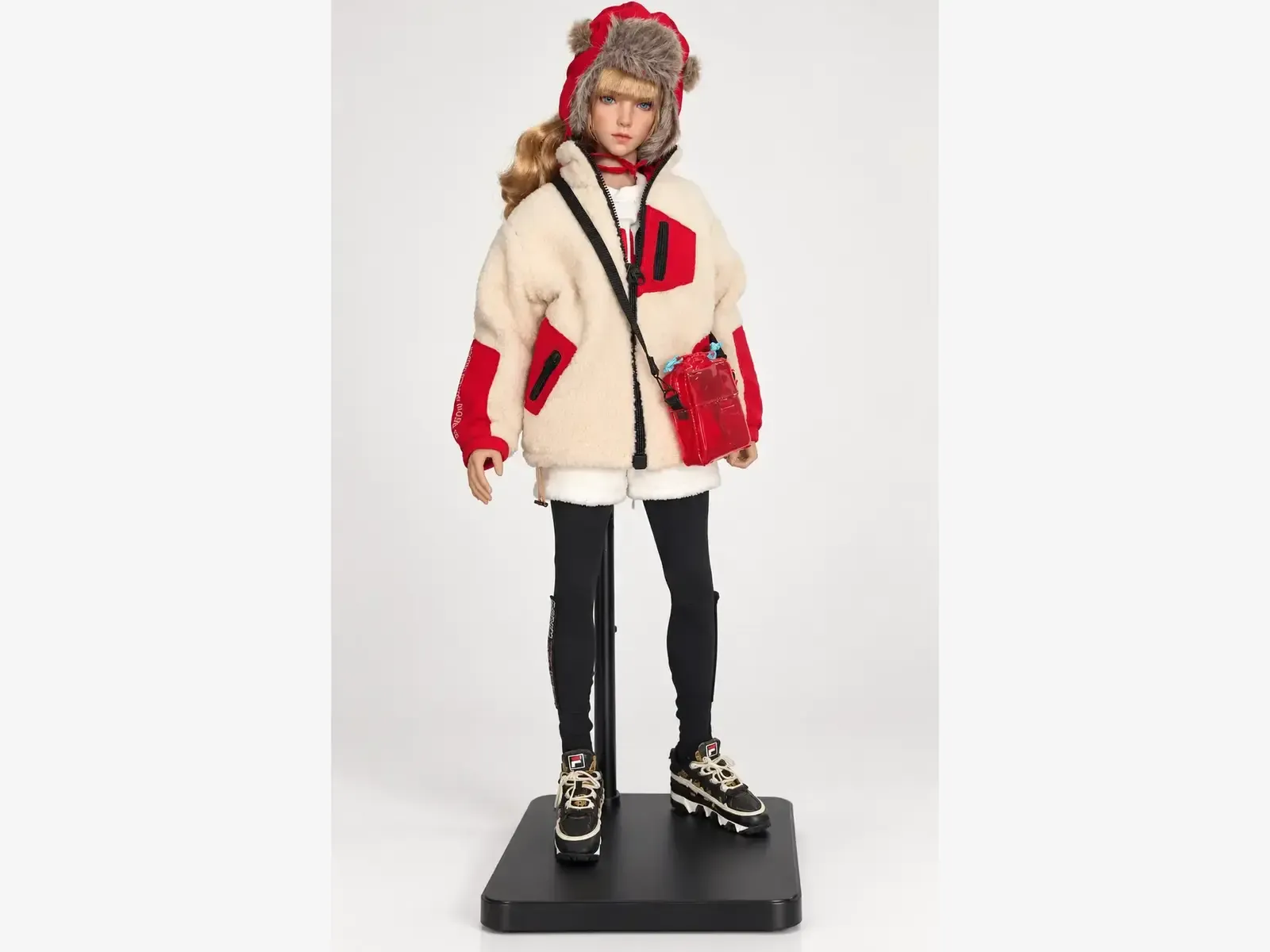
The accompanying photograph shows a figure in a winter outfit with contrasting pocket details and a shoulder bag. It illustrates the surrounding clothing and access relationships. It does not establish which pockets open, what they hold or whether a functional review has been performed.
Complete the retrieval route
Do not end the demonstration when the accessory disappears into the pocket. Take it out again using the intended method. Identify what remains available to grasp and how the owner distinguishes the opening from an adjacent fold or decorative seam.
If the proposed method depends on a separate implement, resolve whether that is appropriate and whether it belongs in the product instructions. Do not quietly introduce an undocumented tool during approval and then describe the feature as straightforward owner storage.
Record any required repeated-use review separately. One completed insertion and retrieval establishes only what was actually observed in that demonstration; it is not evidence of an unperformed durability test or a universal cycle rating.
Keep the claim and the supplied configuration aligned
Specify whether the accessory ships inside the pocket, separately packed or permanently arranged for display. The collector's first action differs in each case. The contents list and instructions should agree with that supplied condition.
This review complements fabric clothing inspection, which addresses the dressed outfit's overall quality. Pocket function needs its own accessory-specific demonstration. It is also separate from deciding whether the entire garment is removable.
Use the development and sample process to settle the feature before it becomes a product claim. A pocket earns a functional description when the intended object, dressed appearance and complete handling route have been reviewed together.
Frequently Asked Questions
Does a miniature zipper prove that a pocket works?
No. Review the opening, usable interior and complete insertion and retrieval route with the intended accessory.
Should the pocket be reviewed only when empty?
No. If an occupied display is promised, approve the accessory's position and the surrounding garment in that condition too.
Is a factory-filled pocket necessarily usable by the owner?
No. Filling it before dressing may involve access the collector will not have. Check the intended owner activity on the dressed figure.