Should a 1/6 Figure's Clothing Be Removable?
Define removable clothing on a 1/6 figure by garment, removal route, permitted body-part handling, concealed surfaces and the owner experience the product supports.
Clothing on a 1/6 figure should be removable when changing or removing it is an intended collector activity that the product has been developed to support. Real fabric does not automatically create that promise. Decide which garments the owner may remove, how they come off and what the figure should look like afterward before approving a fully dressed sample.
A jacket can look convincing in a display photograph and still be unsuitable for routine removal. An opening at the front tells us very little about whether its sleeves can pass over the hands, whether accessories must come off first or whether the owner can restore the intended arrangement.
Define removability for each garment
Avoid describing the entire outfit as “removable” when the intended activity is only taking off an outer jacket. Identify the owner-removable items individually. Distinguish an opening used during factory dressing from one the collector is expected to operate.
The same applies to layers. A removable coat over a permanently arranged shirt is a coherent product choice if that is the promised experience. It becomes confusing when product copy suggests a complete wardrobe change while the underlying construction was developed only for dressed display.
For a hypothetical figure with a jacket, shirt and decorative harness, state whether the harness comes off independently, remains attached to the jacket or must stay in place. Resolve that relationship before treating each garment as an isolated accessory.
Work backward from the removal route
Trace the route on the actual intended body. Identify what must move through each opening and in what order. A sleeve opening and a sculpted hand occupy the same physical route even if they were developed by different teams.
If a hand or another body component must be removed, decide whether that is an authorized owner operation. Do not turn factory assembly access into an owner instruction by default. The design team should identify the permitted connection and handling method; an unexplained instruction to “remove the hand” leaves a significant product decision unresolved.
Consider the complete sequence in both directions. Taking off the outer layer is only half the activity. The owner must also be able to put it back and recover the intended display arrangement without relying on an undocumented factory dressing technique.
Decide what becomes visible underneath
Removing clothing changes the visible product. Identify surfaces previously covered by the garment, including the torso, joints, attachment areas and the inside of any layer expected to remain on display.
Choose the intended result. The undressed figure might be an intermediate state used only to change outfits, or it might be a display option in its own right. Those are different appearance requirements. Specify which applies instead of expecting a dressed approval photograph to settle the condition of concealed areas.
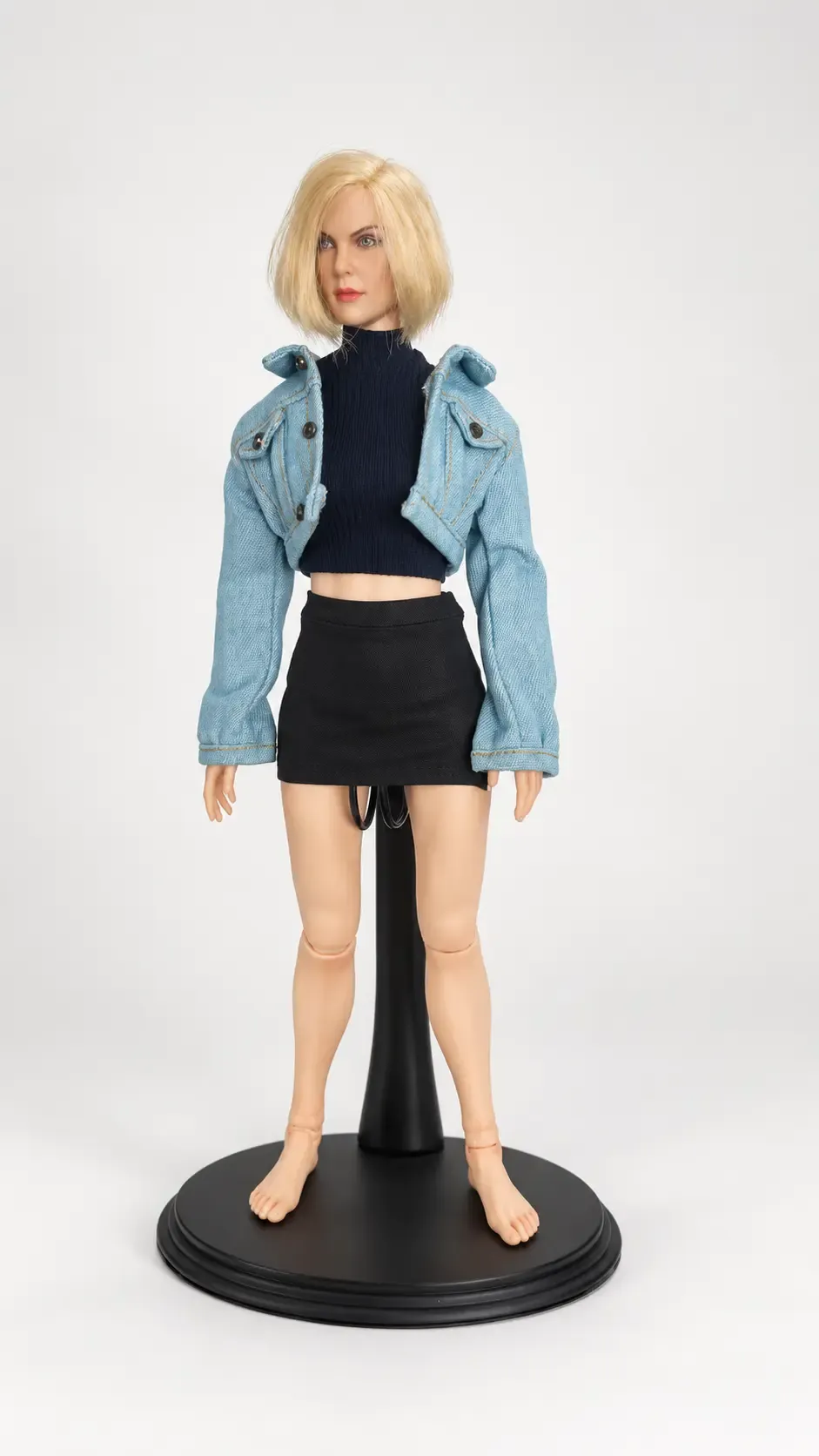
The accompanying photograph shows fabric layers on a figure wearing a denim jacket, dark top and skirt. It provides a relevant view of garment-to-body relationships. It does not demonstrate that these garments are removable or that a removal sequence has been tested.
Review the activity without coaching
When the product is intended for owner dressing, review a representative sample with the proposed instructions. Ask a reviewer who did not dress the sample to follow that sequence. Observe where identification, access or the return route is unclear before offering an explanation.
Record what the review actually establishes. A single successful demonstration by the person who developed the outfit does not show that the instructions are sufficient, and it does not establish performance after repeated use. Any required repeat-use review needs its own agreed scope and evidence; do not invent a cycle count or describe an unperformed test as passed.
Keep this decision separate from the existing fabric clothing inspection. That review addresses the quality of the dressed outfit. Here the question is whether the owner should be able to transform it, and what development must support that promise.
Describe the supported experience precisely
Carry the decision into product copy, the contents list and instructions. “Removable jacket” communicates a narrower promise than “fully interchangeable clothing.” Use the statement that matches the developed product, including any required accessory removal or excluded layers.
Agree these choices during development and sample approval. A figure intended to remain dressed can still be a well-resolved collectible. A figure sold for outfit changes needs an equally deliberate route out of the clothing and back into it.
Frequently Asked Questions
Does real fabric mean the clothing is removable?
No. The construction and intended owner activity determine removability. Fabric can also be used for clothing intended to remain dressed.
Is an opening or working closure enough to claim removability?
No. Review the full removal and redressing route, including hands, accessories, layers and any permitted body-part removal.
Must concealed surfaces look display-ready after undressing?
Define that requirement. A temporary outfit-changing state and an approved undressed display option need different appearance decisions.