Does a Collectible Weapon Accessory Need to Be Metal?
Choose actual metal for a collectible weapon accessory when it serves the product brief, with the complete construction, holding arrangement and sample evidence reviewed.
A collectible weapon accessory needs to be metal when the actual material is an agreed part of the product's value and the complete figure can accommodate it. A metallic appearance alone is not a reason to specify metal. For a non-functional miniature weapon, choose the construction around the intended object, how it is held and what the collector is promised, then approve the finished assembly in that construction.
“Metal weapon” can sound like a straightforward premium upgrade. It is still a development decision. Before adding it to the specification, establish what would be missing from an otherwise convincing accessory if it were made by another suitable route.
Separate the material promise from the appearance
Start with the requirement in plain language. Does the brief call for an actual metal component, a particular finish, a convincing sculpted shape or a specific handling experience? Those requirements can point toward different solutions. Do not let one attractive reference photograph silently answer all four.
A silver-colored blade in a rendering establishes an appearance target. It does not identify an alloy, a manufacturing method or the construction inside the handle. If actual metal matters to the release, identify which component must be metal and why. A metal shaft with a separately made ornamental head is a different proposition from an accessory described simply as “all metal.”
Mancheng's collectible product capabilities include mixed-material work. That makes a component-by-component discussion useful; it does not make every possible metal accessory suitable for every figure.
Compare complete accessory proposals
Ask for proposals covering the same visible geometry, finish target and attachment arrangement. Comparing an unfinished metal blank with a fully painted molded accessory does not settle the product decision. Neither does comparing two accessories with different levels of ornament or different assembly requirements.
For a hypothetical ceremonial staff, the important features might be an intricate head, a patterned grip and a clean transition between them. The team could consider different constructions for those areas. Each proposal should explain which features are integral, which are separate and which visible joints need approval. This is an example of a review question, not a claim about a completed project.
Keep the full cost scope visible: development, tooling where needed, finishing, joining, inspection and protective packing. Request a quotation for the actual construction rather than assuming that the material name predicts either the final cost or the quality.
Put the proposed accessory in the intended hand
An accessory should be reviewed as part of the display configuration. Record its actual mass and assess the complete figure with it installed, including the intended hand, wrist connection and any independent support. Do not infer that a previous approval covers a revised accessory merely because its outline is unchanged.
Follow the installation path as well. Can the collector place the accessory in the hand using the intended handling areas? Does doing so bring a projecting ornament close to the portrait or another finished surface? For an articulated product, include the promised display positions. For a fixed statue, review the final relationship between the hand, accessory and base.
Those observations identify what needs engineering review. They do not establish universal load limits or prove that a particular material is safe. Use the actual design and agreed review conditions rather than borrowing a result from another product.
Approve the ornament and the transitions
Material selection should not become permission to lose the design. Identify the details that carry the accessory's character: the profile of a blade, the outline of a guard, a carved emblem or the relationship between the head and shaft. Compare the proposed production geometry with that reference before accepting a material change.
Ask the supplier to explain any necessary changes to thickness, detail, part division or attachment. Approve those changes explicitly. A proposal that preserves the long silhouette but changes an important emblem may fail the artistic requirement even if the assembly is otherwise practical.
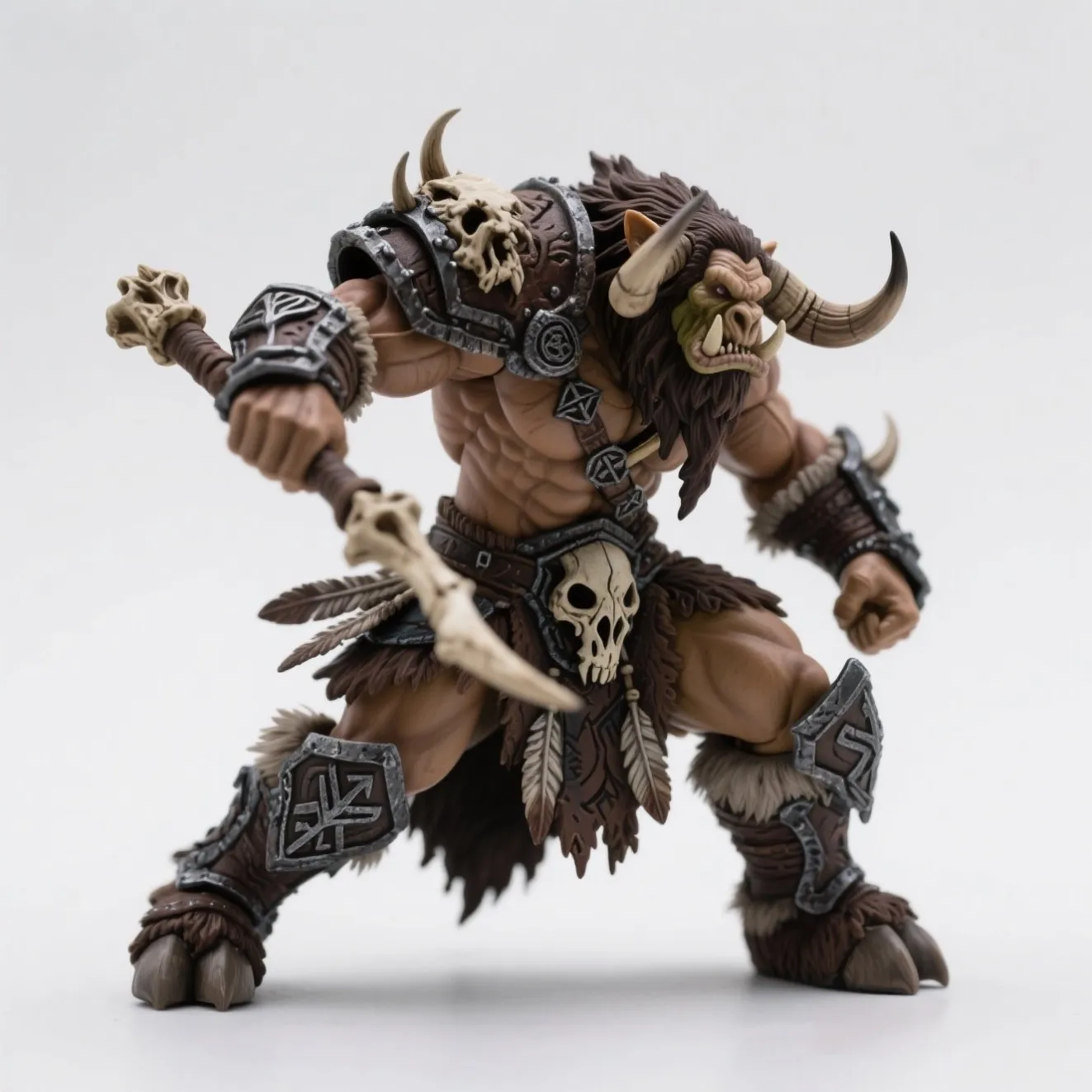
The pictured collectible shows a long-handled accessory alongside sculpted ornaments and metallic-looking armor. It illustrates the shapes and component relationships under discussion. The photograph does not identify the accessory's material or demonstrate a load, handling or durability test.
Match the sample's evidence to the decision
A shape sample can help settle proportion and access. If its construction differs from production, record that limitation. It cannot by itself settle how the intended finished accessory behaves in the figure's hand.
Before final approval, request a representative sample of the proposed construction with the intended finish and connections. Review visible seams, the junction with the grip, intended handling areas and the packed arrangement. Define what the sample is being accepted for and which questions remain open. The development and production process should carry that identified construction forward, rather than treating every sample with the same silhouette as interchangeable evidence.
Choose metal when its actual presence serves the product and the reviewed assembly supports that choice. Choose another suitable construction when it delivers the intended accessory more convincingly. The useful upgrade is a better resolved collectible, with a material description the product can substantiate.
Frequently Asked Questions
Does a metallic-looking accessory have to contain metal?
No. Appearance does not establish composition. Keep the finish reference separate from the verified material specification.
Can a metal accessory replace an approved accessory without another review?
Treat it as a construction change. Review the complete accessory, connection, display configuration and packing implications before accepting the substitution.
Is an unpainted shape sample enough to approve the metal version?
It can answer defined geometry questions. Final construction, finish and assembly decisions need representative evidence for the version intended for production.