USB or Battery Power for an LED Collectible? Start With the Display
Choose USB or battery power for an LED collectible by reviewing display location, cable routing, control access, battery replacement and owner setup.
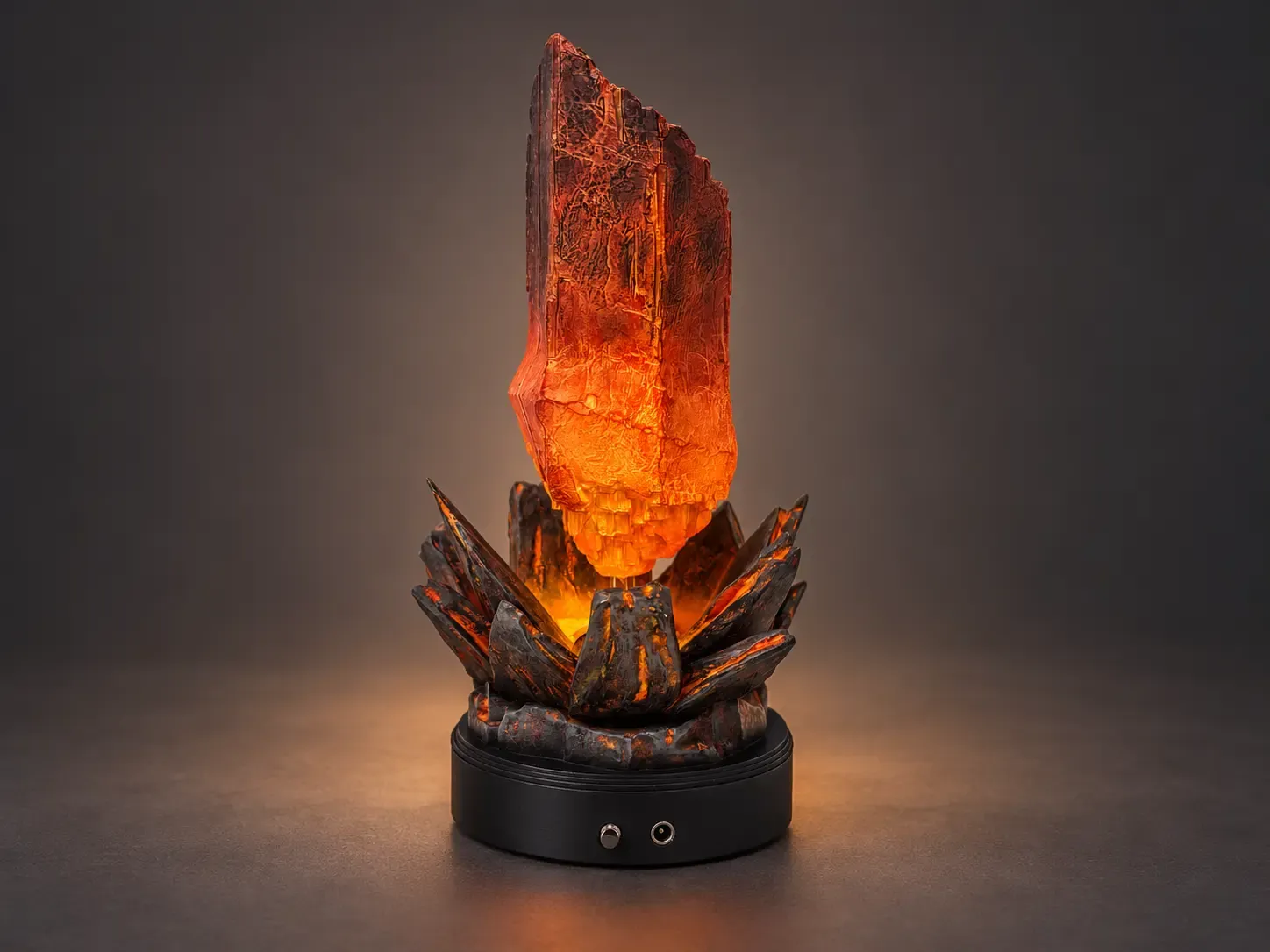
Neither USB nor battery power is automatically better for an LED collectible. The right choice starts with the intended display routine: where the piece will sit, how long the light should run, whether a cable can be hidden, how the owner reaches the controls and what must be removed to replace a battery.
Power is part of the product experience. If it is decided only after the illuminated feature has been approved, the team may be left trying to hide a cable, open a battery compartment or explain a control sequence that the physical design never accommodated.
Start with the owner’s display routine
An LED effect can be technically functional and still be inconvenient to use. Before selecting the power arrangement, write down the expected sequence:
- Where is the collectible displayed?
- Is a wall outlet or powered USB port likely to be nearby?
- Is the light used for a short demonstration or left on for longer viewing?
- Can the owner reach the switch without lifting the product?
- Will a visible cable conflict with the composition?
- How often might the owner need to access the power source?
These questions turn an electrical decision into a product decision. They also help the industrial design, electronics and packaging teams review the same real use case.
USB power solves one problem and creates others
USB power can suit a display that remains near a stable power source. It avoids routine battery replacement and can support an owner who uses the light frequently. But the connector, cable path and supplied accessories must be defined clearly.
The development review should establish:
Where the port and cable exit sit
A port can be electrically convenient but visually awkward. The cable should leave the base or prop without forcing the collectible away from a wall, interfering with a turntable or pulling against a removable section. The sample should be reviewed with the actual intended connector inserted, not only with the port shown in a render.
What is included
“USB powered” is incomplete unless the product specification says whether a cable, adapter or neither is included. The connector type, required input and public instructions should agree. If USB supplies operating power rather than charging an internal battery, the wording should make that distinction clear.
How the owner controls the effect
The power connection and the control are separate decisions. A button on the rear may be easy to hide but difficult to reach. If the collectible has several light modes, the sequence should be understandable without repeatedly moving a heavy or fragile display.
Battery power protects placement freedom, but access matters
Battery power removes the visible cable and gives the owner more freedom to choose a shelf. It can suit a light that is used occasionally or a display position without nearby power. The trade-off is that the battery eventually needs attention.
The physical sample should answer practical questions:
- Is the battery type clearly specified and reasonably obtainable in the intended market?
- Can the compartment be reached without disassembling fragile decorative parts?
- Does opening it require a tool?
- Can the cover be removed and refitted without confusing orientation?
- Is the switch reachable after the collectible is fully assembled?
- Do the instructions address installation, removal and storage?
A hidden compartment is useful only if it remains serviceable. Placing it under a base may keep the exterior clean, but the owner may then have to lift or invert the complete product. That action should be assessed against the product’s weight, shape and removable components.
Including batteries also affects the project’s packaging, documentation and logistics review. The applicable requirements depend on the selected battery, product configuration and destination, so they should be confirmed for the actual project rather than assumed from another collectible.
Dual power is not free insurance
Some products use more than one power arrangement, but adding options also adds decisions. The team has to define which source has priority, whether both can be connected, how the instructions describe them and what happens if one source is removed.
Dual power is worthwhile when it supports a clear ownership scenario. It should not be added simply to postpone the choice. Every additional connector, compartment and instruction becomes part of the sample approval and production specification.
Public product pages already show that the market uses USB, replaceable batteries and mixed arrangements for illuminated figures and display products. That variety is useful evidence that there is no universal answer. It does not remove the need to define the use case for a new product.
Approve the complete owner sequence
An illuminated sample should be reviewed as an owner would use it:
- unpack the product and power components;
- identify the connection or battery compartment;
- assemble the collectible in its display position;
- connect power or install the battery;
- reach the switch and operate every intended mode;
- disconnect power or replace the battery; and
- return the product to display without damage or confusion.
This review does not replace electrical or production testing. It checks a different question: whether the approved product can be powered and controlled in the way the instructions and marketing imply.
The power specification should then record the connector, cable or battery arrangement, control location, included accessories, instruction requirements and approved operating sequence. That gives development, assembly, QC and packaging one shared definition.
Mancheng supports functional integration within mixed-material and collectible products. Our development process connects the visual effect with the physical construction, assembly, review and packaging decisions. For the separate production-stage checks, see When to Test Electronics Before Final Assembly.
FAQs
Is USB power always better for a collectible used frequently?
Not always. It avoids routine battery replacement, but the cable, connector, power source and control access must suit the actual display location.
Should a battery compartment be completely hidden?
It should be visually discreet and practically accessible. The owner should not need to risk fragile parts or perform an unclear disassembly sequence to reach it.
Can the final power choice wait until after the LED effect is approved?
It should not. Port position, cable routing, battery access, controls, instructions and packaging all affect the physical product and should be reviewed during development.