Resin vs. PVC/ABS Collectibles: How to Choose the Right Material
A practical guide to choosing resin, PVC/ABS or a mixed-material approach based on scale, detail, quantity, structure, finish and production risk.
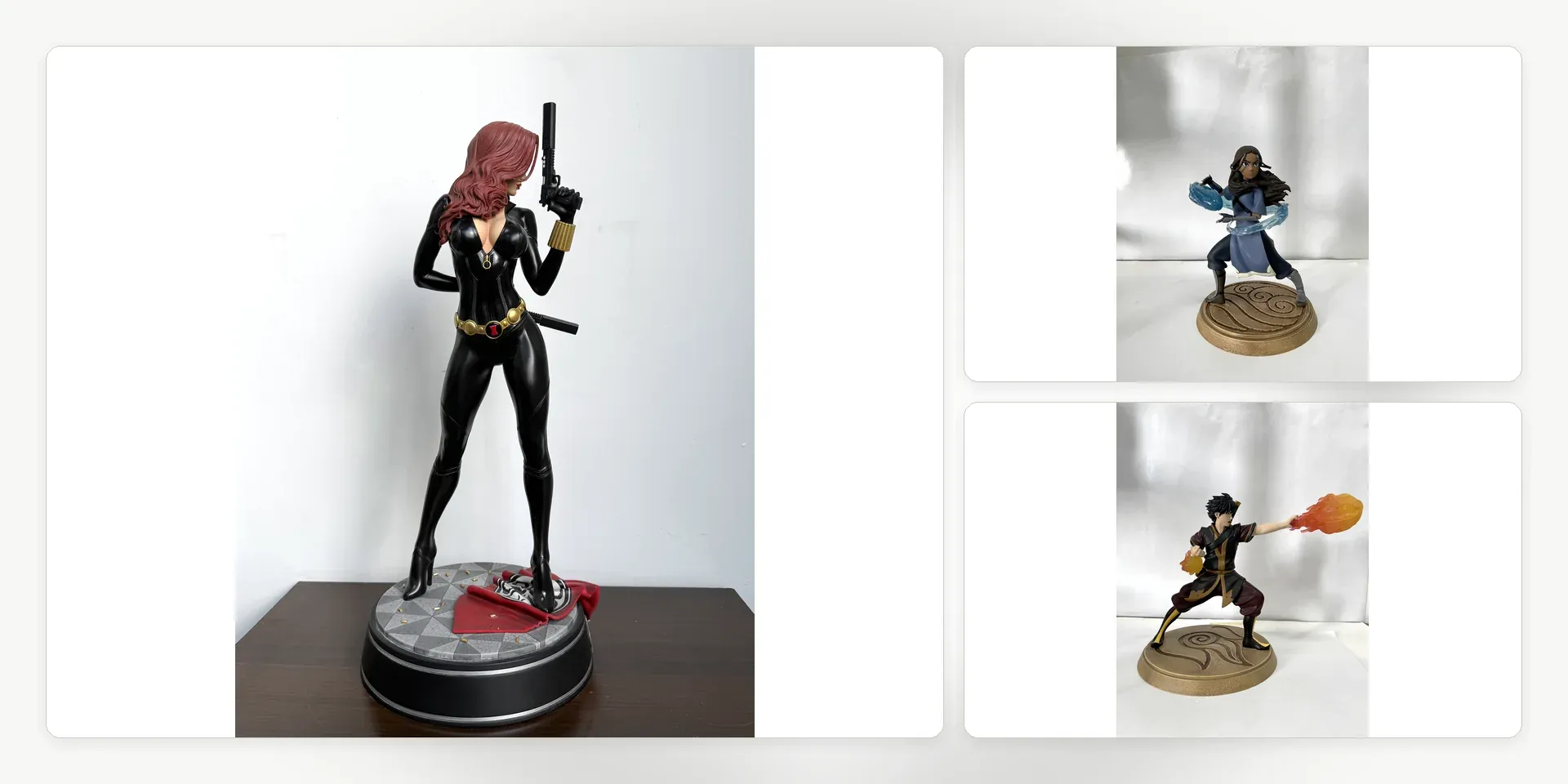
The short answer: choose resin when the product is detail-led, relatively rigid and produced in a smaller or moderate run; choose PVC/ABS when durability, repeatable molding and larger production volumes matter more. For many complex collectibles, the most practical answer is not one material at all, but a planned combination of resin, PVC/ABS, metal, fabric or electronic components.
Material selection should happen after the team understands the product’s scale, geometry, finish, assembly, function, quantity and packaging—not simply from a preference stated at the quotation stage.
What Resin Is Best Suited For
Resin is commonly selected for statues, busts and display pieces where sculpted detail and surface character carry much of the product value. It supports crisp textures, undercuts and complex forms, and it works well with hand-applied painting, metallic finishes, translucent effects and other controlled surface treatments.
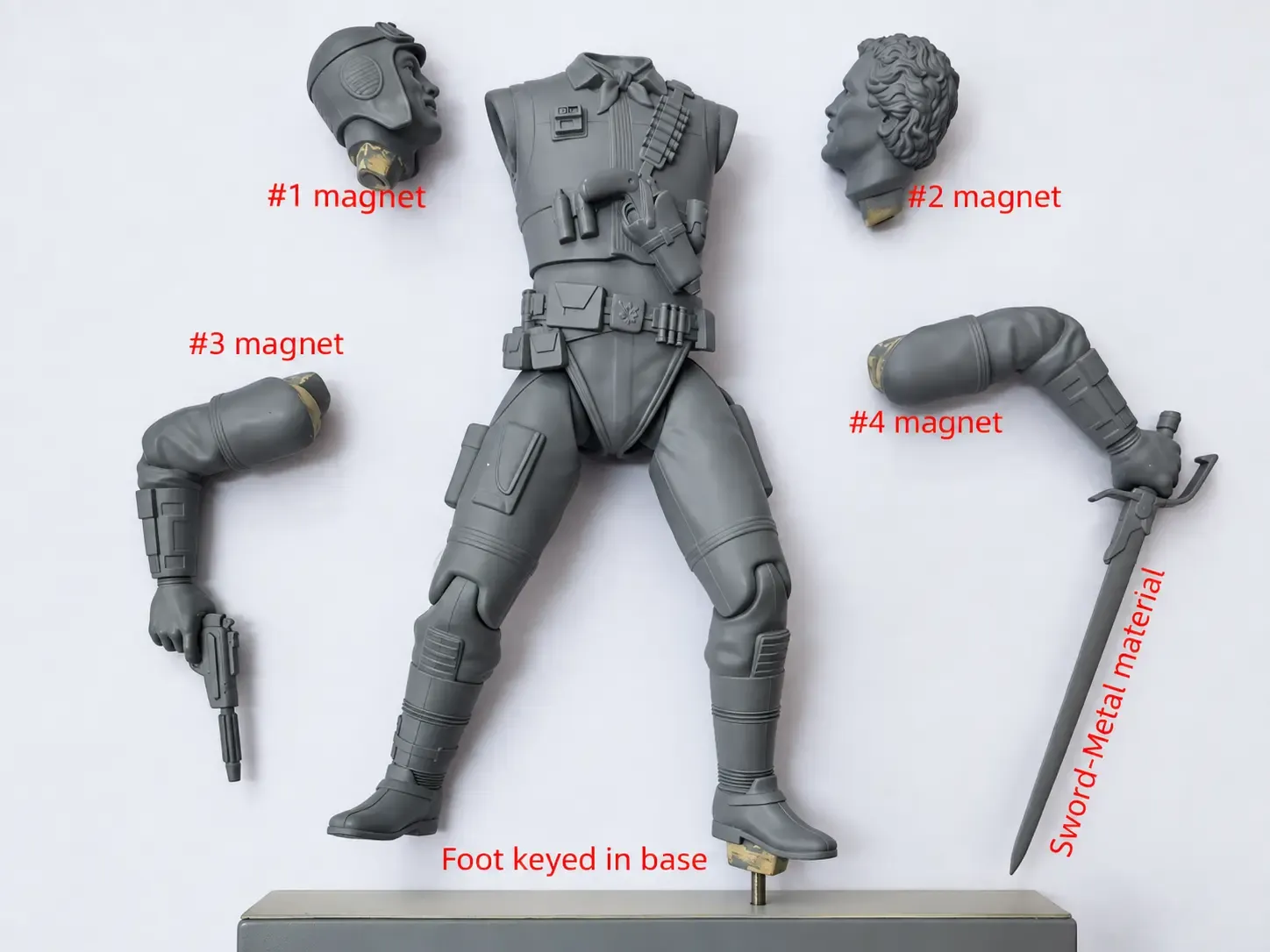
It is also practical for projects that do not justify the tooling investment or production volume normally associated with injection-molded parts. However, resin is relatively rigid and can be vulnerable at thin projections, long unsupported parts and heavy connection points. A dramatic sculpt may therefore require thoughtful part breaks, metal reinforcement, keyed joints or a more protective packaging structure.
Typical resin decisions
- Can thin weapons, fingers, hair strands or effects survive molding, handling and shipment?
- Is the base stable enough for the figure’s weight and center of gravity?
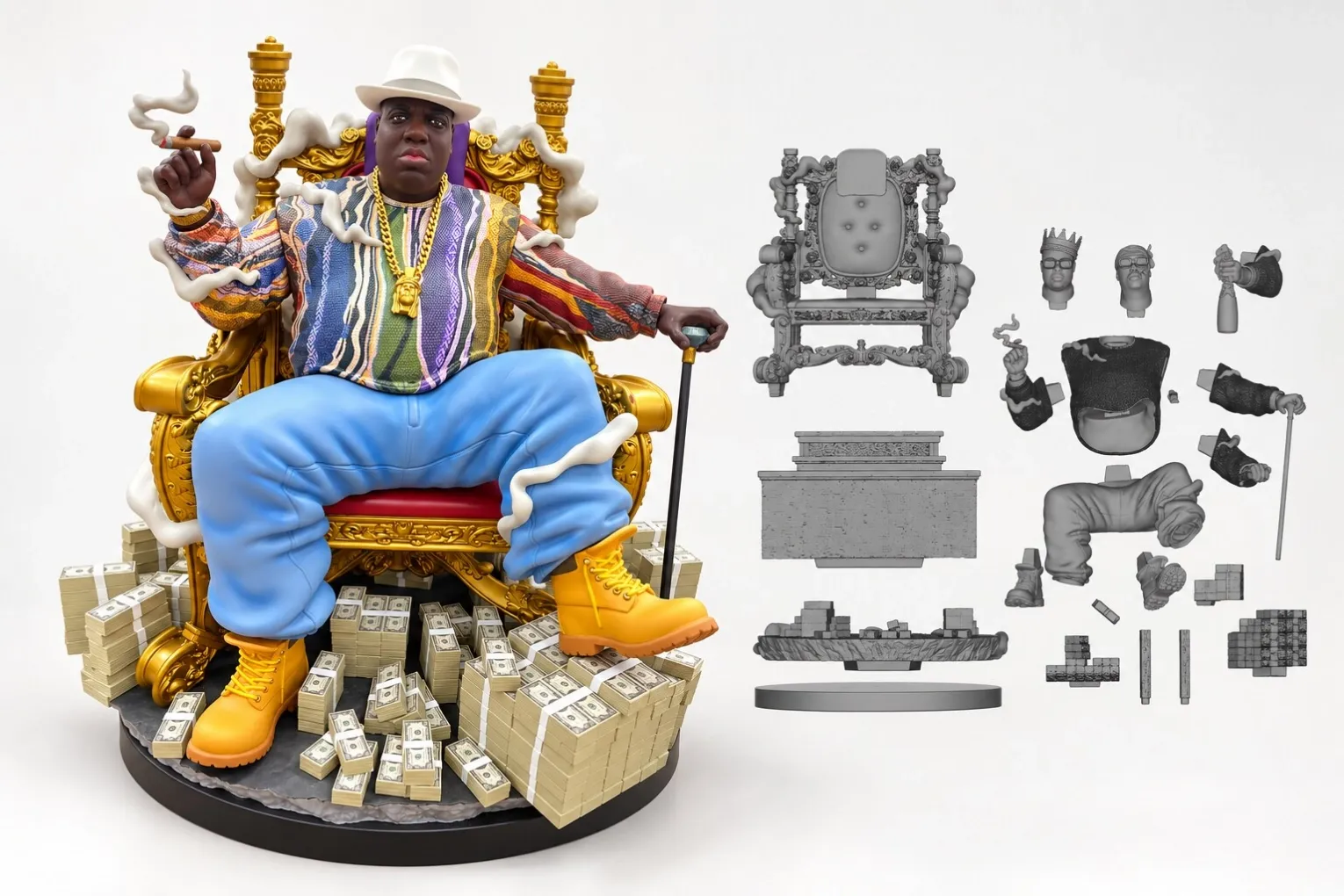
- Where should parts separate for casting, painting and assembly?
- Which details need reinforcement without changing the approved appearance?
When PVC and ABS Make Better Sense
PVC and ABS are useful when a project needs repeatable molded parts, lighter weight or more impact resistance than a resin-only construction can provide. PVC is often chosen for figure bodies and flexible details, while ABS is commonly used where harder, more dimensional parts or stronger structural features are needed.
These materials can suit larger production runs, but tooling and engineering decisions become more significant. Draft angles, wall thickness, shrinkage, gates, parting lines and assembly tolerances must be considered before tooling. A 3D file that looks complete on screen may still need extensive production engineering.
PVC/ABS should not be treated as an automatic cost-saving substitute for resin. Tooling, part count, paint masks, assembly time and quality-control requirements can outweigh the material difference.
Why a Mixed-Material Construction Is Often the Better Answer
Complex collectibles frequently ask one material to do too much. A resin body may carry fine sculpted detail, while ABS supports a structural component, metal reinforces a load-bearing connection, fabric adds realism, and translucent molded parts support an LED effect.
The goal is not to maximize the number of materials. It is to assign each material a clear job while keeping assembly, finishing, repair access and packaging manageable. Functional collectibles also need space for switches, wiring, speakers, battery compartments or mechanical movement without allowing those systems to compromise the exterior design.
See our collectible manufacturing capabilities for the product types and processes we support.
Six Decisions to Make Before Approving a Material
1. Intended scale and product weight
A material that works on a small figure may create unacceptable weight, stress or shipping cost at a larger scale. Hollowing, wall thickness and internal support need to be considered together.
2. Production quantity
Quantity affects tooling logic, production method and the amount of process control required. The best route for a short resin run may not be appropriate for a larger molded-figure program.
3. Sculpt and part geometry
Undercuts, thin projections and deep textures influence mold design, part breaks and the risk of deformation or breakage.
4. Finish standard
Realistic skin, metallic coatings, translucent effects and layered weathering each create different preparation, painting and inspection requirements. The material surface must support the approved finish consistently.
5. Assembly and function
Joints, magnets, fasteners, fabric, electronics and moving features affect tolerances and access. These choices should be engineered before the master sample is treated as final.
6. Packaging and shipment
Fragile projections, heavy bases and removable components change the tray layout and drop-risk profile. Packaging should be developed around the actual production construction, not around the visual model alone.
Cost Drivers Buyers Often Overlook
Raw material is only one part of the cost. Tooling, number of cast or molded parts, paint operations, masking, surface preparation, assembly time, electronics testing, QC and packaging can have a larger effect on the final quotation.
A lower-cost material can become the more expensive route if it creates additional tooling, complicated assembly or difficult paint control. Conversely, a mixed-material design can reduce risk when each component is assigned to the process that suits it best.
From Approved Sample to Production
The approved sample should define appearance, fit and function, but production readiness also depends on documented references and repeatable controls. Paint masters, assembly instructions, functional checks and in-line QC help carry the approved result through casting or molding, finishing, assembly and packing.
The most useful material decision is therefore the one that protects the design while remaining realistic to manufacture repeatedly.
Frequently Asked Questions
Is resin always more detailed than PVC?
Not automatically. Resin is well suited to crisp sculpted detail, but final quality also depends on the master, tooling, molding, surface preparation and paint execution.
Can one collectible combine resin, PVC/ABS, metal and electronics?
Yes. Mixed-material construction is practical when each material has a defined structural, visual or functional role and the assembly is engineered early.
When should material selection be finalized?
Before final tooling and ideally before the master sample is approved. Scale, quantity, finish, part breaks, assembly, function and packaging should all be reviewed together.
If you are deciding between resin, PVC/ABS or a mixed-material route, discuss your project with our team with your available concept, 3D files, target scale and expected quantity.