Oct 22, 2026
What Does an In-Line Check Catch Before Final Collectible QC?
In-line collectible inspection checks parts, finishes, fit, subassemblies and functions while corrections are still accessible before final QC.
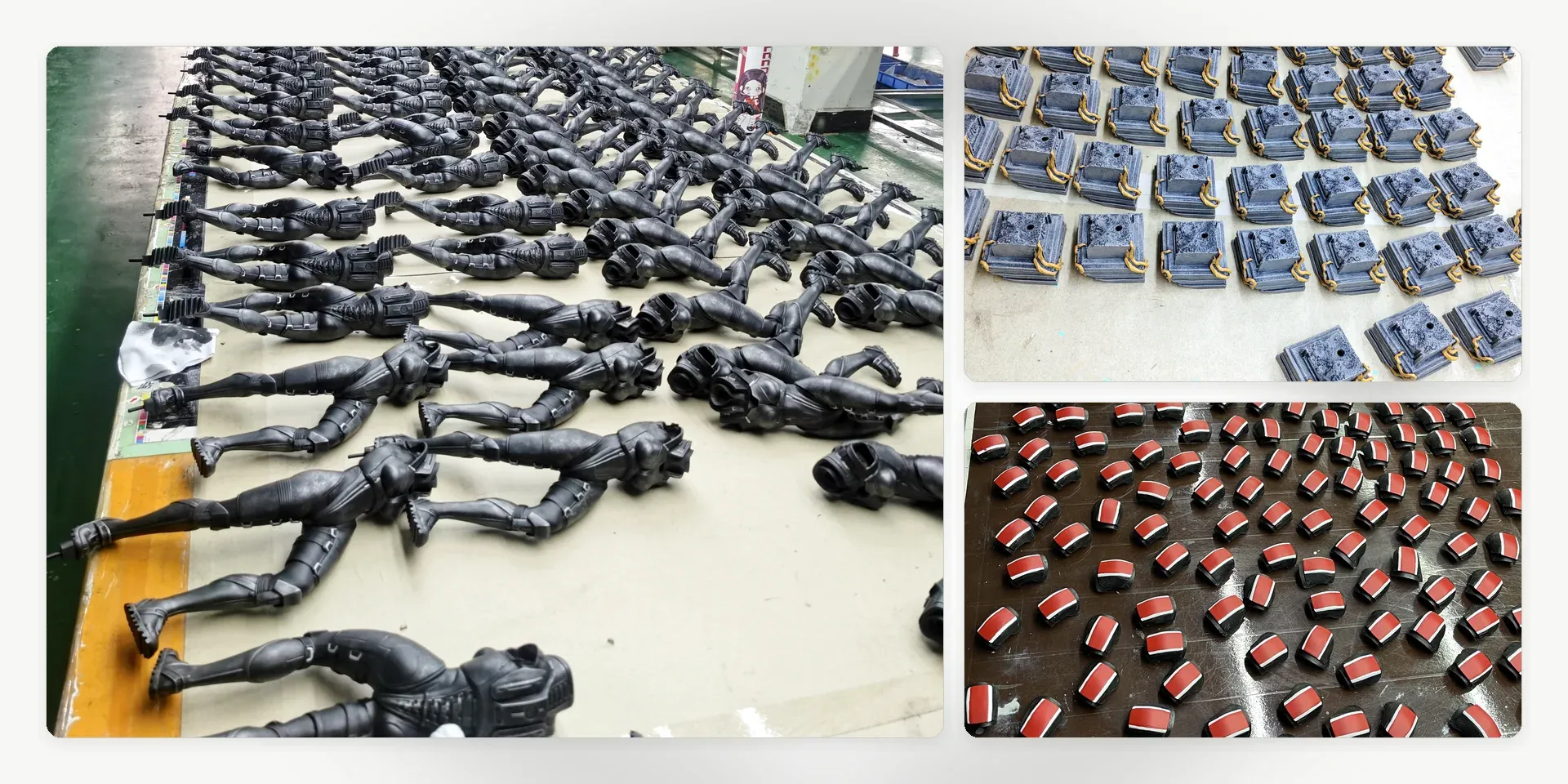
An in-line check catches problems at the production stage where they can still be seen, understood and corrected. It may review cast or molded parts before paint, painted parts before assembly, a subassembly before it is closed, or a function before access is restricted. Final collectible QC still matters, but it cannot replace checks performed while the relevant surface, joint or connection is exposed.
Check the evidence that the next operation will hide
Each production step changes what can be inspected. A surface mark on a resin part is easy to identify before primer and paint; after finishing, the visible symptom may be harder to trace. A connector, wire route or mechanical feature can be checked before an enclosure is closed, while later inspection may reveal only that the finished function does not operate as intended.
This is why an in-line check should be tied to a specific handoff. The useful question is not simply “Does this part look acceptable?” It is “Is this part ready for the next process, and what evidence will become inaccessible after that process begins?”
Separate part condition from finish condition
At the component stage, inspection focuses on the part itself: identity, orientation, molded or cast detail, contact surfaces and obvious deformation or damage. For resin statues and busts, that can include seams, repaired areas and the fit between keyed sections. For PVC or ABS parts, it can include mating features, edges and areas that must remain controlled for later assembly.
After painting, the emphasis changes. The same part may now need to be checked for color placement, surface condition, masking boundaries and unwanted paint on a bonding or fitting area. Combining both stages into one late inspection can make it difficult to tell whether a problem began in the part, the preparation or the finish.
Use representative fit checks before full assembly
Parts that look correct separately can still create an alignment problem together. A representative dry fit or subassembly check can reveal interference, gaps, an incorrect insertion depth or a sequence that puts unnecessary pressure on a painted surface.
The check should focus on interfaces that matter to the finished pose and stability. It does not require fully assembling every unit early. It requires choosing the right evidence before committing more work. Mancheng's manufacturing process covers prototyping, finishing, assembly and QC as connected stages rather than isolated departments.
Inspect functions while access remains practical
For collectibles with LED, sound or mechanical features, testing only at the end creates a narrow diagnostic window. Power connections, controls, light sources, sound components, moving parts and wire routing should be checked at the stage where they can still be reached without disturbing finished surfaces.
The same principle applies to non-electronic features. A magnet, fastener, peg, removable accessory or moving joint can be checked before surrounding parts limit access. The goal is not to declare the completed collectible approved early; it is to confirm that the hidden foundation is ready for closure and final assembly.
Define what happens when a check fails
An in-line check is only useful when the response is clear. The affected parts should be identified and separated, the observation recorded against a known reference, and the next process held for those parts until disposition is agreed. Rework should include a recheck at the same stage, not an assumption that the correction succeeded.
For repeated observations, the review should look beyond the individual piece. The team may need to compare the working method, fixture, approved sample or production instruction. That helps distinguish a single damaged component from a process issue that could continue into later work.
Keep final QC independent and complete
Passing an in-line check does not mean the finished collectible is ready to pack. Final QC still needs to review the assembled appearance, stability, surface condition, accessory fit, intended functions and packing preparation. In-line records explain what was checked earlier; they do not reduce the scope of final inspection.
For a project with multiple materials, finishes or functions, the most useful inspection plan follows the real build sequence. The relevant collectible capabilities help define which interfaces and features need a stage-specific checkpoint. If you are planning a new production program, contact Mancheng with the product structure, finish references and functional requirements.
FAQs
Is an in-line check the same as final QC?
No. An in-line check confirms readiness for the next production step while specific evidence is accessible. Final QC evaluates the completed collectible before packing.
Does every production step need a separate inspection?
Not necessarily. Checkpoints should be placed where the next operation will hide evidence, add significant work, or make correction more difficult.
What should a buyer ask to see from an in-line check?
Ask for the named stage, the reference used, the feature checked, the observed issue when applicable, and evidence that any rework was checked again before release.