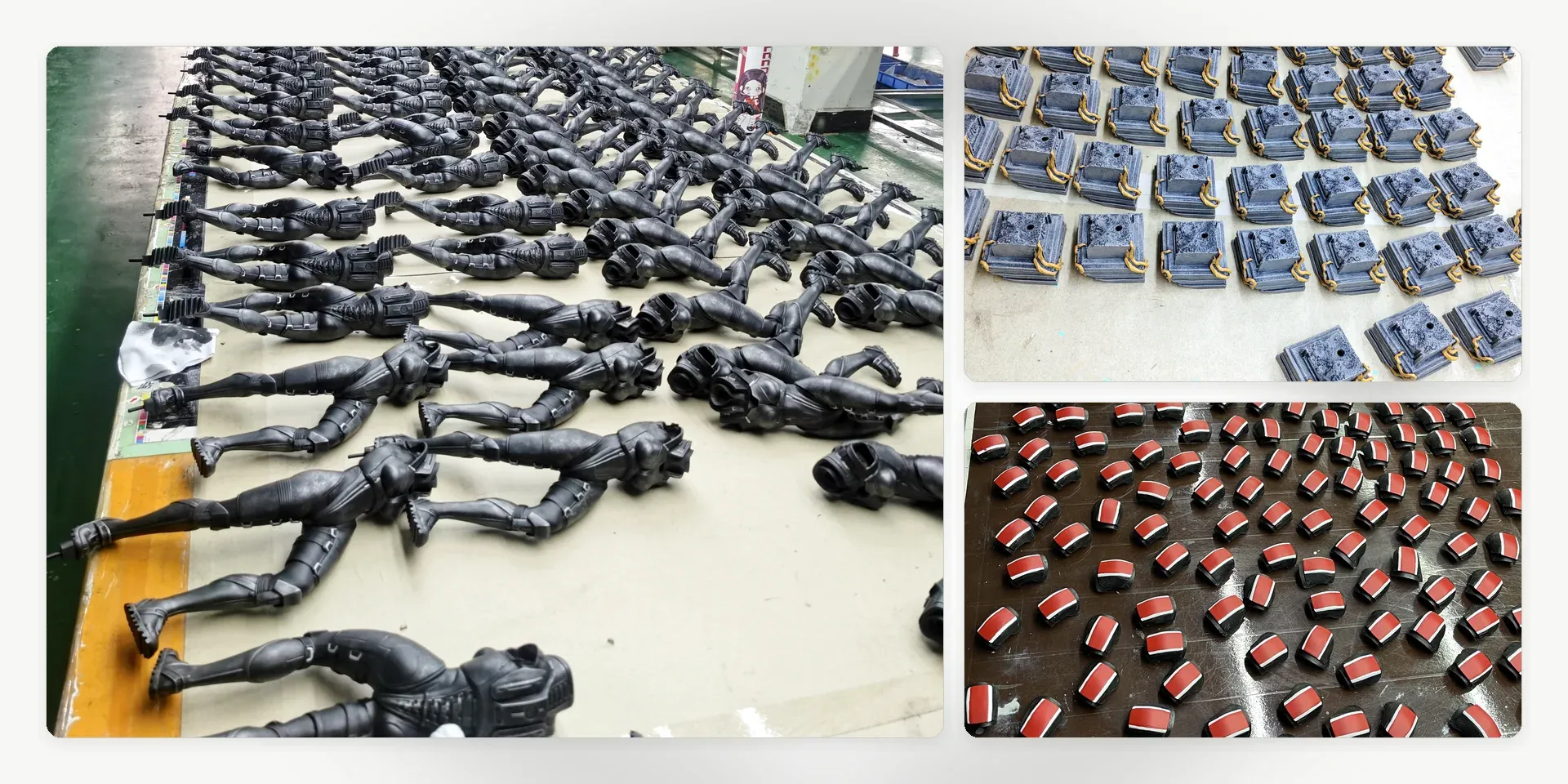
Oct 23, 2026
How to Build a Realistic Collectible Production Timeline
Plan a collectible production timeline around approvals, prototypes, materials, finishing, assembly, packaging and shipment readiness, with clear dependencies.
Build a realistic collectible production timeline by linking each stage to the inputs and approvals it actually needs, then allowing time for review, correction and verification before dependent work starts. Separate development, production and shipment preparation, and define what the final date means. A schedule that ends at “production complete” does not yet explain when an inspected, packed shipment will be ready for collection.
Define the delivery point before counting backward
A brand may be planning a product launch, a warehouse arrival or a shipment pickup. Those are different milestones. Agree which date the manufacturing schedule is expected to support and which transport or receiving activities sit outside it.
For the factory portion, describe completion in observable terms: the required product version is assembled, inspection issues are resolved, accessories and packaging are complete, and the goods are prepared for the agreed handover. This makes the finish date useful to both the product team and the people arranging logistics.
It also prevents a misleading comparison between a schedule ending at finished assembly and one that includes final QC and packing.
Link each stage to a specific release
A phase name such as “sampling” hides several decisions. A prototype may be ready for silhouette review while its keyed connections still need work. A paint sample may establish the face and main color treatment while a translucent effect or fabric accessory remains unresolved.
List the release needed for the next activity. Tooling may depend on approved geometry and part breaks. Painting instructions depend on an agreed finish reference. Final assembly may depend on compatible components, the approved sequence and functional checks.
The collectible manufacturing process provides the stages to consider, but the schedule should follow the actual product structure. A resin bust and an articulated figure with clothing and electronics will not have the same dependency chain.
Separate factory work from review time
An approval is not complete when photographs are sent. The plan needs time for the relevant people to review the evidence, combine their comments and communicate a decision against a named version.
For professional teams, this may involve creative, engineering and product stakeholders. Ask who can release each stage, what evidence they need and when a consolidated response can be expected. Record whether approval concerns the whole sample or only specified features.
If a physical sample must travel for review, include dispatch, transit and receipt before the review period begins. Avoid placing an approval milestone on the day a sample is expected to arrive unless that review arrangement has been agreed.
Identify the components that govern completion
Collectible projects often contain several streams of work: sculpted parts, molded or cast components, fabric items, painted accessories, electronic elements and packaging. They can progress at different speeds, but the assembled product needs the compatible set.
Check which component or decision controls the next handoff. A figure body may be ready while the support structure still needs validation. A painted part may be complete while its mating accessory is awaiting approval. Displaying those streams separately makes the reason for a forecast date easier to understand.
The product capabilities help identify what belongs in the plan. Include only the features actually specified for the project, with their own readiness conditions.
Use parallel work where the inputs are stable
Some activities can proceed together. Packaging concepts can be explored while the product is being developed, and finish references can be organized while engineering reviews continue. Parallel work is useful when the team knows which assumptions remain provisional.
The trade-off is rework. Finalizing a tray around an unconfirmed pose, base or removable accessory may produce packaging that no longer fits. Ordering a component before its interface is fixed may leave a mismatch when assembly begins.
Mark work as exploratory or released, and identify the decision that makes it safe to commit. A schedule should show that distinction clearly enough that an early start is not mistaken for final approval.
Plan correction and verification as real activities
A timeline with no space for a sample correction assumes that every review will close without further work. Where the product includes an uncertain fit, finish or function, identify how the team would correct it and what evidence would confirm the result.
The allowance should reflect the unresolved feature. A finish adjustment might require a revised paint sample; a structural change may affect multiple parts and their fit. Avoid applying one arbitrary allowance to every type of issue.
Verification also takes time. Corrected parts need to be reviewed against the current reference, and affected instructions or related components may need to be checked before the work is released.
Update the forecast when a dependency changes
When an approval or component moves, review the activities that depend on it. Some work may continue, while a particular handoff must shift. The useful update identifies what changed, what remains unaffected and which completion milestone is now forecast.
Keep the original agreed plan available alongside the current forecast so the team can distinguish progress from a revised assumption. A status message saying “on schedule” is most useful when it identifies the current milestone and the evidence supporting it.
For a new program, contact Mancheng with the product scope, available files, unresolved features and intended handover date. Those inputs support a schedule built around the actual development work rather than a generic duration.
FAQs
When should a collectible production timeline be confirmed?
Develop an initial plan from the scope and available files, then refine it as engineering, materials and approval requirements become clear. State the assumptions behind any early forecast.
Can production start before every detail is approved?
Only work with sufficiently stable inputs should be released. Identify the approved scope and the parts that remain provisional, along with the effects a later change could have.
What should a useful progress update include?
Include the milestone reached, the evidence available, the next decision or component required, and any change to the forecast. Completed work and expected completion should be clearly distinguished.