Oct 8, 2026
Resin vs Polystone for Premium Collectibles: What Actually Changes in Production?
Resin and polystone are often used interchangeably in collectibles, but their production behavior, weight, finishing and structural requirements can differ.
“Resin” and “polystone” are often used almost interchangeably when people talk about premium collectible statues.
From a buyer’s point of view, both may simply mean a heavy, hand-finished collectible rather than an injection-molded PVC figure.
From a production point of view, however, the material choice affects much more than the label on the specification sheet.
It influences casting, wall thickness, weight, structural strength, surface preparation, painting, assembly and even packaging.
At Mancheng Collectibles, we normally look at the product first rather than starting with a fixed material rule.
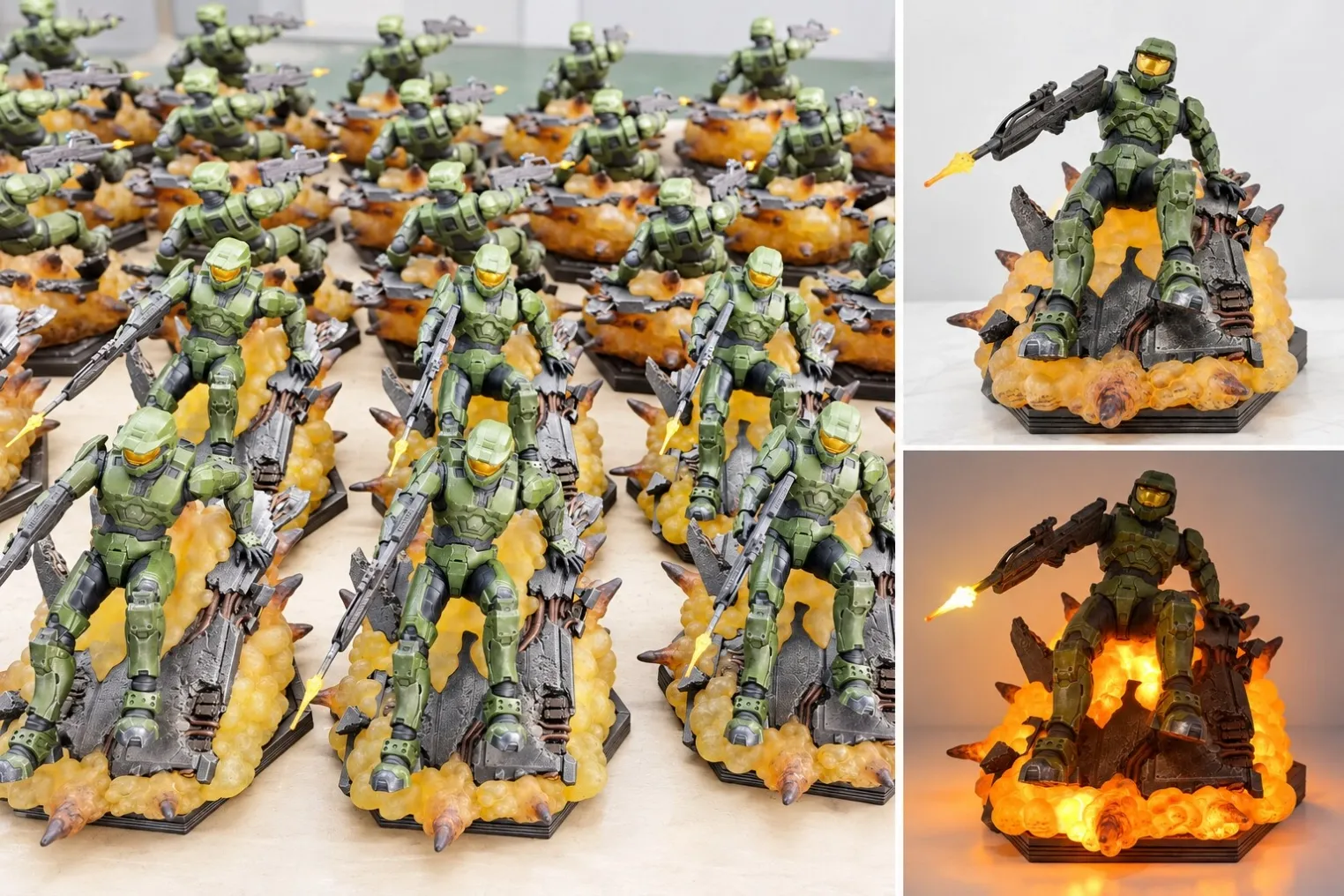
A highly detailed character statue, a large base, a thin weapon and a translucent effect part may all belong to the same collectible, but they do not necessarily need to be produced in exactly the same material.
Detail reproduction is only one part of the decision
Resin is popular in premium collectibles because it can reproduce fine sculpted detail very well.
Textures, skin details, armor surfaces, fabric folds and small sculpted features can all translate nicely from the master into production.
But good detail reproduction does not automatically mean the material is right for every component.
A long, thin part may need more flexibility or internal reinforcement. A very heavy base may need its weight controlled. A complicated assembly may benefit from a different material in selected areas.
That is why material decisions are better made part by part instead of treating the whole product as one block.
Weight can feel premium — until it becomes a problem
Collectors often associate weight with quality.
A solid resin or polystone piece can certainly give a product a substantial, premium feel.
But more weight also means more stress on joints, more pressure on packaging and higher freight costs.
For a large collectible, adding weight without thinking about the structure can create problems later.
The important question is not simply:
“Can this be made solid?”
It is:
“Where does the product actually need mass, and where can the structure be made more efficient?”
This becomes especially important on large statues, diorama bases and long unsupported components.
Surface preparation matters before painting starts
A premium finish begins well before the paint booth.
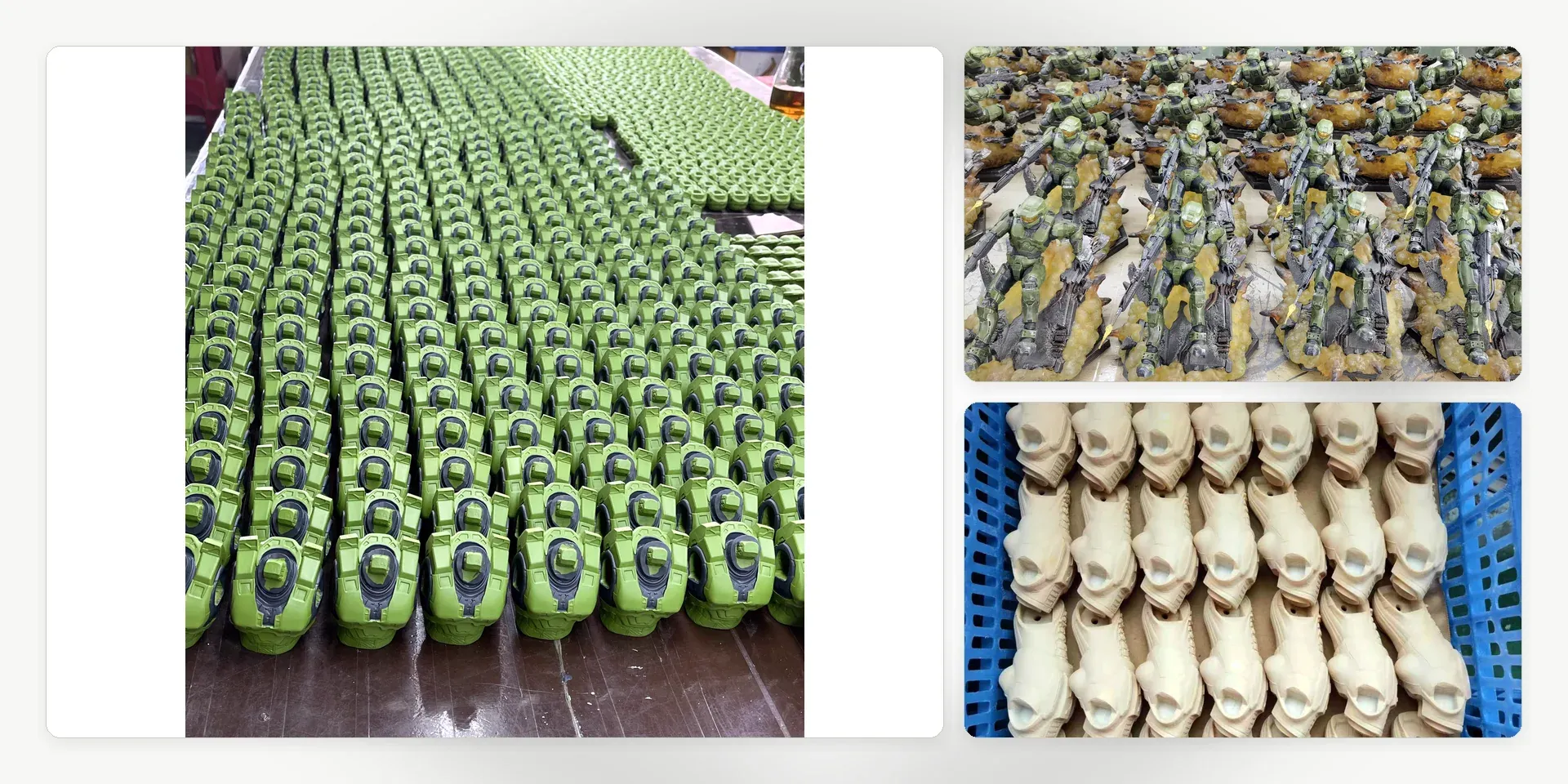
Casting seams, small surface imperfections, sanding marks and assembly interfaces all need to be controlled before primer and paint are applied.
This is one reason resin and polystone collectibles remain relatively craft-intensive products.
A beautiful paint master cannot compensate for poor surface preparation underneath.
The cleaner the casting and preparation stage is, the easier it becomes to maintain the approved appearance during production.
Material choice also affects assembly
Large resin collectibles are rarely one single piece.
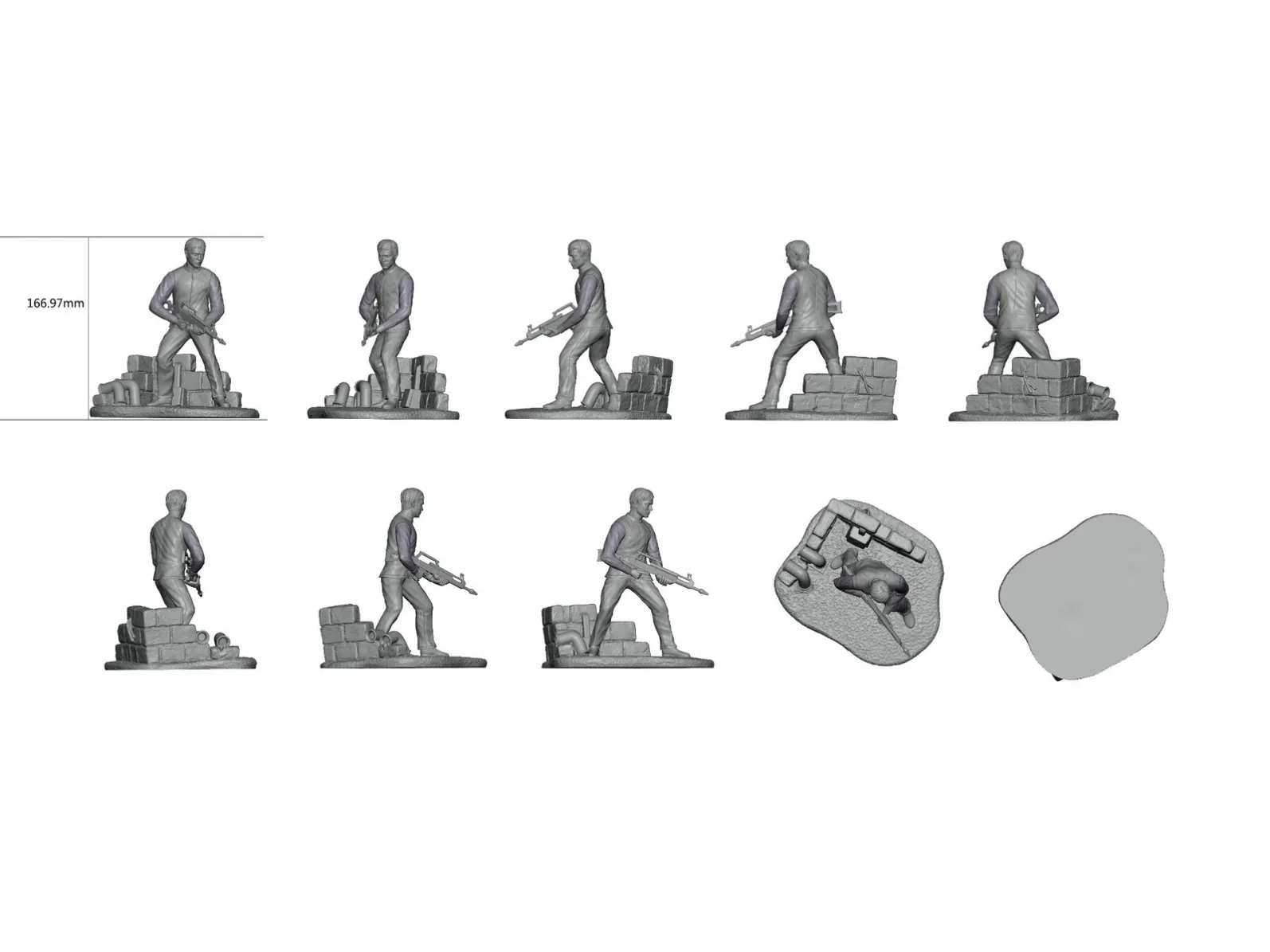
They are normally divided into multiple components for molding, casting, painting, assembly and packing.
Each connection point needs enough strength while remaining practical for production.
Pins, keyed joints, magnets, metal reinforcement or other structural solutions may be used depending on the product.
The correct solution is usually determined by the shape, weight and function of each part rather than by a standard formula.
Resin or polystone is not the real question
For most premium collectible projects, we think the more useful question is:
What material and production method will preserve the design while making the product repeatable in production?
That may result in a mostly resin or polystone product.
It may also lead to a mixed-material construction where different components are chosen for different reasons.
The material should support the collectible — not force the collectible to fit the material.
At Mancheng Collectibles in Dongguan, China, we work with resin, polystone and mixed-material collectible projects from prototype development through casting, painting, assembly and production QC.
The earlier material and structural decisions are reviewed, the easier it is to avoid compromises later in production.