How to Preserve a Stylized Character in a 3D Collectible
Preserve a stylized character in a 3D collectible by defining its proportion system, separating graphic effects from volume and reviewing expression at product size.
A stylized character should become a three-dimensional collectible through deliberate interpretation, with its defining exaggerations protected from the start. Identify the proportions, shapes and graphic relationships that make the character recognizable, then decide how they should work as physical volumes. Making every feature more anatomically realistic can move the product further from the intended character.
For a brand or art director, the useful question is not simply whether the sculpt matches an illustration. It is which relationships must remain recognizable when the character occupies real space, and which drawing effects need a different physical solution.
Identify the character's proportion system
Start with a few specific relationships rather than a general instruction to keep the character cute, bold or expressive. These might include the head relative to the body, the spacing of the eyes, the narrowness of the shoulders or the contrast between a compact torso and oversized footwear.
Treat those relationships as a system. Enlarging the head while leaving the neck, hands and costume unchanged may produce a different character rather than a stronger version of the same style. Likewise, adding realistic facial planes to a deliberately simplified face can change its age or expression even when the overall head size remains similar.
Ask the responsible creative reviewer to distinguish defining features from flexible ones. That helps the development team understand where interpretation is welcome and where a seemingly small adjustment changes the product's identity.
Separate drawn effects from physical features
An illustration can describe a cheek with a line, a shadow or a change of color. Those signals do not always mean the cheek needs a corresponding ridge or depression in the sculpt. Decide what belongs to the volume and what belongs to the later paint treatment.
For example, in a hypothetical stylized portrait, a dark shape beside an eye might be graphic shading rather than an anatomical hollow. Sculpting it deeply could make the face look convincing from one camera angle but unexpectedly severe from another. The appropriate answer may be a softer volume and a controlled painted shape, subject to the intended finish review.
Make the same distinction for hair divisions, clothing folds and decorative outlines. A line that organizes a drawing does not automatically need to become a groove. Adding physical detail everywhere can weaken the hierarchy that made the design clear.
Resolve depth without normalizing the design
A front view may establish width while leaving the depth of the head, nose, hair or footwear open. Resolve those questions explicitly. A profile should explain the same character, rather than reveal a realistic figure hidden behind a stylized front.
Compare the proposed side and three-quarter views with the intended design language. Does the large forehead still belong to the face? Does a simplified nose become too prominent in profile? Does the hair form a coherent mass around the head, or only reproduce the outline of one drawing?
When references conflict, identify the conflict instead of averaging them silently. Different illustrations may use perspective or expressive distortion for different purposes. The brand needs to choose the controlling interpretation for this product. A sculptor cannot satisfy incompatible proportions merely by matching every image independently.
Review the eyes and expression as a combined decision
On a stylized face, eye size, spacing, eyelid shape and brow direction can carry much of the expression. Review their relationship with the cheeks, mouth and head shape before treating the portrait as settled.
Decide which elements are sculpted and which are painted. A large painted eye area may need a different supporting surface from a deeply modeled realistic eye. Review an appropriate color study alongside the unpainted geometry where the paint is essential to understanding the expression. Keep the two approvals distinct: a promising color study does not prove the geometry or final decoration is ready for production.
Avoid correcting one isolated feature without looking at the whole face again. Moving the mouth or changing a brow can alter the emotional reading even when each individual adjustment seems small.
Protect intentional simplicity at product size
Inspect the design at its intended physical size. A large digital view can encourage additional eyelashes, strands and folds that compete with the main forms when reduced. More detail is a choice, not an automatic improvement.
Ask which details support recognition and which merely fill a surface. A clean grouping of hair locks may be closer to the intended style than many fine strands. A simplified garment can still need a clearly resolved edge, thickness and transition into the body; simplicity should be intentional rather than unfinished.
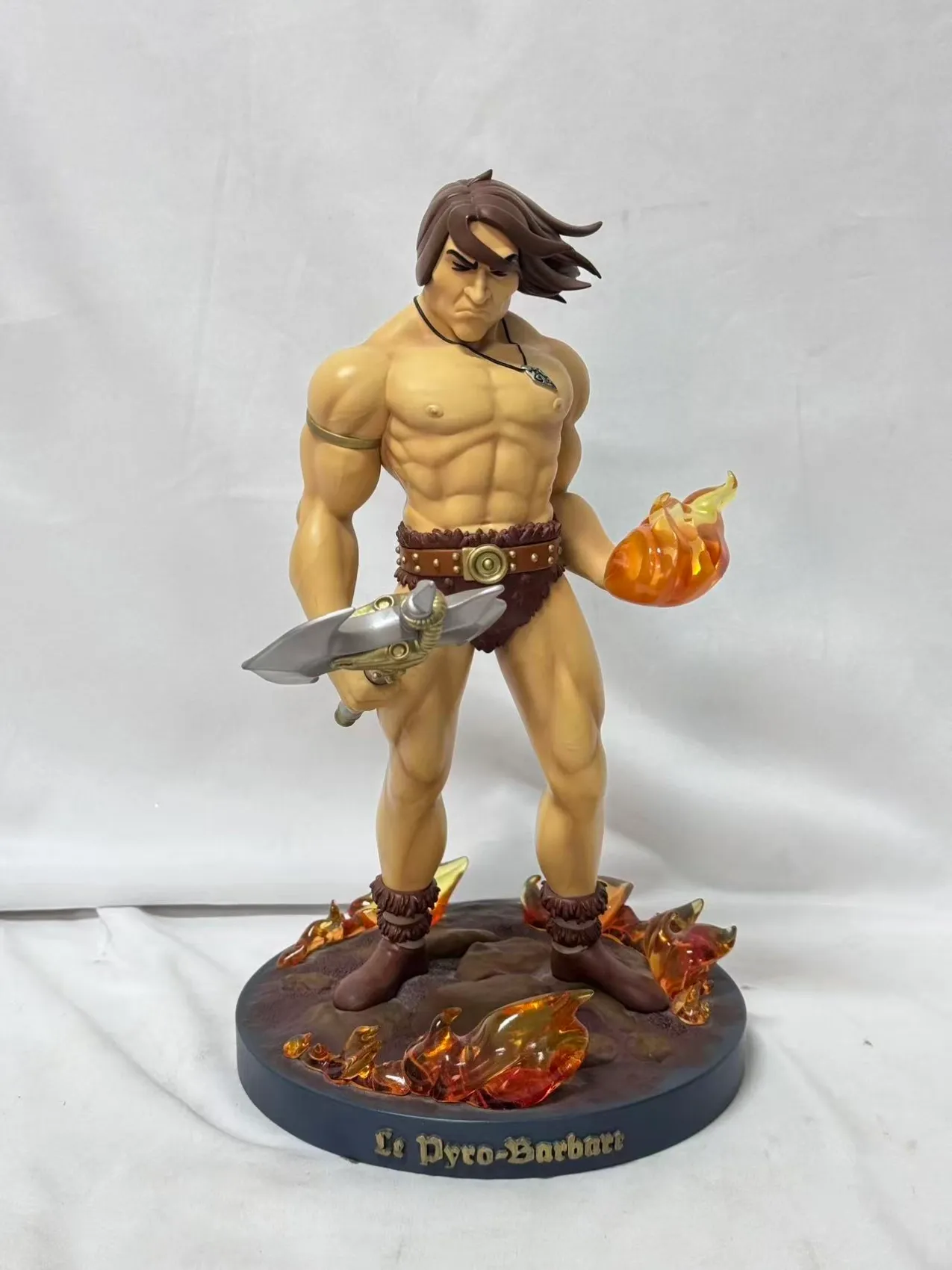
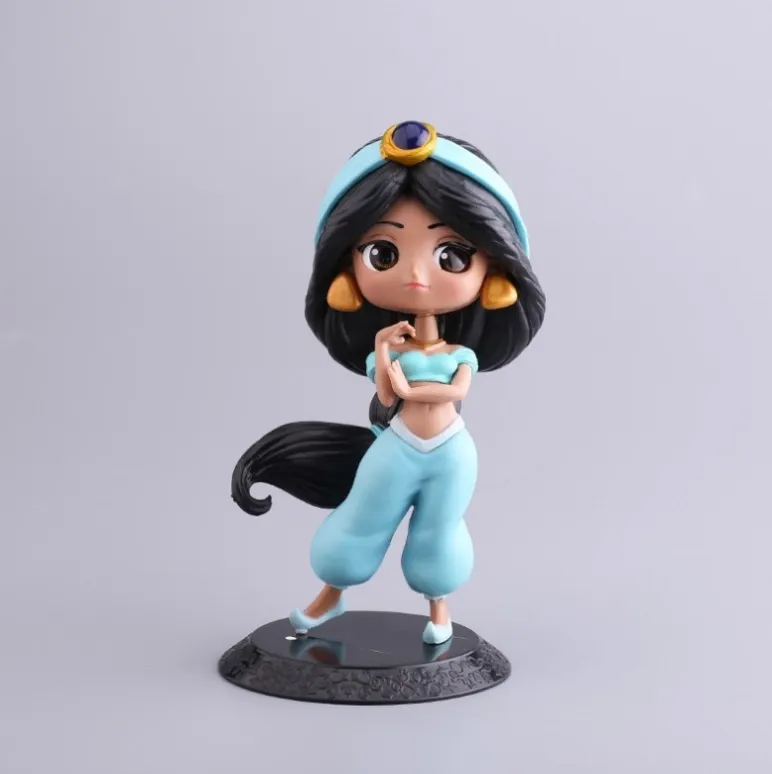
The photograph accompanying this article shows enlarged facial features, simplified costume forms and a prominent hair shape on a finished collectible. It illustrates a stylized physical result. No original illustration is supplied here, so it is not evidence of fidelity to a particular source artwork or of an approval outcome.
Hand over the interpretation, not just the latest sculpt
Retain the accepted views and a short explanation of the character relationships that must be protected. Record intentional departures from a particular drawing, including decisions about depth or the division between sculpt and paint. That keeps a later engineering or finish adjustment from accidentally reversing the art direction.
The project file guide explains what to supply at the beginning. This review answers a later creative question: how those references become one coherent three-dimensional character. Within the development and production process, production feasibility still needs its own assessment. The objective is to make those decisions with a clear understanding of what gives the character its identity.
Frequently Asked Questions
Should a stylized collectible use realistic anatomy?
Only where it supports the intended design. Approve the character's specific proportion system rather than treating realism as the default correction.
Can one illustration settle every three-dimensional feature?
It can establish important direction, but unresolved depth and unseen forms need an explicit interpretation and review. Do not treat an invented rear or side view as already approved.
Should every drawn line become sculpted detail?
No. Determine whether the line represents volume, a surface division or a graphic effect, then review the appropriate sculpt or paint treatment.