What Makes a Collectible Assembly Sequence Production-Ready?
A reliable assembly sequence protects paint, fit and function. Review access, order, curing time and inspection points before mass production.
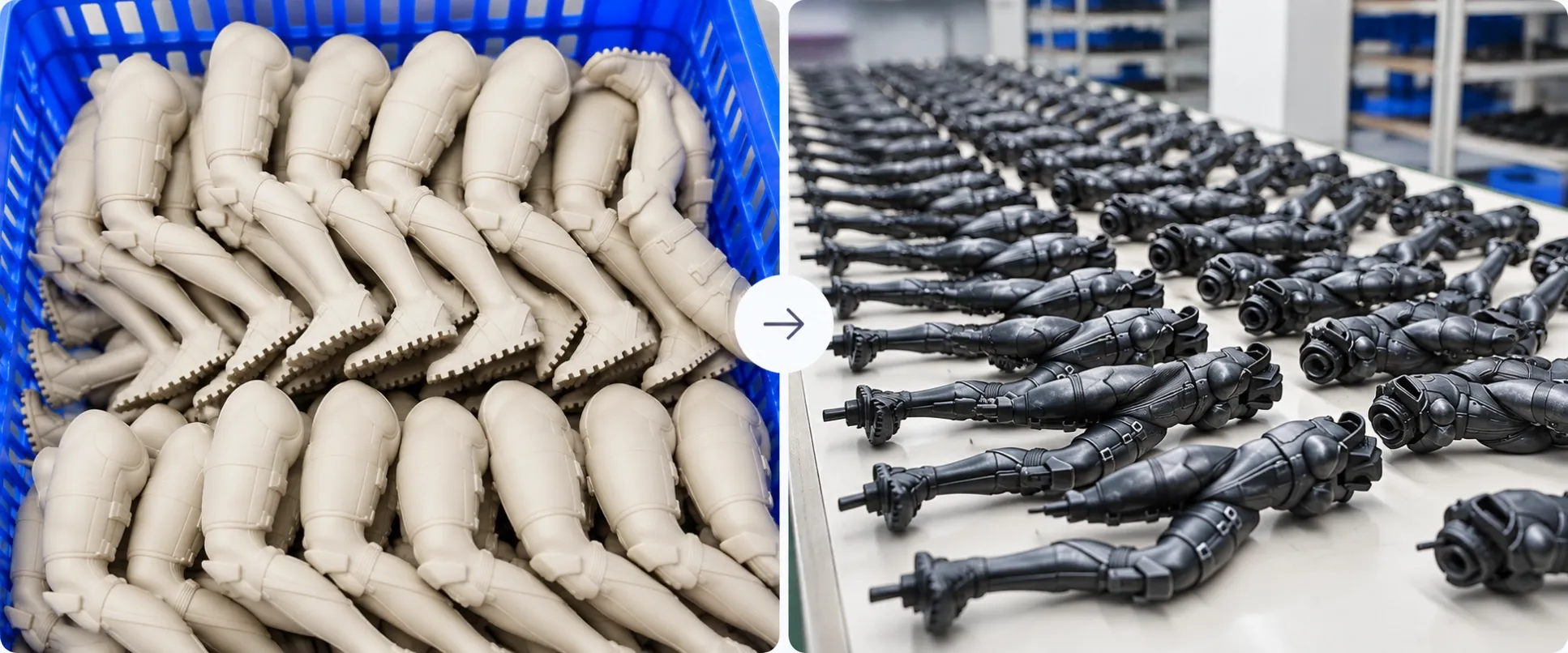
A collectible can have accurate parts and still fail at assembly if the order is wrong. Paint can be damaged, hidden joints can become inaccessible and small gaps can appear only after the final piece is installed. A production-ready assembly sequence is defined before the batch begins.
Start with access and risk
List the parts that are fragile, painted, heavy or difficult to reach after installation. These parts should not automatically be assembled first. The sequence should protect the highest-risk surfaces and leave enough access for fit checks, wiring or fasteners where needed.
Separate fitting from permanent fixing
A dry-fit step lets the team confirm orientation, contact surfaces and visual alignment before adhesive or permanent hardware is used. If a part is difficult to remove after fixing, the approval point belongs before that step, not after it.
Match the sequence to the finish
Painted parts may need protection from handling or time for a finish to settle before the next operation. Avoid placing a freshly finished surface against foam, a clamp or another painted part without a documented reason. For mixed-material products, record which surfaces must remain clean for bonding or mechanical contact.
Add inspection points
The sequence should identify when to check alignment, gaps, paint damage, loose parts and functional features. A final inspection cannot always detect a problem that became hidden during assembly. Earlier checkpoints make rework more controlled.
Document exceptions
If one variant requires a different order, give it its own instruction and photos. Do not rely on an assembler remembering a verbal exception from a previous batch. The approved assembly reference should show the correct orientation and the finished appearance.
A good assembly sequence is a manufacturing decision, not just a set of workshop steps. It connects the approved master to repeatable handling, protects the finish and gives QC a clear moment to catch problems before packing.
FAQ
Should every collectible use the same assembly order?
No. The order depends on access, finish, materials and functional integration.
Is a photo enough for an assembly instruction?
Use photos with numbered steps and short notes for orientation, contact surfaces and inspection points.
When should the sequence be approved?
Before mass assembly, using representative parts and the intended finish condition.