How Should a Collectible Statue Pose Be Approved Before Production?
Approve a collectible statue pose by reviewing its silhouette, balance, expression, viewing angles, accessory relationships and physical production consequences together.
Approve a collectible statue pose as a complete physical composition, not as a single attractive render. The pose should communicate the character clearly from the intended display views while remaining compatible with the base, accessories, part breaks, assembly route and packaging plan. A pose is ready for production only when those decisions support the same visual idea.
Start with the action the pose is meant to communicate
Before reviewing anatomy or surface detail, describe the intended action in one sentence. Is the character advancing, bracing, turning, resting or presenting a weapon? That sentence gives the team a stable question to answer when the pose changes during development.
A render may look energetic because of camera distortion, dramatic lighting or a low viewpoint. The physical object does not control how every collector will see it. Review the posture without the promotional camera treatment and ask whether the direction of the head, chest, hips, hands and feet still tells the same story.
This is also the point to identify the primary display view. A statue can have a preferred front without making the side and rear views accidental. The main view should be deliberate; the other visible angles should explain the same pose rather than expose unresolved intersections or an unsupported gesture.
Judge the silhouette before adding more detail
The silhouette reveals whether the body and accessories can be read as separate forms. Review the assembled sculpt at the intended product size, because clear spaces in a large digital view can disappear after the object is reduced.
Look at the gaps between the arms and torso, the direction of projecting weapons or costume pieces, and the way the legs connect visually to the base. If several important forms overlap from the primary view, extra texture will not restore the missing separation. Adjusting an elbow, hand or accessory angle may improve the reading more effectively than adding detail.
The silhouette also affects the product envelope. A long weapon, cape edge or wide arm position changes the overall width, packing arrangement and handling route. Record the full assembled dimensions after the pose and accessories are defined; nominal character scale alone does not describe the space the finished piece occupies.
Review balance as a visual and physical decision
A convincing stance shows where the figure appears to carry its weight. The relationship between the feet, hips, torso and head should support the intended action. A wide stance can feel stable but static. A narrow or offset stance can feel active but may require more attention to how the figure connects to the base.
Visual balance and structural support are related, but they are not the same approval. A concealed support may solve a physical requirement without fixing a pose that still looks weightless. Conversely, a pose can look stable in a render while leaving too little practical connection to the base. Review the gesture and the physical support plan together, then keep their decisions separately identifiable.
For statues that use a scenic element as support, confirm that the environment belongs to the composition. A rock, wall fragment or effect should do more than hold the figure upright. Its direction, scale and contact point should reinforce the action rather than appear as an engineering addition placed after the pose was approved.
Check the relationship between expression, hands and accessories
Collectors read a pose through a small number of high-attention areas: the face, hands and the objects they hold. Review the head angle with the expression. A stern portrait looking away from the action can change the meaning of the entire composition even when the individual sculpt is strong.
Hands should appear to carry, grip or present accessories with believable intent. Confirm the orientation of handles, blades, tools or props and the clearance around nearby costume elements. If an accessory is removable, approve both its installed appearance and the way it is fitted. A beautiful final angle is incomplete if installation requires pressure on a delicate painted surface.
Alternative hands, heads or equipment should be evaluated as complete configurations. A replacement part can shift the visual center of the statue or create a new projection that affects balance and packing. Do not assume that an alternate portrait or weapon is approved because it fits the same connection.
Use physical review to expose production consequences
Digital sculpt review is valuable for proportion, gesture and revision speed. A physical prototype adds information about real scale, viewing height, assembly access and how the object feels when it is handled. Use the stage that can answer the current question.
During physical review, rotate the complete object rather than approving isolated parts. Check whether the intended part breaks preserve the gesture, whether seams sit in high-attention areas, and whether the assembly sequence can reproduce the approved angles. A hand-fitted sample should not hide a connection that cannot locate consistently in production.
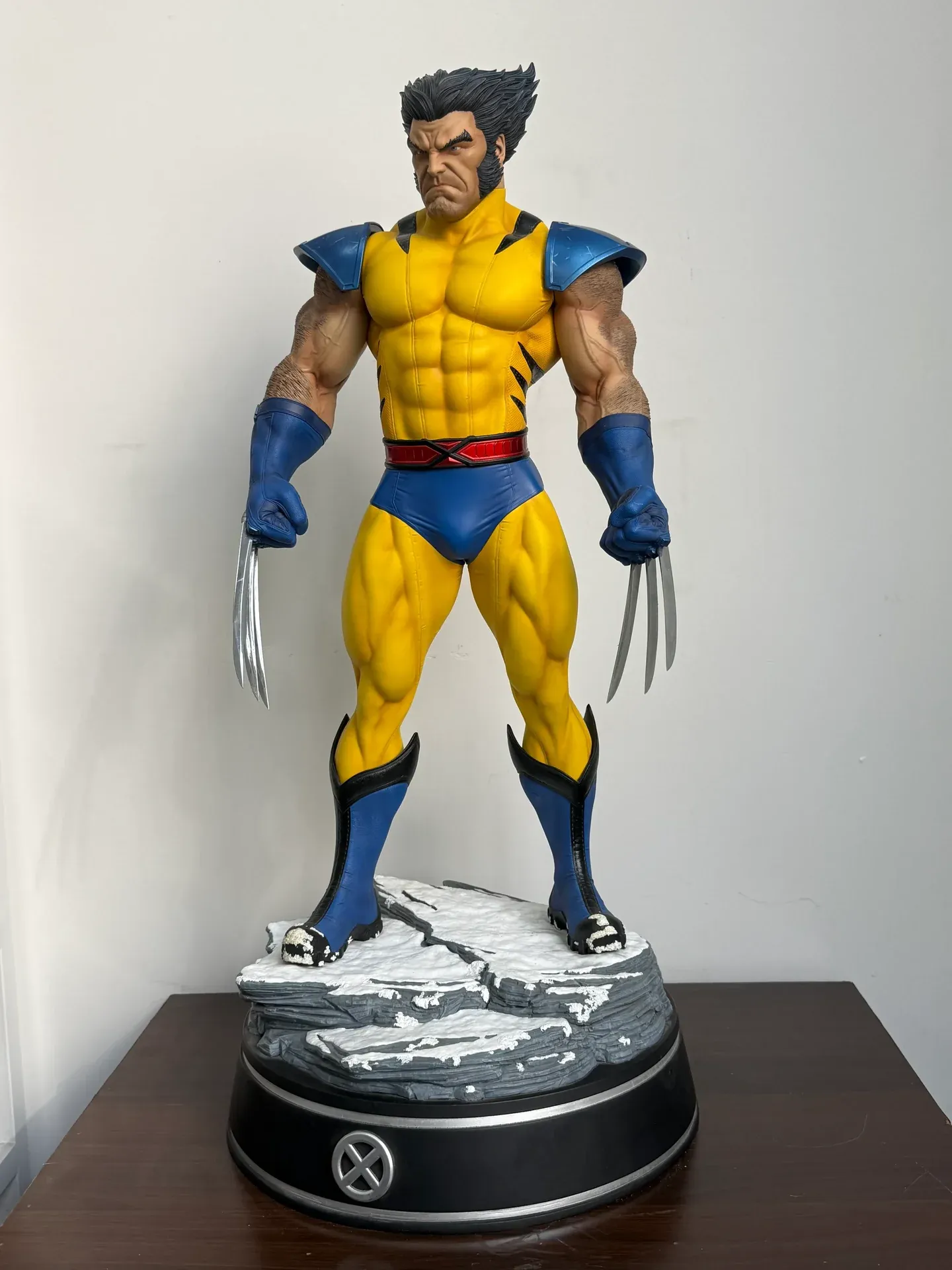
The photograph used with this article shows a finished standing statue with a scenic base and projecting hand accessories. It illustrates how stance, head direction, accessories and base read together. It does not establish that any particular structural, assembly or performance test was completed.
Record the approved pose as a usable reference
An approval should identify the revision and the complete configuration. Retain clear front, three-quarter, side and rear views, plus close views of connections that control important angles. Include the base and every visible accessory in the reference.
Comments such as “more dynamic” or “more powerful” are useful at the start of art direction but too open-ended for final approval. Translate them into observable decisions: rotate the torso, raise the hand, open the space between the arm and body, or turn the portrait toward the action. That gives sculpting, prototyping, assembly and QC teams the same target.
Pose approval sits inside the broader collectible development and production process. It should connect the artistic goal to the practical decisions required for statues and figures. When those decisions are reviewed together, the approved pose can remain recognizable from the sculpt through the finished product.
Frequently Asked Questions
Can a statue pose be approved from renders alone?
Renders can approve many visual decisions, but a physical review is valuable for real scale, viewing height, assembly access and base relationships. Use each form of evidence for the decision it can actually settle.
Does a visually stable pose prove that the statue is structurally safe?
No. Visual balance and structural support need separate review. A pose can look stable while still requiring an engineered connection, and a strong support does not automatically make the gesture convincing.
Should alternative accessories be included in pose approval?
Yes. Review every intended display configuration because another head, hand or accessory can change the silhouette, balance, installation route and packaging envelope.