Action Figures vs Statues vs Designer Toys: Which Category Fits Your Brand?
Action figures, statues and designer toys are bought for different reasons and made in different ways. How to pick the format that fits your brand before you brief a factory.
A brand starting a collectible usually asks the same question first: what should we make? The answer is not a character or a pose. It is a category — action figure, statue, or designer toy — because each one is bought for a different reason, made in a different way, and sold in a different quantity.
Choosing the wrong category is expensive to fix. It changes the mould, the packaging, the price, and the buyer you are selling to. Choosing the right one, before you brief a factory, saves all of that.
Three Formats, Three Buying Reasons
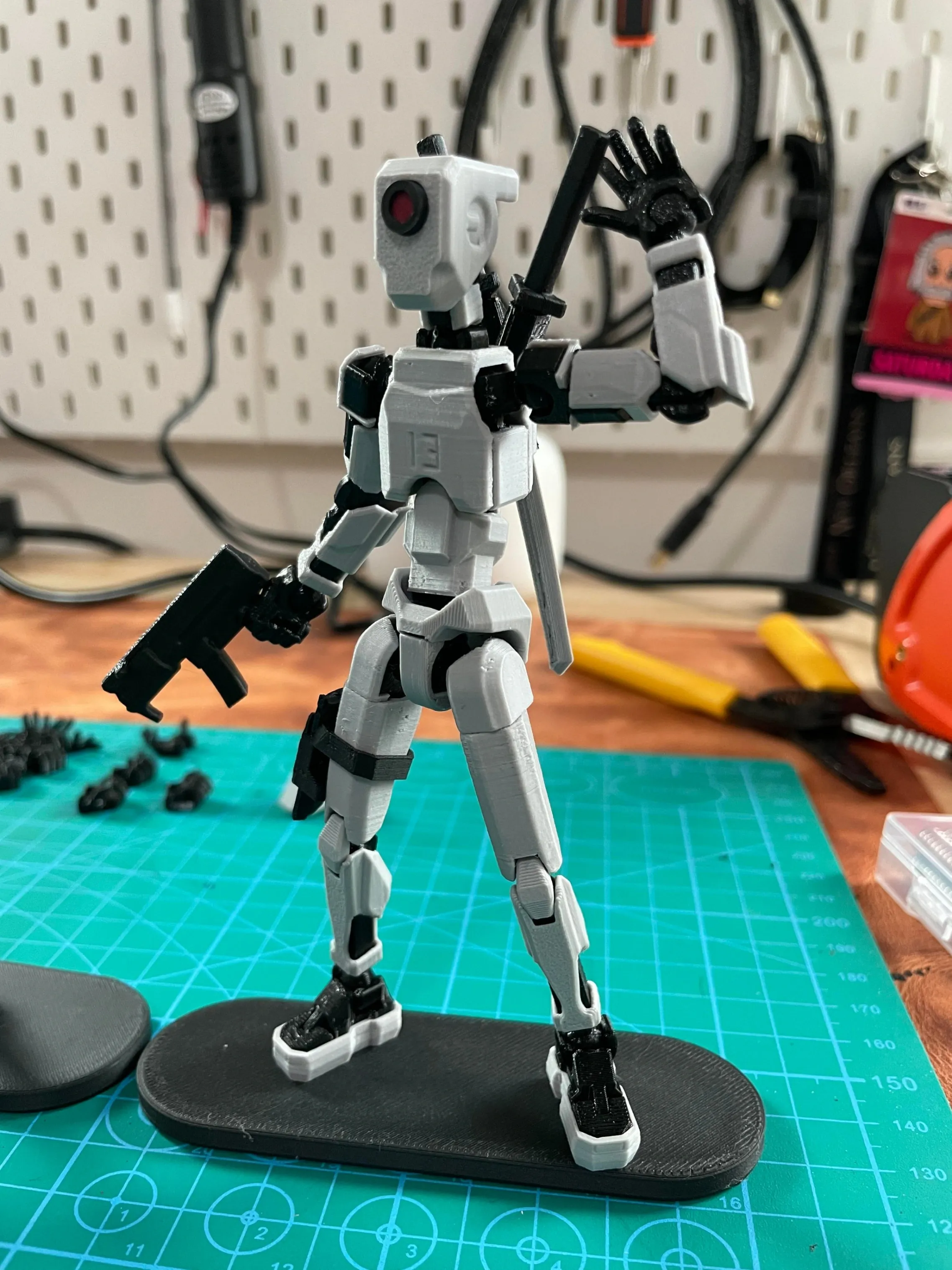
An action figure is bought to pose. The buyer wants joints, accessories, and the ability to change the display. The value is in movement and play, even when the figure ends up on a shelf.
A statue is bought to look at. The buyer wants a single pose, executed well, at a scale that fills a display. The value is in the sculpt, the paint, and the presence of the piece. Nothing moves, and nothing needs to.
A designer toy is bought as an object. The buyer wants a character, a shape, or a colourway that feels like art. The value is in the design itself — often simple, often stylised — and in the series it belongs to.
These are three different purchases. A collector who wants a poseable figure will not be satisfied with a statue, however well made. A collector who wants a display piece will not pay statue prices for a toy. Start from the buying reason, not from the character.
What Each Format Demands From Production
The production difference follows the buying reason.
An action figure needs joints that hold a pose, parts that fit together repeatedly, and accessories that survive handling. That means more parts, more assembly steps, and more testing of fit and tolerance. The engineering is in the movement.
A statue needs a clean sculpt, a stable structure, and a paint finish that holds up at display distance and at close inspection. Resin casting suits small runs with high detail; the engineering is in the structure, the weight, and the support. A statue that leans, cracks, or loses paint in shipping has failed at the one thing it was bought to do.
A designer toy needs a shape that reads instantly and a finish that is consistent across a series. The engineering is in the mould and the paint mask: every piece in the series must match, and every colourway must be repeatable.
None of these is simpler than the others. They are different kinds of work, and a factory brief that does not name the format will get a quote for the wrong kind of work.
Who Each Format Suits Best
For a brand with an established character and an audience that already collects, a statue is often the most direct choice. It is a single, high-impact piece that can carry a premium price and a limited edition.
For a studio or creator testing a new character, a designer toy can be a better first step. It is a smaller commitment per piece, it works as a series, and it lets the audience grow with the character.
For a brand whose audience expects interaction — poseable figures, swappable hands, display options — an action figure is the format that matches. It demands more engineering, but it is what that buyer is actually buying.
There is no universal best format. There is a format that fits your audience, your price point, and your appetite for production complexity. A brand that picks a format to copy a competitor, rather than to serve its own buyer, will feel the mismatch in every later decision.
How Edition Size Changes by Format
Edition size is not a number you pick at the end. It follows from the format.
Statues, especially premium format pieces, are often produced in limited, numbered runs. Sideshow released 25 Premium Format figures in 2025, many of them limited to under 1,000 pieces. That is a public signal about how the statue category works: scarcity is part of the product, and a small run can be the right run.
Action figures and designer toys more often work in larger runs, or in series where each release builds on the last. A blind-box series, for example, only makes sense as a set of designs released together. A single figure, released alone, does not create the collecting behaviour the format depends on.
Do not set an edition size before you have set the format. A statue run planned like a toy run will be over-produced. A toy run planned like a statue run will be under-supplied. Both mistakes are visible to collectors, and both are hard to correct after production starts.
What Happens If You Pick the Wrong Format
Changing format after production has started is not a revision. It is a restart.
A statue redesigned as an action figure needs joints, new parts, new moulds, and new packaging. An action figure redesigned as a statue loses the joints that justified its price, and gains a sculpt and finish standard it was not designed to meet. A designer toy redesigned as either will need a new scale, a new finish, and a new price.
Each change also changes the cost structure. More parts mean more assembly and more quality checks. A larger scale means more material and a larger box. A limited edition means a different pricing and distribution plan. None of these can be fixed by a paint change.
The cheapest time to choose a format is before you brief a factory. The most expensive time is after the first prototype.
A Simple Decision Check Before You Brief a Factory
Before you send a brief, answer five questions in writing:
- What will the buyer do with it? Pose it, display it, or collect it as part of a series?
- Who is it for? An existing audience, or a new one you are trying to reach?
- Where will it live? A shelf, a desk, a display case — and at what scale?
- How many? A limited numbered run, or a series that grows over time?
- What price must it hold? The format you choose has to work at the price your buyer will pay.
If you can answer all five, you can brief a factory with confidence. If you cannot, the format is not decided yet — and no prototype will decide it for you.
For a closer comparison of two of these formats — resin statues and 1/6 figures — see our earlier article on choosing between them. That piece covers the two-way choice in detail; this one covers the three-way choice that comes first.
Sources: Astute Analytica via GlobeNewswire, action figures $7.4B in 2024 → $11.15B by 2033, CAGR 4.67%; Sideshow 2025 Premium Format releases, public product records.
Related: W01 — Resin Statue or 1/6 Figure: Which Format Fits the Product?