Oct 28, 2026
Plan Collectible Replacement Parts Before Production Ends
Plan collectible replacement parts with defined service units, clear part references, revision compatibility, protected storage and an agreed support route.
Plan collectible replacement parts by defining the serviceable unit, giving it an unambiguous identity, checking compatibility and agreeing on storage and support responsibilities before production ends. Retaining unidentified loose pieces leaves too much work for the moment a collector needs help.
A damaged forearm or missing accessory creates a small, specific request from the owner's perspective. The response becomes much harder if the brand, development team and production team use different names for that component or disagree about what can be replaced safely.
Decide what the replacement unit actually includes
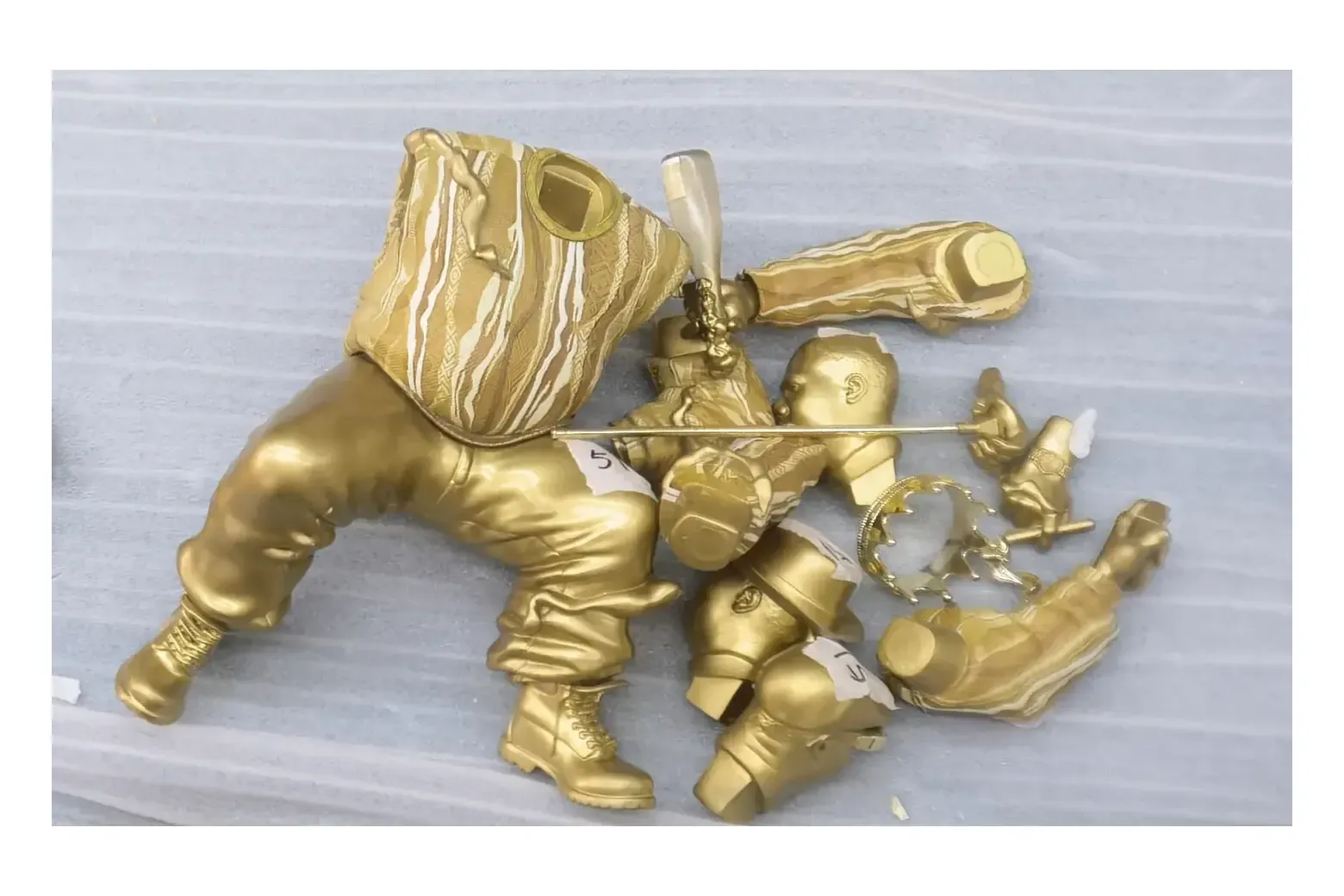
Start with the component that would be supplied and the operation needed to install it. A hand, a complete forearm and an assembled body are different service units even when a report describes the same visible problem.
Some interfaces are intended for the collector to separate. Others are permanently assembled or require trained handling. Decide whether support would provide an individual part, a larger subassembly or a return-and-inspection route. A part break chosen for manufacturing does not automatically become an owner-serviceable connection.
Make this distinction during development and sample review, while the assembled sample is available. Avoid designing a support response around disassembly that nobody has checked.
Give the part a name that survives outside the factory
Use a part identifier linked to a clear photograph or drawing, its orientation and its place in the finished product. Define left and right from an agreed viewpoint. Keep internal identifiers connected to the terms used in instructions and support records.
One useful industry example is Good Smile Company's support guidance, which asks customers to identify a defective component by its name or instruction-manual code and provide photographs. That illustrates the value of a shared reference between an owner and a support team; it is not a universal policy for other brands.
A close-up of damage helps locate a problem. An overall photograph helps establish which assembly and orientation are involved. Request the information needed to identify the service unit without turning a simple request into repeated rounds of ambiguous questions.
Check compatibility with the version being supported
Keep the replacement identifier connected to its applicable product revision and finish reference. A component that looks similar in a tray should not be assumed compatible with every version of the figure.
Check the intended replacement against a representative finished interface. Depending on the service unit, the relevant observations may include seating, orientation, movement, visible gaps or the continuity of the painted surface. Define the observations for that particular connection rather than applying one generic fit rule to every part.
For a visibly adjacent painted component, compare the intended appearance under consistent conditions. Separate a compatibility question from a finish question so the team can resolve the right issue. The objective is to restore the agreed product configuration, not simply to dispatch something with a similar name.
Make retained parts usable when a request arrives
Agree which service units should be retained, how they will be identified and protected, and who maintains the record. The appropriate selection depends on the design, the support arrangement and the feasible replacement route; there is no credible universal spare percentage for every collectible.
Keep retained pieces associated with their revision and finish information. Protect small projections and visible surfaces during storage and transport. A replacement can be correct on paper and still create a second problem if its identifying information is lost or its finish is damaged before dispatch.
Record what is actually available and how requests are authorized. Clear responsibilities are more useful than an open-ended promise that parts will always exist.
Feed a verified issue back into development
A support report is evidence to investigate, not an automatic diagnosis. Preserve the description of what happened, the relevant photographs and any returned part. Distinguish a component that separated from an interface from one that fractured, and avoid advising an unverified repair from an unclear image.
Where further inspection is needed, agree on a route before the part is modified. The resulting observation can inform a future revision, handling instruction or production check. A replacement response and an investigation serve different purposes; both need a clear owner.
For the collectible formats Mancheng develops and manufactures, replacement planning can be included in the project scope discussion. The useful time to define the service unit is while the team still has the design, sample and production references together.
FAQs
Should every collectible include a spare-parts set?
No. Decide the support arrangement around the actual design and serviceable units. Some issues call for a part replacement; others require inspection or a larger assembly.
Is a photograph enough to approve a replacement?
It may identify the component and visible condition, but it may not establish the cause or compatibility. Check the applicable revision and arrange physical inspection when the evidence is insufficient.
Can a generic joint set support every articulated figure?
Do not assume that. Use the specific manufacturer's compatibility information and verify the intended interface. A published joint set is an example of component-level support, not proof that its parts fit another product.
External references
Max Factory / Good Smile Company — figma Basic Joint Set (White). This historical product reference illustrates separately identified joint categories. It is not a Mancheng product, a compatibility recommendation or a statement of current stock.